
What Is The Importance of Trucking Industry
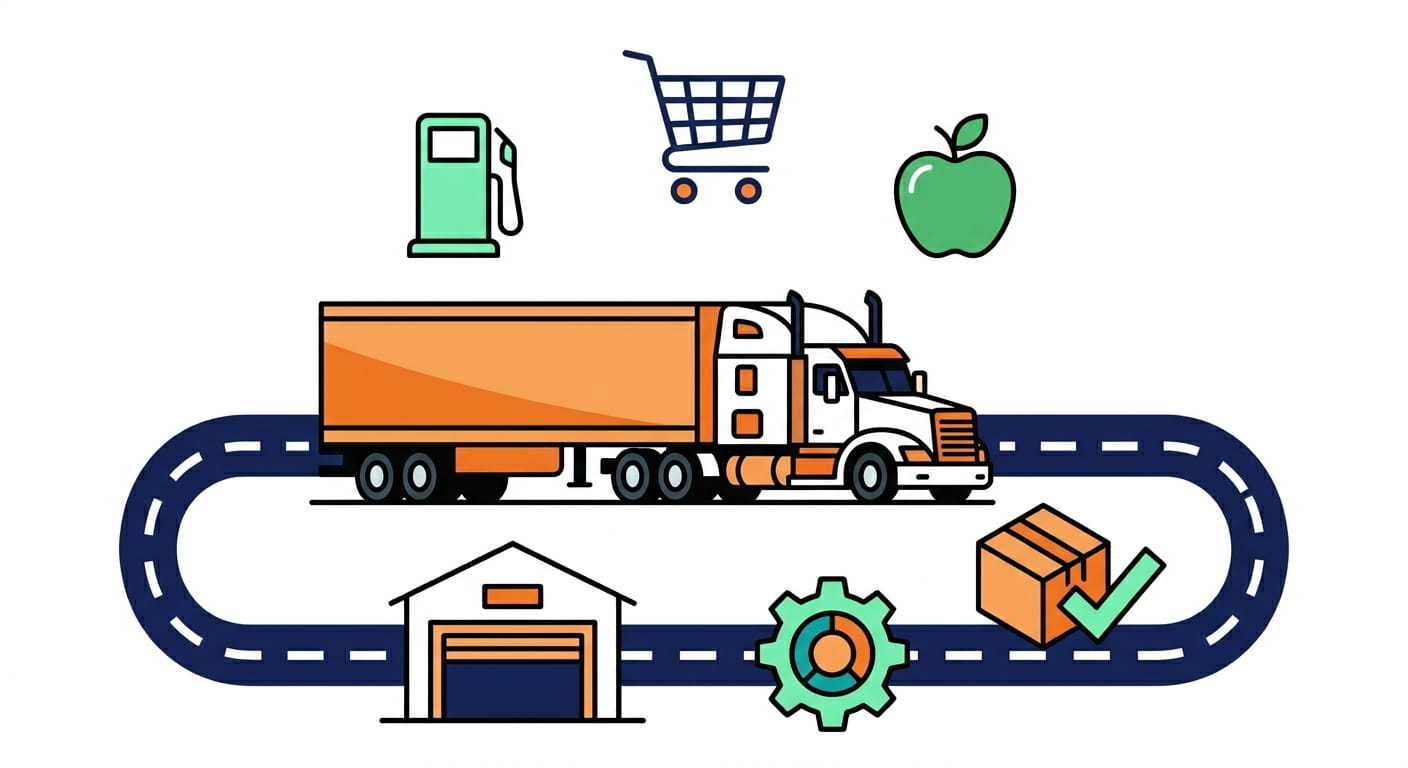
Imagine waking up to empty grocery shelves. No milk for your coffee. No fresh produce. No medication at the pharmacy. No fuel at the gas station.
This is not a dystopian fantasy it is the reality that would unfold within days if the trucking industry stopped moving.
As the American Trucking Associations (ATA) puts it in their “Nothing Without Trucking” campaign, the industry is “the true beating heart of this nation.”
Yet for all its centrality, trucking remains one of the most underappreciated pillars of modern civilization.
To fully grasp the importance of trucking industry, one must imagine a world without it a world where factory assembly lines halt for lack of parts, grocery store shelves remain bare, and hospitals run out of critical supplies.
The industry does not merely transport goods; it is the circulatory system of the global economy, the invisible architecture upon which virtually every other sector depends.
This article explores the multifaceted nature of this sector from its overwhelming economic dominance to its role in daily life, national security, and the critical challenges that will shape its future.
The Economic Backbone: By the Numbers
A Market of Staggering Scale
The numbers that underscore the importance of trucking industry are staggering in their scope and scale.
The global freight trucking market was valued at approximately $2.84 trillion in 2025 and is projected to reach $3.97 trillion by 2034, representing a compound annual growth rate of 3.82%.
The U.S. freight trucking market alone reached $830.3 billion in 2025.
To put this in perspective, the truck transport market globally grew from $2.07 trillion in 2024 to $2.24 trillion in 2025, an 8.4% CAGR.
This is not a static industry it is expanding rapidly, driven by the growth of global trade, e-commerce, and industrial development across regions.
These figures are not abstract; they represent the literal movement of everything that sustains modern economic activity.
The 72% Reality
Perhaps the most frequently cited statistic and for good reason is that trucks move nearly 72% of all freight in the United States.
In 2022, the trucking industry moved over 11.4 billion tons of freight, generating more than $940 billion in revenue.
These figures represent not abstract numbers but the literal movement of everything that sustains modern life: food, medicine, fuel, building materials, clothing, electronics, and countless other essentials.
The industry’s reach extends beyond U.S. borders.
In 2023, trucks transported 66.5% of the value of surface trade between the United States and Canada and 84.5% of the value of surface trade between the United States and Mexico.
Trucking is not merely a domestic concern it is the connective tissue of North American commerce, and these cross-border flows further amplify the importance of trucking industry to continental economic stability.
An Economic Barometer
The trucking industry serves as a real-time economic indicator. The Cass Freight Index tracks shipment activity and freight spending, giving analysts a window into supply chain strength.
Rising shipment volumes signal that manufacturers are producing more and retailers are stocking up both pointing to economic growth. When the index drops, it often foreshadows slowdowns in production and consumer demand.
This is why policymakers, investors, and business leaders watch trucking metrics so closely.
The industry does not merely participate in the economy it reveals its health, making its performance a leading indicator for GDP growth and employment trends.
The First and Last Mile: Trucking’s Unique Role in the Supply Chain
Beyond the Highway
Understanding the importance of trucking industry requires recognizing its unique and irreplaceable role as the “first and last mile” of the supply chain.
This phrase captures something essential: while trains, ships, and planes move goods over long distances, it is trucks that bridge the gap between these modes and the final destination.
Raw materials arrive at factories by truck. Finished products leave by truck. Goods reach distribution centers, warehouses, and ultimately store shelves or front doors by truck.
No other mode of transportation can match this flexibility. Rail cannot deliver to a suburban grocery store; ships cannot dock at a neighborhood pharmacy; planes cannot land at a construction site.
Trucking is the universal connector, the mode that translates bulk freight into accessible consumer goods.
Enabling Just-in-Time Efficiency
Trucking allows manufacturers to optimize their supply chains through just-in-time deliveries, reducing inventory costs and improving operational efficiency.
This has transformed modern manufacturing, enabling businesses to operate with leaner inventories and greater responsiveness to consumer demand.
Less-than-truckload (LTL) shipments have become increasingly common as manufacturers and wholesalers minimize delivery times.
Shipments per day have risen while weight per trip has declined a testament to trucking’s adaptability to evolving business needs.
Without this flexibility, supply chains would grind to a halt, and the just-in-time model that underpins modern commerce would collapse entirely.
Serving Diverse Industries
The reach of trucking touches virtually every sector of the economy:
- Retail and e-commerce rely on trucks to deliver products from distribution centers to homes and stores, especially during peak seasons.
- Manufacturing depends on trucks to transport raw materials, components, and finished goods between facilities.
- Agriculture and food production require refrigerated trucks to preserve freshness from farm to table.
- Construction uses specialized trucks to haul heavy equipment and materials to job sites.
- Healthcare and pharmaceuticals depend on temperature-controlled trucks for the safe delivery of medications, vaccines, and medical supplies.
- Waste management and recycling rely on trucks for collection and disposal.
Employment: Millions of Jobs, Countless Livelihoods
The Workforce Behind the Wheels
Beyond economics, the importance of trucking industry is profoundly evident in its workforce.
The transportation and warehousing sector employs more than 6.6 million Americans, with trucking accounting for a significant share.
Across the United States, over 3 million professional drivers work behind the wheel.
Globally, there are approximately 3.6 million unfilled truck driver positions across 36 countries representing 70% of global GDP.
These are not merely statistics they represent millions of families whose livelihoods depend directly on this industry, and many more who depend on it indirectly through affordable access to goods.
From dispatchers and mechanics to logistics planners and safety inspectors, the industry supports an entire ecosystem of middle-class careers.
The Driver Shortage Crisis
Despite its importance, the industry faces a chronic and worsening driver shortage.
In 2021, the ATA estimated the shortage at about 80,000 drivers and projected it could surpass 160,000 by 2030.
Globally, the situation is even more dire: over the next five years, 3.4 million truck drivers are expected to retire, adding to the millions of currently unfilled positions.
Several factors contribute to this shortage: the high average age of current drivers, insufficient numbers of younger workers entering the industry, the inability of some would-be drivers to pass drug tests, and the difficult lifestyle that requires long hours away from home.
The away-from-home lifestyle and older-than-average age of drivers have led to steady employee turnover that logistics companies struggle to replace.
This shortage directly threatens the very supply chains that define the importance of trucking industry to modern life.
Professionalizing the Industry
The perception of trucking as a “last resort” career or low-skill job is outdated and harmful.
Leaders in the industry are increasingly focused on professionalizing trucking, treating drivers as skilled professionals deserving of respect, competitive compensation, and career advancement opportunities.
This includes investing in technology training, creating clear career pathways, and improving working conditions all essential steps to attract the next generation of drivers.
The Invisible Lifeline: Trucking in Daily Life
Every Product, Every Meal, Every Medicine
Nowhere is the importance of trucking industry more visible than in the quiet, everyday moments of modern life.
The American Trucking Associations’ “Nothing Without Trucking” campaign captures a profound truth: without trucking, we would have nothing.
Truckers deliver “the food we eat, the medicine that keeps us healthy, the fuel that powers our cars and homes, the building materials that shape our communities, and countless other essentials that touch every aspect of daily life.”
Senator John Boozman of Arkansas put it succinctly: “Trucking literally touches most facets of life in one form or fashion.” Professional truck drivers rack up more than 330 billion miles every year transporting daily necessities.
The next time you pour a glass of milk, turn on a light, or take a prescription, you are directly benefiting from the unseen labor of millions of drivers who ensure those items are exactly where they need to be, exactly when they are needed.
Crisis Response and National Security
Trucking’s importance becomes most visible in times of crisis. During the COVID-19 pandemic, truckers kept supply chains moving while the rest of the world shut down.
They delivered medical supplies, food, and other essentials when they were needed most often at great personal risk, working around the clock to ensure hospitals remained stocked and grocery stores remained open.
The industry also supports national security through the transport of military equipment and personnel.
In the aftermath of natural disasters, truckers haul emergency staples such as food, clothing, and shelter materials, enabling both immediate relief and long-term recovery.
Whether delivering supplies to hurricane victims in North Carolina or flood survivors in Texas, truckers exemplify service and sacrifice, proving that the importance of trucking industry extends far beyond commerce into the very fabric of public safety.
Challenges on the Road Ahead
Economic Pressures
The trucking industry entered 2025 after enduring one of the harshest corrections in decades.
Excess capacity, falling rates, and rising costs drove tens of thousands of carriers out of the market.
The industry continues to grapple with economic uncertainties and shifting trade policies.
Labor issues remain a critical concern, as many trucking and transportation companies struggle to attract and retain skilled workers.
The slowdown in economic activities, including reduced goods consumption and manufacturing output, has led to decreased freight shipments, though the decline is beginning to stabilize.
These economic headwinds test the resilience of an industry that has historically proven its ability to adapt and endure.
Environmental Sustainability
The trucking industry faces mounting pressure to address its environmental impact. Road freight accounts for 40% of road transport’s total energy consumption, and trucks are responsible for approximately 31% of road transport sector emissions.
Globally, the trucking industry is responsible for 1.8 gigatons of CO2 emissions every year, and demand for trucking is forecast to more than double by 2050.
Trucking contributes roughly 7% of global CO₂ emissions and almost 30% of transport-related emissions, making it a critical challenge for climate action.
The industry is responding through electrification, hydrogen fuel cells, and improved operational efficiency innovations that will define the next era of freight movement.
Infrastructure and Parking
The truck parking shortage is a national safety concern.
Commercial truck drivers need access to safe, secure parking, but demand continues to outpace supply.
An inadequate supply of parking spaces can lead to tired drivers continuing to drive because they cannot find a place to rest, or parking in unsafe locations.
These are not minor inconveniences they are safety issues with real consequences for drivers and the motoring public.
Addressing this infrastructure gap is essential to maintaining the safety and efficiency that underpin the importance of trucking industry.
The Future: Innovation and Transformation
Technology and Automation
The industry is being transformed by digital technologies and automation, leading to improved operational efficiency and cost savings.
Trends include the integration of the Internet of Things (IoT) in trucks, truck platooning for efficient operations, and the use of artificial intelligence.
Autonomous trucks are poised to enter the North American market en masse. After a decade of predictions, several major OEM platforms are in late stages of development.
While autonomous vehicles are statistically safer per mile driven, experts emphasize that they will not eliminate the need for human drivers the workforce will still require new entrants at a very high rate.
Instead, technology will augment drivers, making their jobs safer and more efficient.
Electrification and Sustainability
The rapid adoption of electric trucks to meet decarbonization goals is accelerating, alongside the integration of telematics and advanced driver-assistance systems.
Hydrogen-powered fuel cell electric vehicles are being developed for long-haul applications.
The industry is preparing for a dynamic future shaped by electrification, autonomous driving, connectivity, and alternative fuels all while maintaining the essential service that defines its existence.
Conclusion: Nothing Without Trucking
Ultimately, the importance of trucking industry cannot be overstated it is the economic engine that powers commerce, the supply chain backbone that enables modern manufacturing and retail, the employment pillar that supports millions of families, and the invisible lifeline that delivers everything we consume, use, and depend on.
As the American Trucking Associations’ campaign reminds us, “in every season and at every moment of daily life, there’s nothing without trucking.”
The industry has weathered wars, economic downturns, emissions mandates, fuel crises, and a global pandemic. Its resilience is a testament to its essential nature.
Yet the challenges ahead are formidable: a deepening driver shortage, economic pressures, environmental responsibilities, and infrastructure deficits.
Addressing these challenges will require recognition, investment, and policy support commensurate with the industry’s importance. The next time you see a truck on the highway, consider what it carries.
It might be the food you will eat tomorrow, the medicine that will save a life, the fuel that will heat a home, or the materials that will build a community.
Behind every product on every shelf, every package at every doorstep, every meal on every table, there is a truck driver who made it happen.
The trucking industry does not merely support modern life it enables it. And that makes it not just important, but indispensable.
Ready to stop dreaming and start driving?
Fill out the form and a Remms recruiter will reach out within one business day. No spam, no pressure — just real results.
Submit Driver Profile