
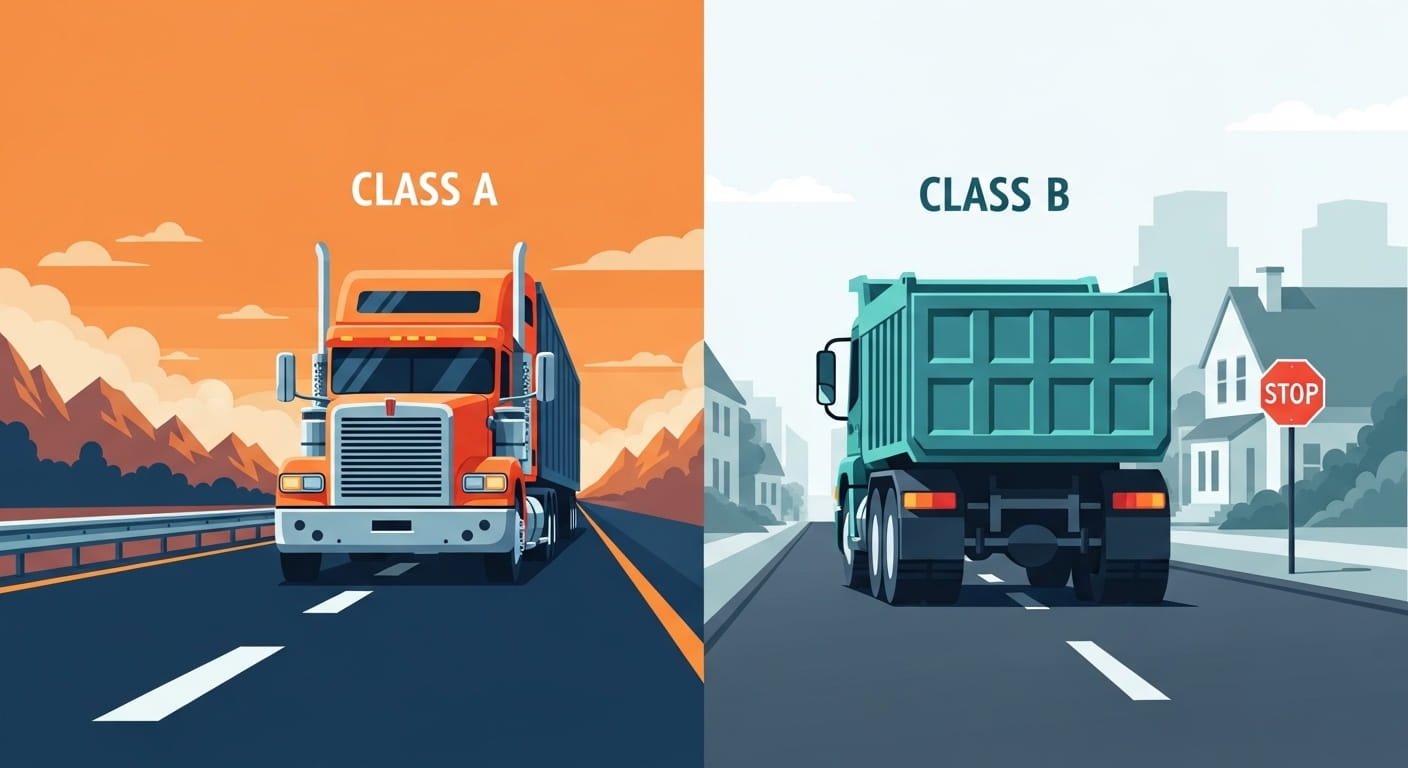
Introduction: Two Different Roads
Imagine two drivers. Sarah drives a 53-foot dry van full of electronics from Atlanta to Dallas. She sleeps in her truck’s sleeper cab and logs interstate miles. Across town, Mike drives a dump truck hauling gravel to local construction sites. He is home every night by 5 PM.
Both Sarah and Mike hold a Commercial Driver’s License (CDL). But they do not hold the same license. Sarah has a Class A. Mike has a Class B.
If you are looking to break into the US trucking industry, understanding the difference between a CDL Class A vs Class B is your first major decision. Pick the wrong one, and you could end up stuck in a job you hate—or missing out on higher pay.
In this guide, we will settle the CDL Class A vs Class B debate once and for all. You will learn what each license allows you to drive, how much money you can make, and which one recruiters are begging for right now.
What is a CDL Class A?
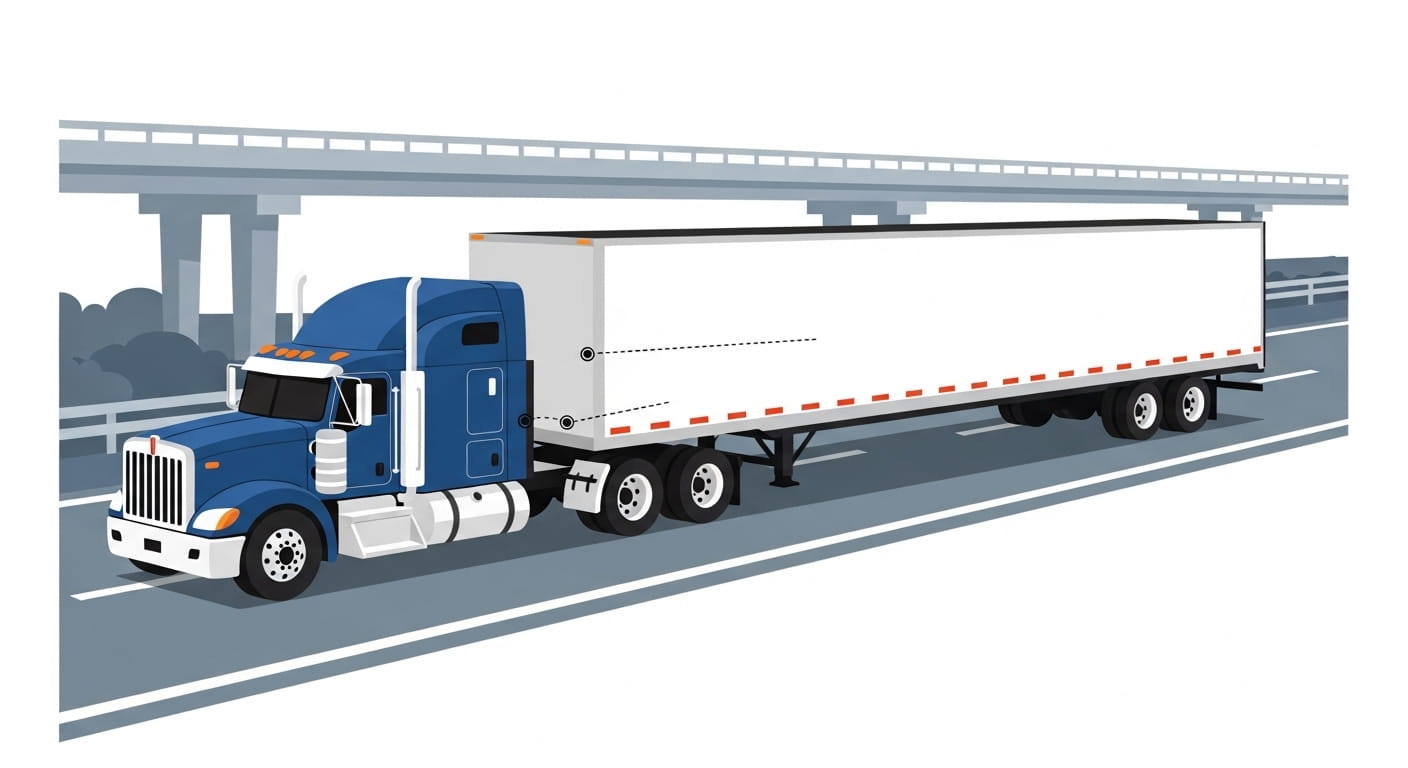
A CDL Class A license allows you to operate combination vehicles with a Gross Combination Weight Rating (GCWR) of 26,001 pounds or more. Specifically, the vehicle you are towing must weigh over 10,000 pounds.
In plain English: You can drive a big truck pulling a heavy trailer. Think semi-trucks, tractor-trailers, and “big rigs.”
Common Class A Vehicles:
- Dry vans (standard box trailers)
- Refrigerated units (reefers)
- Flatbeds (hauling lumber or steel)
- Tanker trucks (gas or milk)
- Lowboy trailers (heavy construction equipment)
Who hires Class A drivers?
- OTR (Over the Road) carriers like Swift, Schneider, and Werner
- LTL (Less than Truckload) companies like FedEx Freight and Old Dominion
- Private fleets like Walmart and Pepsi
What is a CDL Class B?
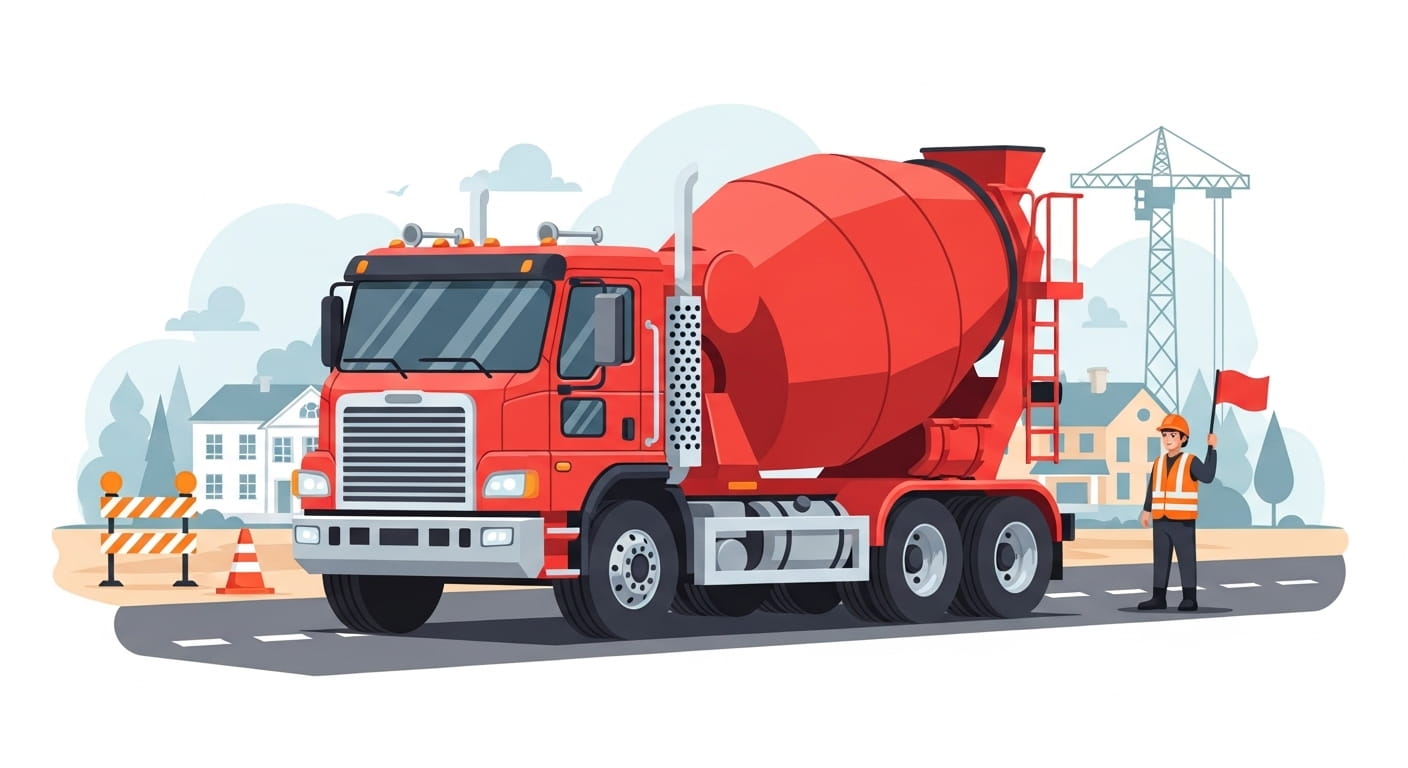
A CDL Class B license allows you to operate single vehicles with a Gross Vehicle Weight Rating (GVWR) of 26,001 pounds or more. You may also tow a vehicle, but it cannot weigh more than 10,000 pounds.
In plain English: You drive one big, heavy truck without a separate heavy trailer. Straight trucks, buses, and dump trucks fall here.
Common Class B Vehicles:
- Dump trucks (with a small pup trailer allowed)
- Garbage trucks (rear-loaders and front-loaders)
- Concrete mixer trucks
- School buses and city transit buses
- Box trucks (like U-Haul’s biggest trucks, but commercial)
Who hires Class B drivers?
- Municipalities (city garbage or snowplow)
- Construction companies
- School districts
- Concrete companies (like Cemex or Vulcan)
The “Big Picture” Difference (Visualized)
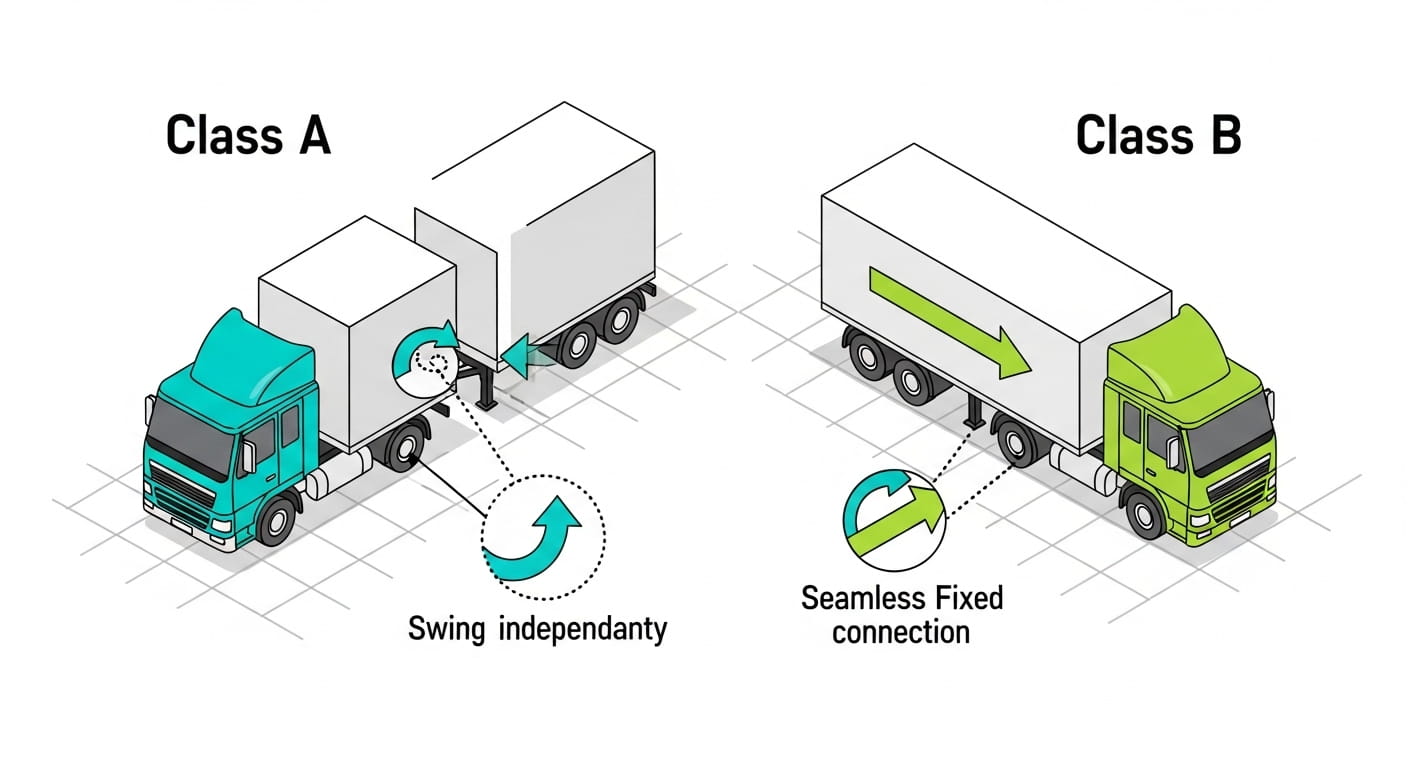
To truly understand the CDL Class A vs Class B distinction, look at the connection between the truck and the trailer.
- Class A: The trailer is articulated. It moves independently from the cab. You need to understand pivot points, kingpins, and 90-degree backing.
- Class B: The cargo area is fixed to the cab. It drives like a very large car or moving truck. Backing up is much easier.
Licensing & Testing: What is harder?
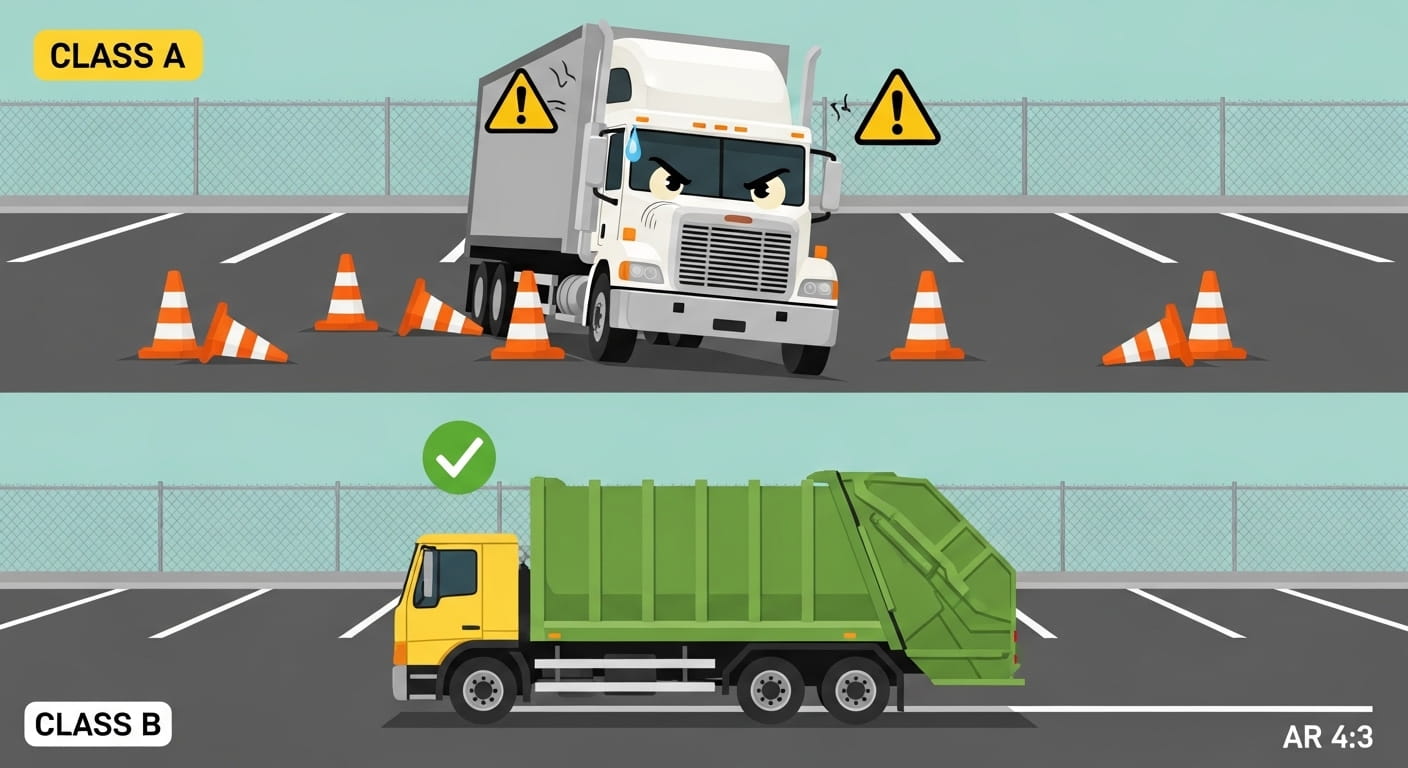
Both licenses require passing the same General Knowledge, Air Brakes (if applicable), and Combination Vehicles (for Class A only) written tests. However, the skills test is where the CDL Class A vs Class B difficulty gap appears.
Class A Skills Test (Harder)
You must demonstrate:
- Pre-trip inspection: Checking 50+ items on the tractor and trailer.
- Basic controls: Straight line backing, offset backing.
- Alley dock backing: You must back the 53-foot trailer into a confined space 90 degrees to the left or right. This fails most new drivers.
Class B Skills Test (Easier)
You must demonstrate:
- Pre-trip inspection: Focusing on the single vehicle (engine, wheels, lights).
- Basic controls: Straight line backing and a simple turn.
- Alley dock: Usually waived or much shorter. You can typically see the corners of your vehicle.
Expert Insight: If you struggle with spatial awareness or get nervous backing a boat trailer, the Class B test is significantly easier to pass on the first try.
Salary Showdown: Which License Pays More?
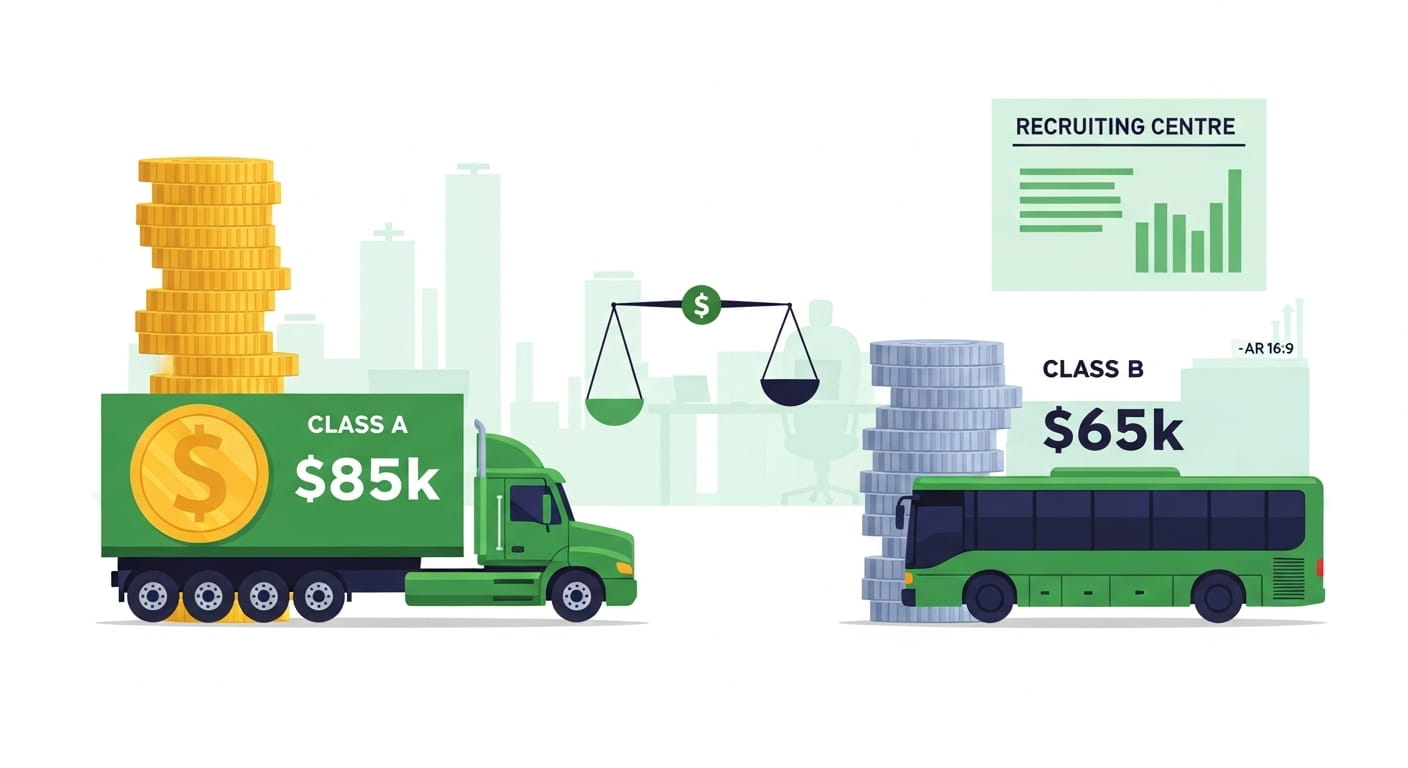
Let’s talk money. Recruiters know that pay is the #1 question for new drivers. Generally, Class A pays more, but not always.
| License Type | Entry Level (0-1 year) | Experienced (3-5 years) | Top Earner |
|---|---|---|---|
| CDL Class A (OTR) | $45,000 – $55,000 | $70,000 – $85,000 | $100k+ |
| CDL Class B (Local) | $40,000 – $48,000 | $55,000 – $65,000 | $80k+ |
Why the gap? Class A drivers haul more valuable freight over longer distances. However, a Class B concrete mixer driver working 60 hours of overtime in the summer can easily out-earn a rookie Class A driver.
The Secret: Class B drivers with Hazmat or Passenger endorsements (driving buses or fuel trucks) often make $75k+, rivaling Class A wages without the overnight travel.
Lifestyle: Home Time vs. Open Road
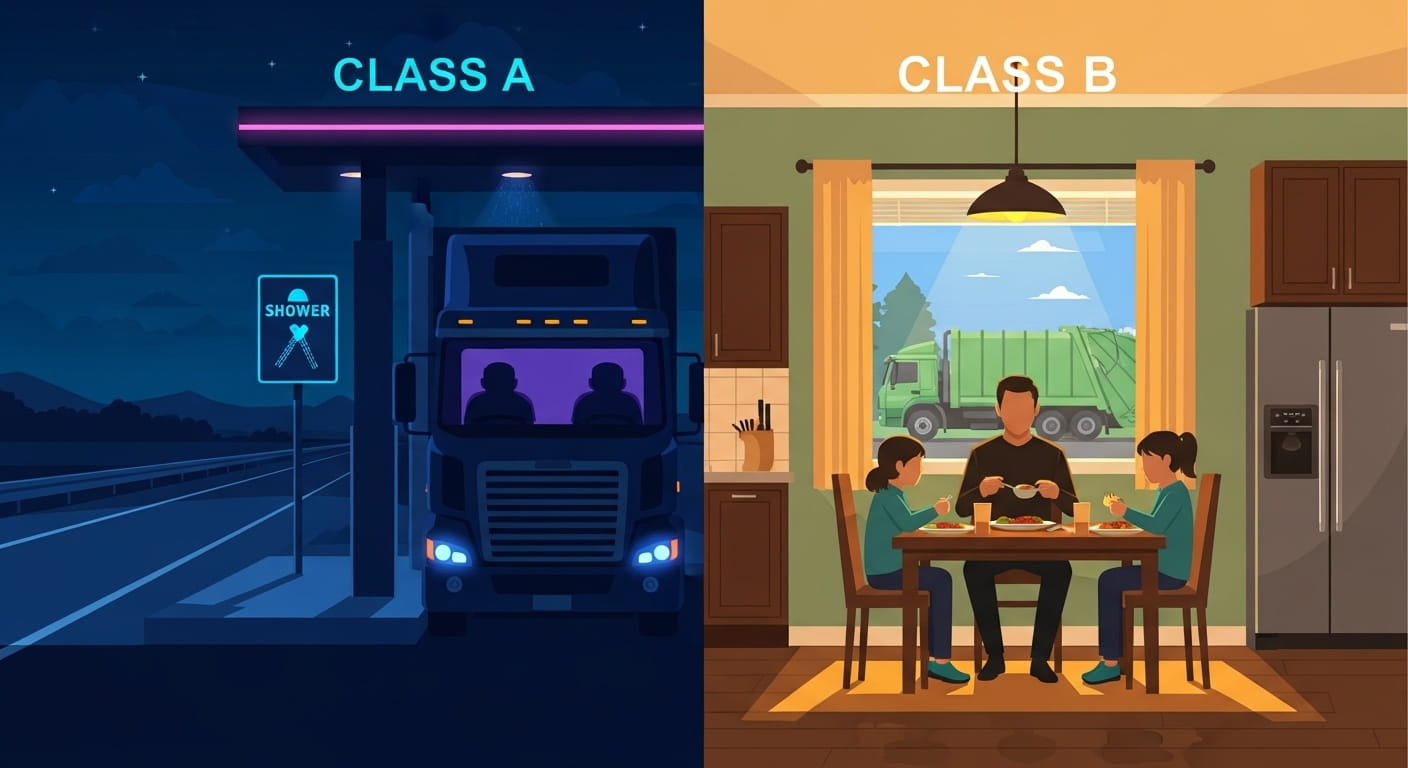
When comparing a CDL Class A vs Class B, your lifestyle is the real deciding factor. Recruiters often lose drivers because they promised one lifestyle but delivered another.
Class A Lifestyle (The Nomad)
- Home Time: Often 3-4 weeks out, 2-3 days home. (Local Class A jobs exist but require seniority).
- Living: You live in the truck. You shower at truck stops.
- Meals: $15 truck stop roller dogs or a $200 mini fridge from Walmart.
- Family: Hard on marriages and seeing kids grow up.
Class B Lifestyle (The Local Hero)
- Home Time: Home every night. Weekends off (usually).
- Living: You sleep in your own bed.
- Meals: Packed lunch from your fridge.
- Family: You are there for soccer practice.
Mini-Story: I once hired a 24-year-old who wanted the “romance of the road.” He got his Class A and loved it for six months. Then his daughter said, “Daddy, the phone lives with you, not me.” He downgraded his license to Class B to drive a garbage truck. He never looked back.
Endorsements: Leveling Up Your License
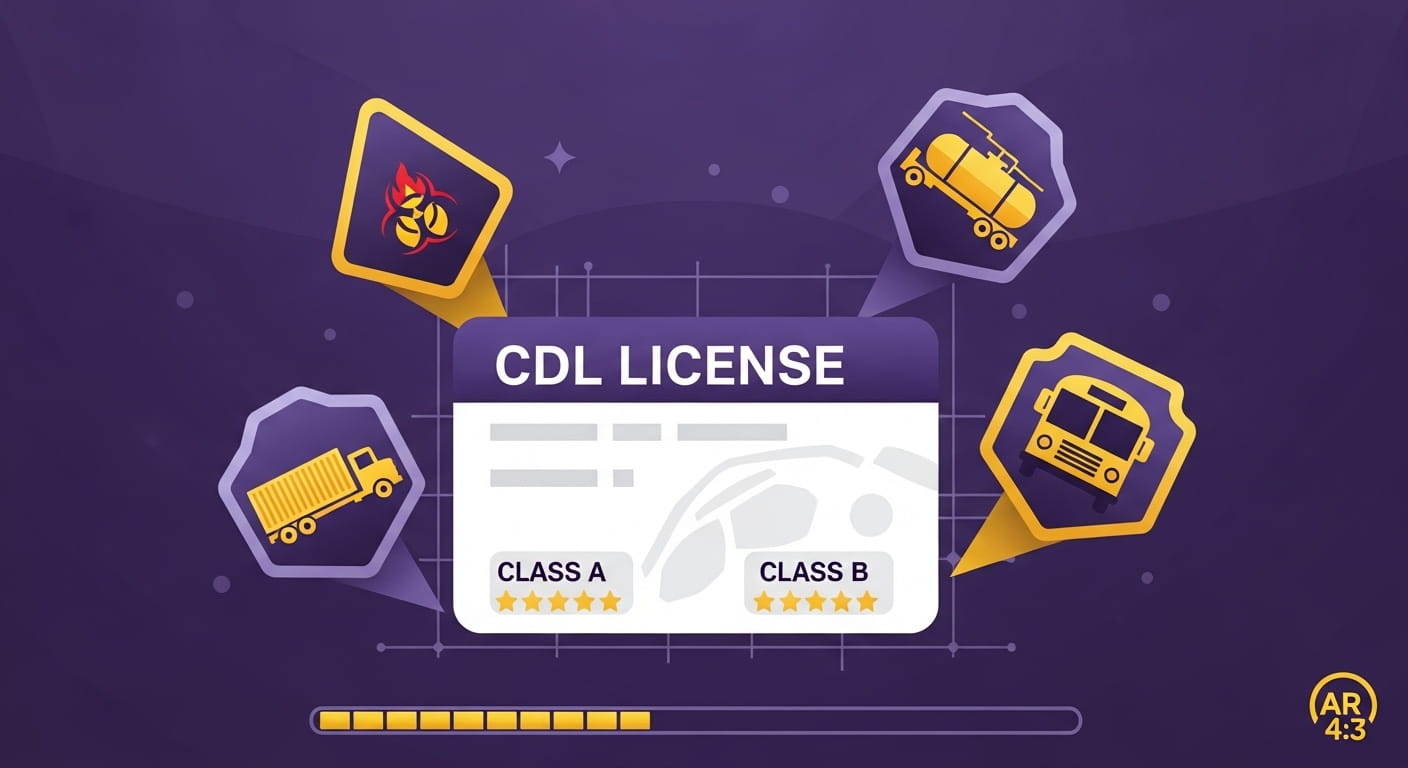
You can add endorsements to both a Class A and Class B. This is where you unlock higher pay.
| Endorsement | Code | Best for Class A | Best for Class B |
|---|---|---|---|
| Hazmat (H) | H | Hauling gasoline or chemicals | Hauling propane or fuel oil |
| Tanker (N) | N | Hauling milk or bulk liquids | Hauling water or septic |
| Doubles/Triples (T) | T | FedEx or UPS road trains | Not applicable |
| Passenger (P) | P | Rare | School bus or tour bus |
| School Bus (S) | S | Never | School district jobs |
Pro Tip for Recruiters: When searching for drivers, filtering for Class B with Passenger (P) endorsement yields the highest retention rate. Bus drivers are incredibly loyal.
Which One Should YOU Choose? (The Decision Tree)
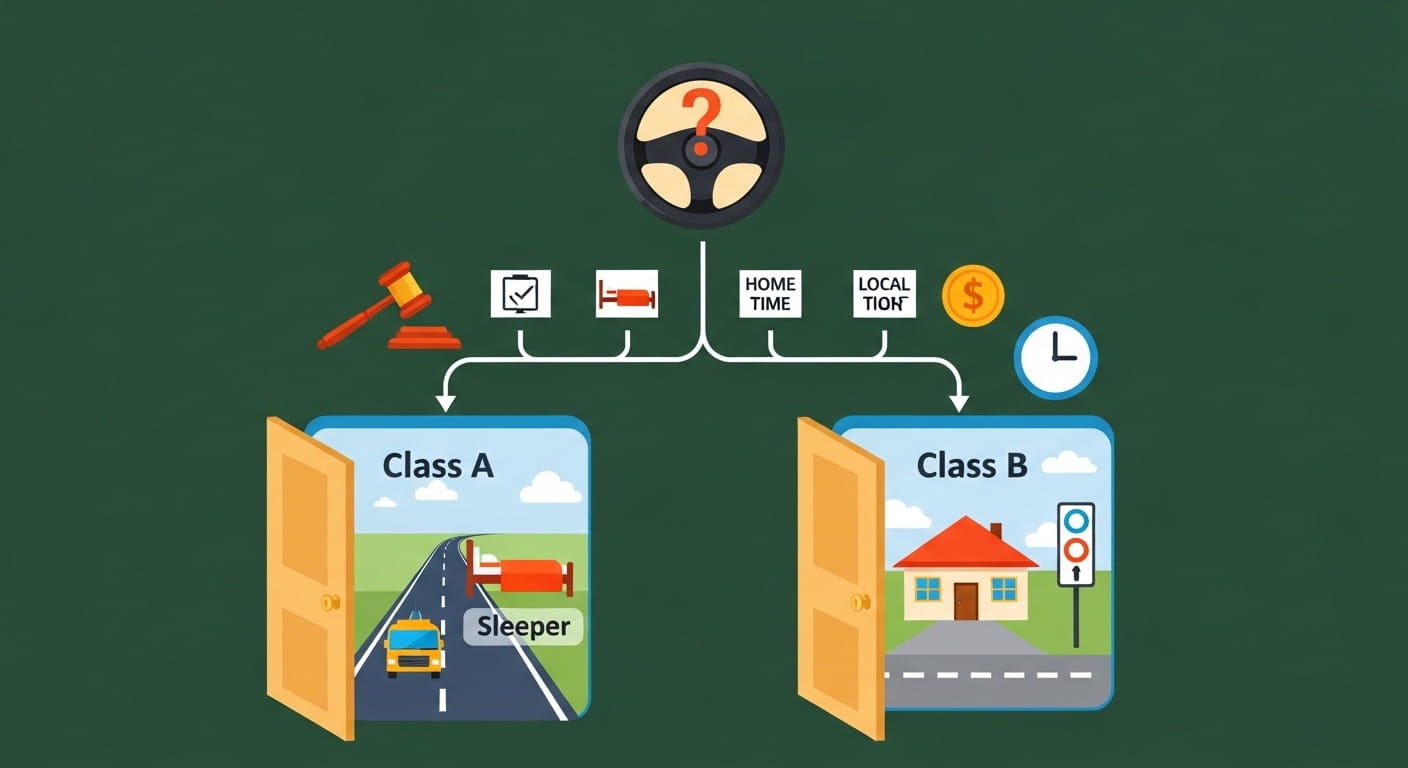
If you are still stuck on the CDL Class A vs Class B choice, answer these three questions.
Question 1: Do you have a felony or bad driving record?
- Yes: Choose Class B. Local employers (garbage, construction) are more forgiving than big interstate carriers.
- No: Proceed to Q2.
Question 2: Do you want to sleep in your own bed every night?
- Yes: Choose Class B. Local Class A jobs exist, but they are competitive.
- No (I like adventure): Choose Class A. Go OTR.
Question 3: Do you have $6,000+ for training?
Yes (I have savings): Choose Class B. Private CDL schools for Class B are cheaper ($3,000 – $5,000) and faster (3 weeks).
No (I need a grant/company sponsorship): Choose Class A. Mega carriers like CRST and Prime Inc. will pay for your Class A training in exchange for a 1-year contract.
Ready to stop dreaming and start driving?
Fill out the form and a Remms recruiter will reach out within one business day. No spam, no pressure — just real results.
Submit Driver ProfileFrequently Asked Questions:
Can I get a CDL license if I have a DUI?
How do I get a CDL license without going to school?
Do I need to speak perfect English to get a CDL?
Do I need the Air Brake endorsement for both?
Can you drive a Class A vehicle with a Class B license?
Can you drive a Class A vehicle with a Class B license?
Is it easier to get a job with Class A or Class B?
How do I upgrade from Class B to Class A?
Do I need a CDL for a 26-foot box truck?
Conclusion: The Verdict
So, CDL Class A vs Class B—which wins? It depends on your life stage.
Get your Class A if: You are young, single, want to see the country, and are willing to live in a truck for two years to pay off debt and save $50k.
Get your Class B if: You have a family, hate highway driving, want to work in construction or local services, or prefer a predictable 6 AM to 3 PM schedule.
For recruiters reading this: When targeting potential drivers, remember that Class A candidates are chasing salary numbers. Class B candidates are chasing lifestyle and home time. Sell the right benefit to the right audience.
Whichever path you choose, the US trucking industry needs you. Get that DOT physical, study your general knowledge, and get behind the wheel.