
If you have been behind the wheel of a semi for a few years, you have probably heard the whisper. It comes during a long haul across I-80 or while waiting for a shipper to finally release your load. The whisper says: “What if I did this for myself?”
That question eventually leads every driver to Google to search for one specific phrase: what is owner operator trucking.
In simple terms, an owner-operator is a truck driver who owns their rig and works as an independent business owner. But as any veteran driver will tell you, the definition only scratches the surface. This guide breaks down exactly what it means to run your own show, how the money actually works, and whether the leap is right for you.
The Simple Definition: Employee vs. Business Owner
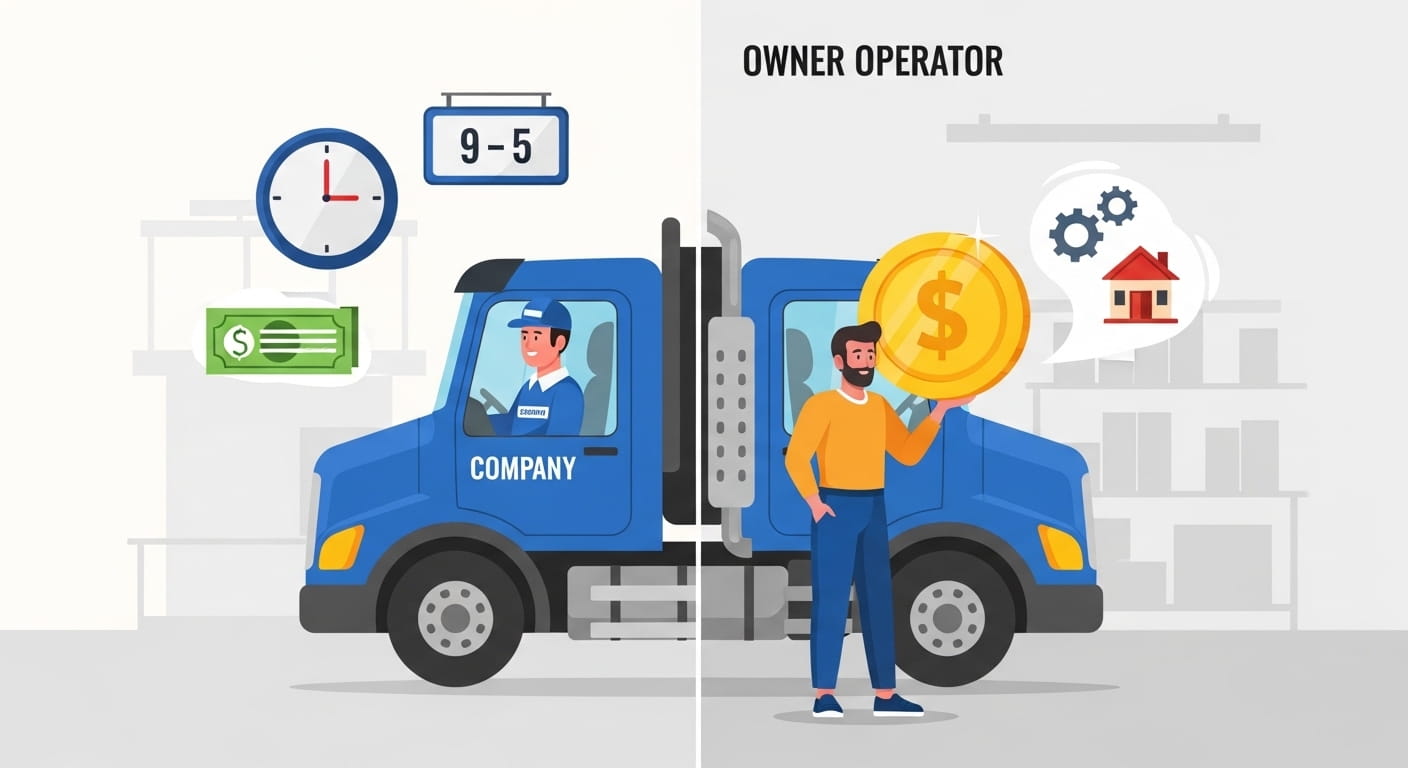
Before we dive into profit margins and authority headaches, let’s clarify the core difference between a company driver and an owner-operator.
- Company Driver: You drive a truck owned by a carrier. The company pays for fuel, maintenance, insurance, and tolls. You get a paycheck (usually per mile or a percentage). You clock in, drive, and clock out.
- Owner Operator: You own (or are financing) the truck. You are legally a small business. You pay for everything—fuel, tires, repairs, insurance, and washing. In return, you keep all the revenue from the loads you haul.
The Golden Rule of Owner Operator Trucking: You do not get paid for driving. You get paid for solving logistics problems. The truck is just your tool.
Why Would a Driver Become an Owner-Operator?
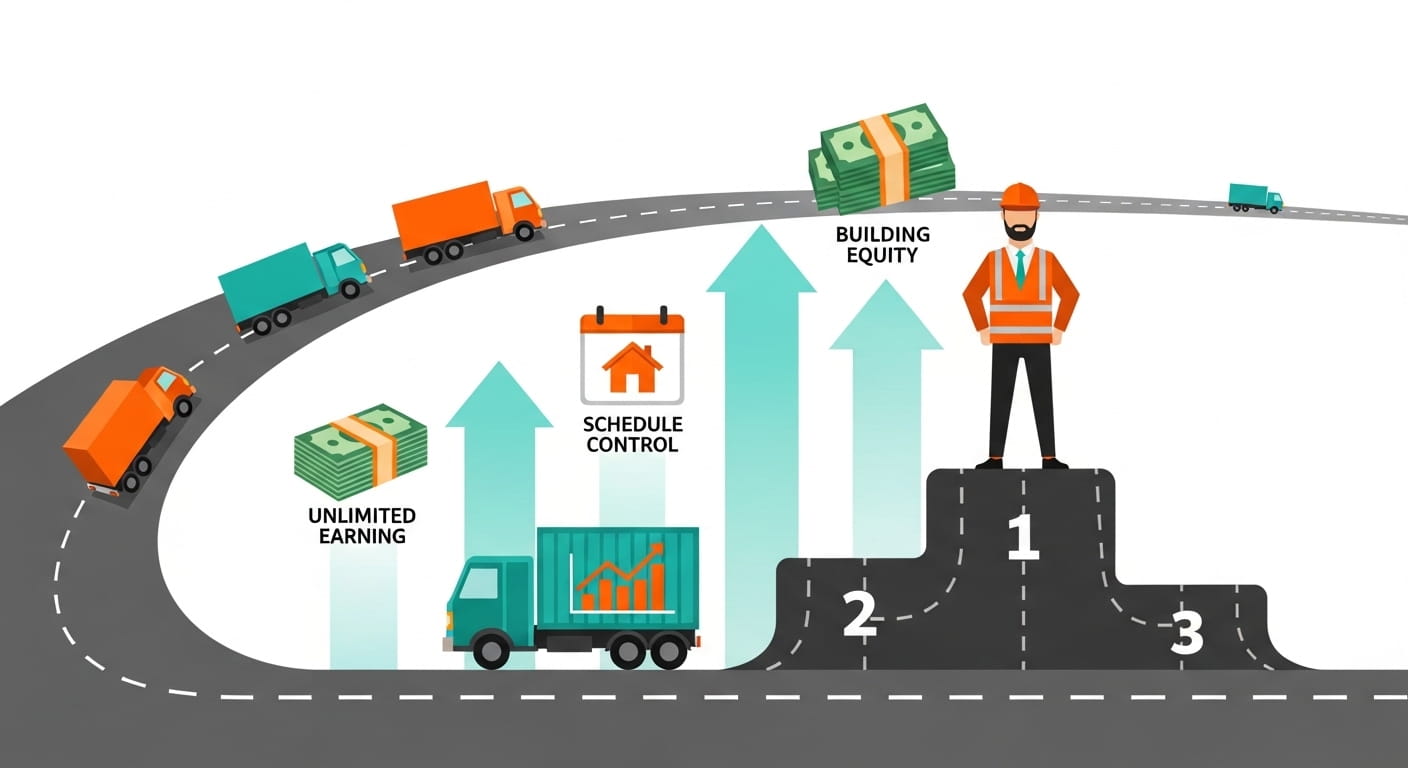
Money is the headline, but it is rarely the whole story. In our conversations with drivers across Texas, Ohio, and Florida, three specific motivations come up constantly.
1. Unlimited Earning Potential (Sort Of)
As a company driver, you cap out at $0.55 to $0.70 per mile. As an owner-operator, you can earn $1.50 to $3.00+ per mile depending on the freight. However—and this is a big “however”—you also pay $0.80 to $1.20 per mile in operating costs. The gap between those numbers is your take-home.
2. Schedule Control (The Dream)
Want to be home for your daughter’s soccer game? As an employee, you ask permission. As an owner-operator, you tell the broker, “I am not accepting loads after Tuesday.” Of course, if you stop driving, you stop earning. But the control is real.
3. Building Equity
A company truck is a rental. Your own truck is an asset. Every payment builds ownership. After three to five years, you own a machine worth $40,000 to $80,000 free and clear.
Mini-Story: Meet “Dave from Oklahoma.” Dave drove for a mega-carrier for eight years. He felt stuck at $75k per year. In 2021, he bought a used 2019 Freightliner Cascadia. His first year as an owner-operator was chaos—$18,000 in unexpected repairs. Year two, he cleared $118k after expenses. He now works four days a week. Dave says: “I don’t make money every month. But the months I win, I win big.”
The Two Paths: Lease Purchase vs. Independent Authority
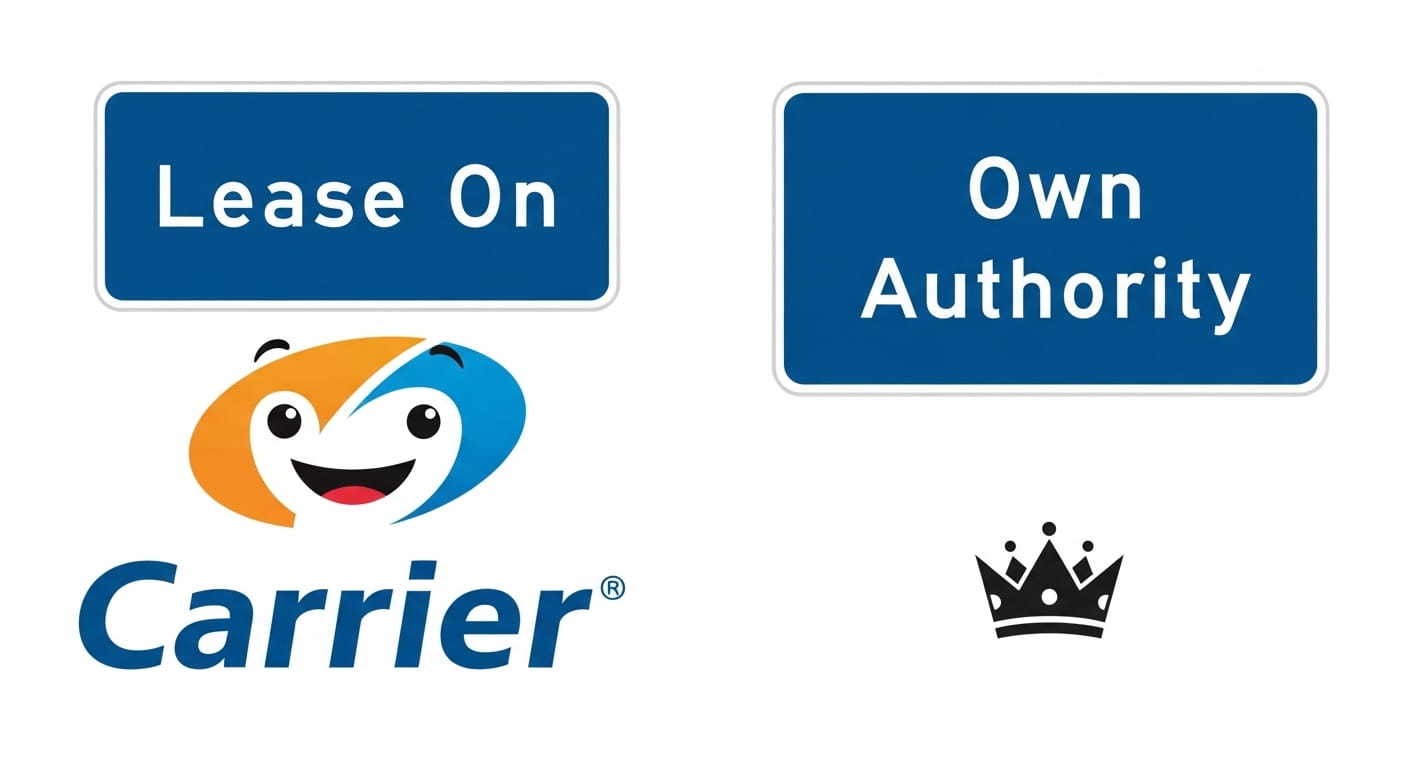
When researching what is owner operator trucking, you will discover two distinct business models. One is safer but less profitable. One is risky but offers total freedom.
Path A: Leased On (The “Easy” Button)
You own the truck, but you sign a lease agreement with a larger carrier (Schneider, Landstar, Mercer, etc.).
- Pros: They handle insurance, fuel discounts, and compliance. You use their operating authority (MC number).
- Cons: You pay the carrier 20% to 35% of your gross revenue. They control your dispatch.
- Best for: First-time owner-operators who want training wheels.
Path B: Fully Independent (Your Own Authority)
You apply for your own USDOT number and Motor Carrier (MC) number from the FMCSA.
- Pros: You keep 100% of the load revenue. You choose any broker or direct shipper.
- Cons: You buy your own liability insurance ($12k–$18k/year minimum). You file quarterly taxes. You handle all drug and alcohol clearinghouse compliance.
- Best for: Veterans with 5+ years experience and $15k in savings.
Expert Insight: Most drivers who ask “what is owner operator trucking” actually want Path B, but they need Path A for the first 12 months. Do not skip the learning curve. The FMCSA does not care if you are broke. They care if you have insurance.
The Real Math: Revenue vs. Profit (What Recruiters Don’t Say)
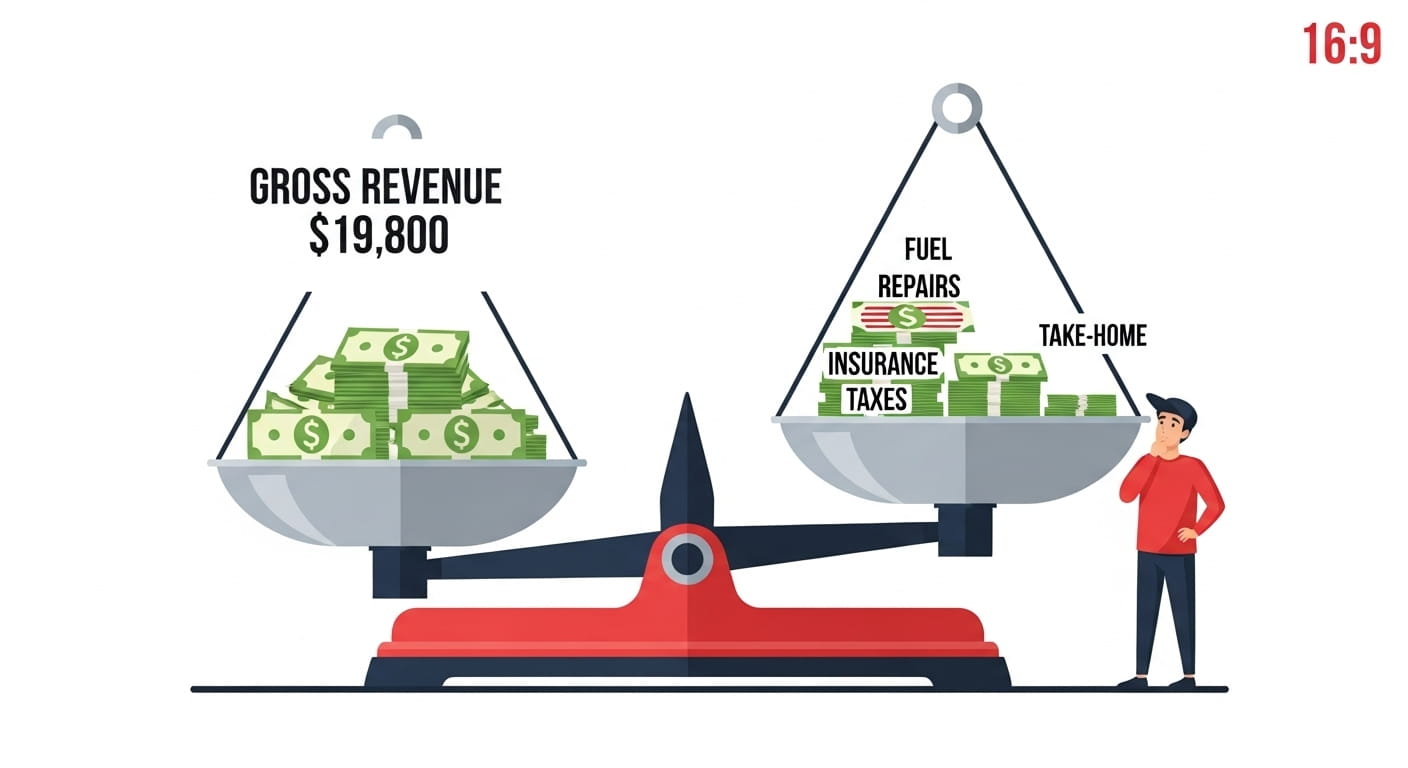
Recruiters love to tell you, “You can gross $250,000 per year!” And they are not lying. You can gross $250k. But gross revenue does not pay for a blown transmission.
Let’s break down realistic monthly numbers for a solo dry van operator running 9,000 miles per month.
| Item | Cost (Monthly) |
|---|---|
| Gross Revenue (2.20/mile) | $19,800 |
| Fuel ($4.20/gal @ 7 mpg) | -$5,400 |
| Truck Payment | -$1,800 |
| Insurance (Cargo/Liability/Physical Damage) | -$1,200 |
| Maintenance & Tire Fund | -$1,000 |
| Tolls & Permits | -$250 |
| ELD, Phone, Software | -$150 |
| Net Profit (Before Tax) | $10,000 |
That looks great—$10k profit. But wait. You still owe self-employment tax (15.3%) and income tax (roughly 22%). After taxes, your take-home is roughly $6,500 per month. Plus, you worked 280 hours driving and 40 hours doing paperwork.
The Hard Truth: Owner-operator trucking is not a get-rich-quick scheme. It is a small business where the owner works 60+ hours per week to replace a $80k company driver salary with a $100k profit.
How to Start Your Owner Operator Career (6 Steps)
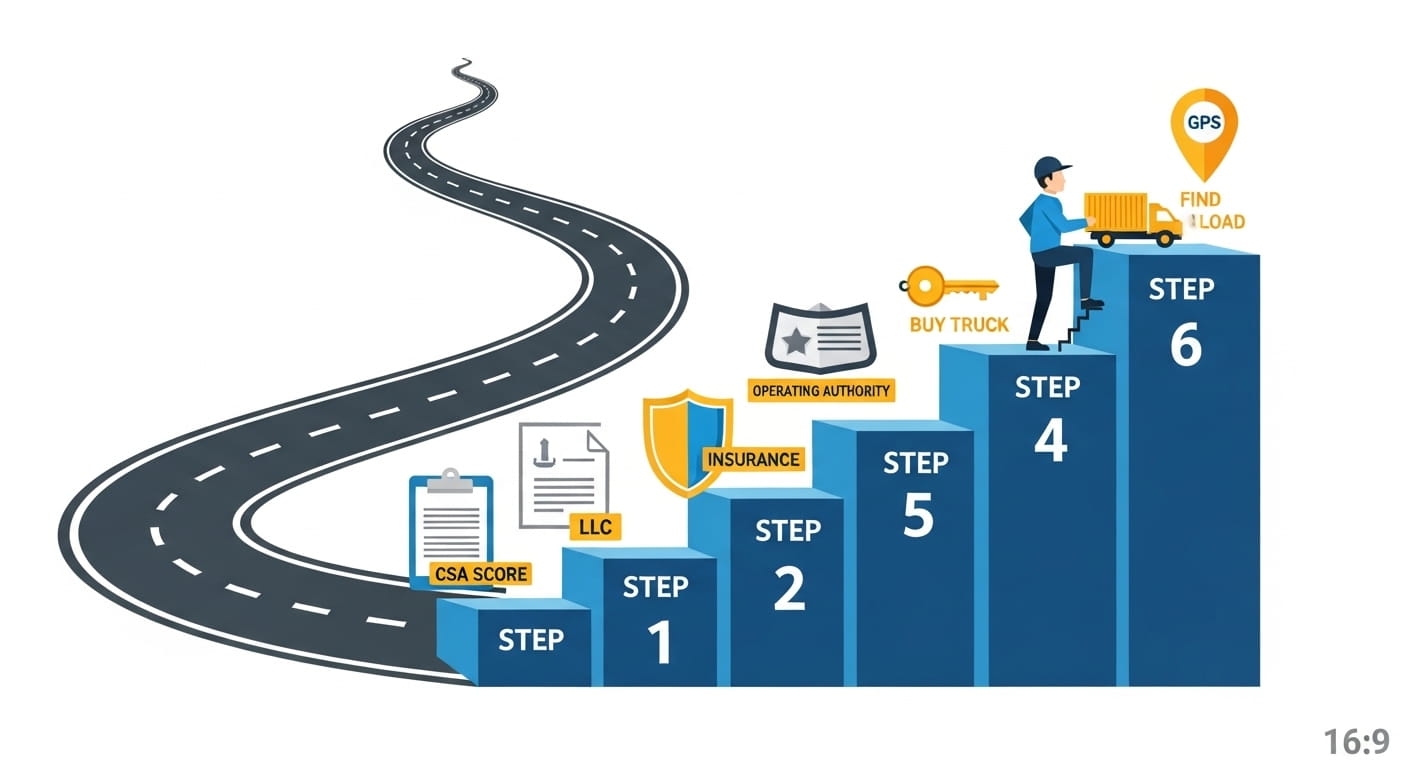
If you are convinced that what is owner operator trucking sounds like your future, follow this roadmap.
Step 1: Clean Your CSA Score.
Any violations in the last 12 months will make insurance unaffordable. Fix your hours of service (HOS) discipline first.
Step 2: Form a Legal Entity.
Do not run as a sole proprietor. Form an LLC or S-Corp. This protects your personal house if you crash into a bridge.
Step 3: Secure Operating Authority (If Going Independent).
Apply for USDOT and MC numbers on the FMCSA website. Budget $300 in fees and 30 days for processing.
Step 4: Get Insurance Quotes.
Call three commercial trucking agents (not Geico or Progressive consumer lines). Get quotes for $1 million liability plus cargo.
Step 5: Buy Your Truck.
Avoid “glider kits” unless you are a mechanic. Avoid new trucks unless you have $50k down. Look for a used 2018–2022 Volvo or Freightliner with 400k–500k miles.
Step 6: Find Your First Load.
Start with load boards (DAT TruckersEdge or Truckstop.com). Take small, easy loads. Do not chase $4/mile loads that require going into Brooklyn on your first week.
The Emotional Reality: Loneliness vs. Liberation

We have talked about money, insurance, and compliance. But what is owner operator trucking emotionally?
It is sitting in a truck stop in Gary, Indiana, at 2:00 AM, trying to find a mobile mechanic because your alternator died 200 miles from home. It is also calling your wife and saying, “I made $3,200 today. I am parking for the weekend.”
The freedom is real. The stress is real. Owner-operators have higher rates of burnout than company drivers because the mental load never stops. You are dispatcher, mechanic, accountant, and driver all in one.
Pro Tip: The most successful owner-operators join a “small fleet” affiliation. Groups like OOIDA (Owner-Operator Independent Drivers Association) offer legal help, fuel discounts, and—most importantly—a phone number to call when you feel lost.
Searching Your Next Trucking Job?
Fill out the form and a Remms recruiter will reach out within one business day. No spam, no pressure — just real results.
Submit Driver ProfileConclusion: Is the Steering Wheel Worth It?
So, what is owner operator trucking? It is the last meritocracy in America. If you drive well, manage money tightly, and treat your truck like a surgical instrument, you can build real wealth. If you are lazy, disorganized, or unlucky, you will lose your truck and your savings.
Start small. Lease onto a decent carrier for six months. Save every penny. Then buy a used truck in cash if possible. Ignore the shiny new Peterbilts. Ignore the Instagram influencers showing stacks of cash. Focus on one thing: keeping your wheels turning at a low cost per mile.
Trucking is a lifestyle. Owner-operator trucking is a war. But for those who win, the road feels a little straighter, the sunsets look a little better, and the paycheck feels completely yours.