
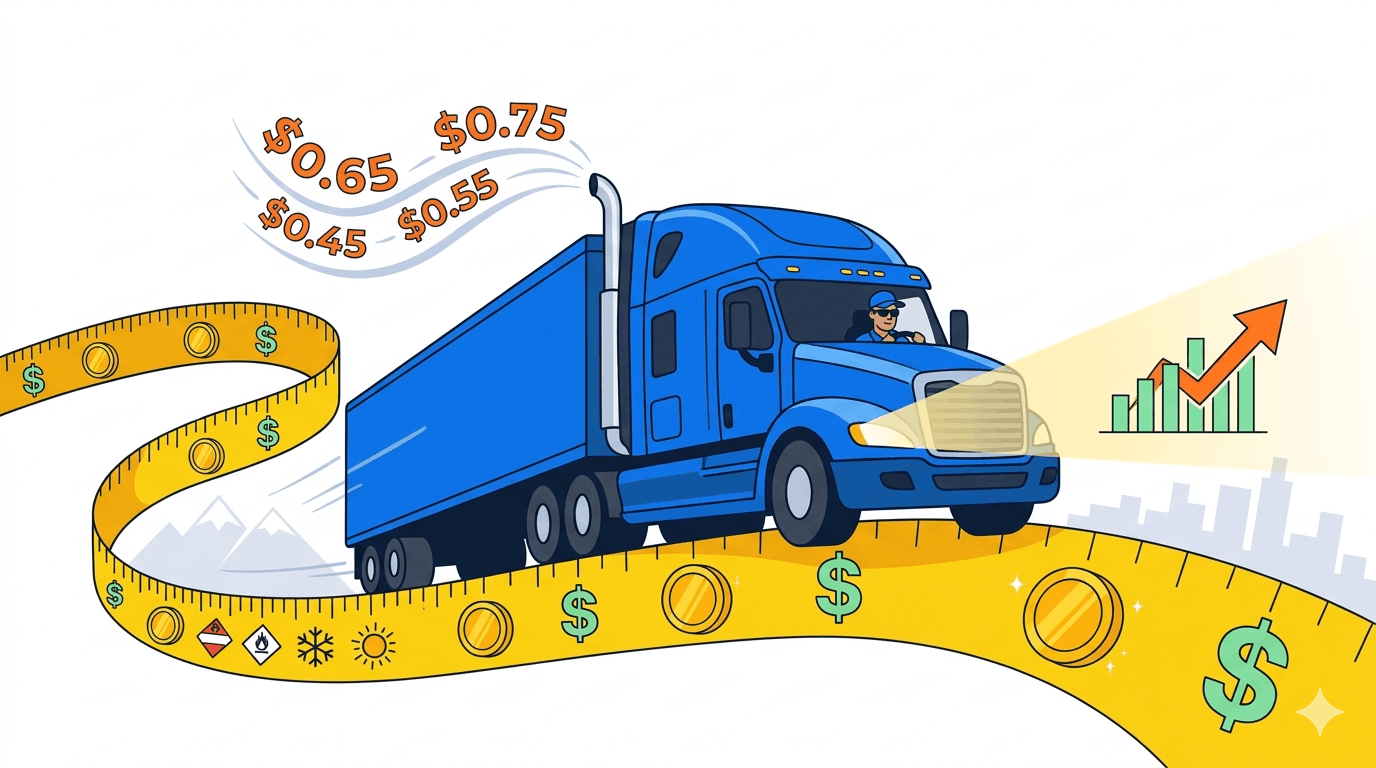
If you’re considering a career behind the wheel or simply curious about the financial realities of the open road, few questions are more important than this: how much do long haul truckers make per mile?
It is the fundamental metric that determines weekly paychecks, annual earnings, and overall financial stability for millions of American drivers. The short answer is that long haul truckers typically earn between $0.45 and $0.75 per mile as company drivers, with experienced professionals and specialized haulers commanding rates at the higher end of that spectrum.
However, the full picture involves far more nuance ranging from freight type and route length to employment status and regional demand.
This comprehensive guide breaks down exactly how much do long haul truckers make per mile in 2026, explores the factors that push rates up or down, and provides actionable strategies to maximize your earnings on every mile.
Understanding the Cents-Per-Mile (CPM) Pay Structure
Before diving into specific numbers, it is essential to understand how per-mile compensation actually works. The vast majority of long haul and over-the-road (OTR) drivers are paid using the cents-per-mile (CPM) model.
Under this system, drivers earn a fixed rate for every mile they drive. For example, if a job pays $0.55 per mile and the driver covers 2,500 miles in a week, the base earnings come to roughly $1,375 before bonuses or additional pay.
This structure directly rewards drivers who cover a lot of ground, which is precisely why it remains the backbone of compensation for long haul positions.
It is transparent, performance-based, and allows drivers to calculate their expected earnings based on the miles they run.
So, how much do long haul truckers make per mile under this system?
The average CPM rate for experienced long haul drivers in 2026 ranges from $0.45 to $0.75 per mile. Some carriers offer starting rates as low as $0.40 for entry-level drivers, while top earners with specialized endorsements can exceed $0.85 per mile.
Average Long Haul Trucker Pay Per Mile in 2026
Based on the most current industry data, here is a breakdown of what long haul truckers can expect to earn per mile in 2026:
| Driver Category | Pay Per Mile Range | Weekly Earnings (2,500–3,000 miles) | Annual Earnings |
|---|---|---|---|
| Entry-Level Company Driver | $0.40 – $0.50 | $1,000 – $1,500 | $45,000 – $65,000 |
| Experienced Company Driver | $0.50 – $0.65 | $1,250 – $1,950 | $55,000 – $85,000 |
| Top-Tier Company Driver (Specialized) | $0.65 – $0.85+ | $1,625 – $2,550+ | $85,000 – $100,000+ |
| Team Drivers (Per Driver) | $0.60 – $0.75 | $1,500 – $2,250 | $65,000 – $90,000 |
| Lease Operator / Owner-Operator | Variable (Gross $1.50–$3.00+/mile) | $4,000 – $6,000+ gross | $100,000 – $250,000+ gross |
Sources: According to the Bureau of Labor Statistics, the median annual wage for heavy and tractor-trailer truck drivers was $58,640 in May 2025, up from $57,440 the prior year.
However, OTR-specific roles tend to skew significantly higher because of the mileage volume. ZipRecruiter places the average long-haul company driver salary at $71,196 per year as of May 2026, with experienced drivers earning $90,500 or more.
When asking how much do long haul truckers make per mile, it is important to recognize that the answer varies dramatically based on the type of freight being hauled.
Flatbed, refrigerated (reefer), and heavy-haul loads typically command higher rates due to the complexity and responsibility involved.
Factors That Determine How Much Long Haul Truckers Make Per Mile
Understanding how much do long haul truckers make per mile requires examining the multiple variables that influence CPM rates. Here are the most significant factors:
1. Experience and Endorsements
Experience is one of the strongest predictors of per-mile earnings. Entry-level drivers may start at $0.40 per mile or less, but as they build a safety record and accumulate miles, rates typically increase.
Drivers with hazardous materials (HazMat), tanker, or doubles/triples endorsements usually earn more than standard CDL holders. These specialized certifications demonstrate additional competence and allow carriers to bid on higher-paying freight.
2. Type of Freight and Equipment
Not all freight pays the same. How much do long haul truckers make per mile depends heavily on what they are hauling:
- Dry van (standard freight): $0.45 – $0.65 per mile
- Refrigerated (reefer) : $0.50 – $0.70 per mile
- Flatbed: $0.55 – $0.75 per mile
- Hazmat / Tanker: $0.60 – $0.85+ per mile
- Oversized / Heavy Haul: $0.65 – $0.90+ per mile
Specialized freight requires additional skills, permits, and safety precautions, which translates directly into higher CPM rates.
3. Route Type and Length
Longer routes often come with slightly lower per-mile rates because the carrier’s fixed costs are spread across more miles.
However, long haul drivers cover significantly more total miles, which often results in higher weekly and annual earnings compared to regional or local drivers.
According to industry data, long haul (>1,000 miles) freight rates average $2.00–$2.80 per mile for the carrier, with driver CPM representing a portion of that total.
4. Company vs. Owner-Operator Status
This is perhaps the most critical distinction when evaluating how much do long haul truckers make per mile. Company drivers receive a consistent CPM rate and have their expenses (fuel, maintenance, insurance) covered by the carrier.
Owner-operators, on the other hand, gross significantly more per mile often $1.50 to $3.00+ but must cover all operating costs out of that revenue.
After expenses, owner-operator net income typically falls in the $80,000 to $150,000 range, depending on lane discipline, fuel efficiency, and broker quality. Gross earnings for OTR owner-operators average around $260,732 annually, but the take-home pay is substantially lower after deducting fuel, maintenance, insurance, permits, tolls, and truck payments.
5. Regional Demand and Location
Pay rates vary significantly by state and region. The highest-paying states for long haul drivers in 2025 are concentrated in the Northeast, the Pacific Northwest, and parts of the Mountain West, where freight demand outpaces local driver supply.
According to BLS data, median annual wages for heavy truck drivers range from around $64,760 in Washington to $70,100 in Alaska. Drivers willing to run in high-demand lanes or less desirable routes can often negotiate higher CPM rates.
6. Team vs. Solo Driving
Team drivers where two drivers share a truck and keep it moving nearly 24/7 typically earn higher per-mile rates. Solo drivers may start at $0.55–$0.60 CPM, while team drivers often command $0.65–$0.75 CPM or more.
Teams cover more miles per week (often 5,000–6,000 miles), resulting in substantially higher weekly earnings despite the split.
7. Freight Market Conditions
The broader freight market significantly impacts how much do long haul truckers make per mile. In 2025, per-mile pay saw its largest quarter-to-quarter gain in over two years, with year-over-year growth climbing steadily.
The third quarter of 2025 saw the largest quarter-to-quarter movement in base mileage pay at for-hire OTR fleets in over two years. These trends suggest that driver pay is responding to ongoing driver shortages and retention challenges.
How Much Do Long Haul Truckers Make Per Mile Compared to Other Pay Structures?
While CPM remains the dominant model for long haul drivers, it is helpful to understand how it compares to other compensation structures:
Hourly Pay
Local and regional drivers are often paid hourly rather than by the mile. Hourly rates for truck drivers typically range from $24 to $32 per hour, with specialized freight or night shifts commanding higher rates.
For long haul drivers, hourly pay is less common because the nature of the work involves long, uninterrupted driving stretches where mileage-based compensation is more straightforward.
Salary Pay
Some trucking jobs offer a straight salary a fixed paycheck regardless of miles driven or hours worked. This provides income stability but limits the upside potential of high-mileage weeks.
Salary positions are more common in specialized logistics, dedicated fleet roles, or hybrid driving-administrative positions.
Percentage of Load
Owner-operators and some experienced company drivers are paid a percentage of the load revenue rather than a fixed CPM rate. This can be highly lucrative when freight rates are strong potentially earning 25% to 30% of load revenue.
However, it introduces income volatility since rates fluctuate with market conditions.
Annual Earnings: Putting Per-Mile Pay in Perspective
To truly understand how much do long haul truckers make per mile, it is helpful to translate CPM rates into annual earnings. Here is a realistic projection based on 2,500–3,000 miles per week:
| CPM Rate | Weekly Miles | Weekly Earnings | Annual Earnings (52 weeks) |
|---|---|---|---|
| $0.45 | 2,800 | $1,260 | $65,520 |
| $0.50 | 2,800 | $1,400 | $72,800 |
| $0.55 | 2,800 | $1,540 | $80,080 |
| $0.60 | 2,800 | $1,680 | $87,360 |
| $0.65 | 2,800 | $1,820 | $94,640 |
| $0.70 | 2,800 | $1,960 | $101,920 |
| $0.75 | 2,800 | $2,100 | $109,200 |
These figures represent base earnings before bonuses, which can add significant additional income. Many carriers offer:
- Sign-on bonuses: $1,000 – $10,000+
- Safety bonuses: $0.01 – $0.05 per mile
- Fuel efficiency bonuses: $0.01 – $0.03 per mile
- Referral bonuses: $1,000 – $5,000 per referral
- Loyalty / tenure bonuses: Incremental CPM increases based on years of service
According to industry data, company drivers (OTR) earn $55,000–$85,000 per year, while long haul drivers specifically average $65,000–$90,000 annually. Top specialized earners can exceed $100,000.
How to Maximize How Much You Make Per Mile as a Long Haul Trucker
If you are wondering how much do long haul truckers make per mile and want to ensure you are earning at the top of the range, consider these strategies:
1. Obtain Specialized Endorsements
Adding HazMat, tanker, or doubles/triples endorsements to your CDL immediately increases your earning potential. Carriers are willing to pay a premium for drivers who can handle specialized freight.
2. Choose the Right Carrier
Not all carriers pay the same CPM rates. Research companies thoroughly and compare offers. Some carriers advertise starting rates up to $0.60 CPM for solo drivers and $0.75 CPM for teams. Look for transparency in pay structures and realistic mileage promises.
3. Consider Team Driving
If you are comfortable sharing a truck with another driver, team driving can significantly boost per-mile earnings while allowing the truck to cover more miles each week. Team rates often start at $0.65–$0.75 CPM per driver.
4. Haul Specialized Freight
Flatbed, reefer, oversized, and heavy-haul loads consistently pay higher CPM rates than standard dry van freight. The additional skills and responsibilities are rewarded with better compensation.
5. Run in High-Demand Lanes
Certain regions and routes consistently offer higher rates due to freight demand and driver shortages. Being willing to run in these areas or accepting less desirable routes can translate into higher CPM.
6. Maintain a Perfect Safety Record
Drivers with clean safety records are more valuable to carriers. Many companies offer safety bonuses and prioritize their safest drivers for the best-paying loads.
7. Track Your Miles and Negotiate
Know your current CPM and weekly mileage. Use this data to negotiate better rates when switching carriers or renewing contracts. Drivers who understand their worth are better positioned to command higher pay.
State-by-State Comparison: Where Do Long Haul Truckers Earn the Most?
The answer to how much do long haul truckers make per mile also depends on where they are based or where they run. According to the Bureau of Labor Statistics, the highest-paying states for heavy truck drivers include:
| State | Median Annual Wage (May 2025) |
|---|---|
| Alaska | $70,100 |
| Washington | $64,760 |
| North Dakota | $63,500+ (estimated) |
| Wyoming | $62,800+ (estimated) |
| Montana | $61,900+ (estimated) |
Source: These states tend to have challenging terrain, extreme weather, or remote locations that make freight more expensive to move and drivers better compensated as a result.
Conclusion: Is Long Haul Trucking Worth It?
So, how much do long haul truckers make per mile in 2026? The answer ranges from $0.40 to $0.85+ per mile for company drivers, with owner-operators grossing significantly more while absorbing their own expenses.
The average long haul company driver earns between $65,000 and $90,000 per year, with top earners surpassing $100,000.
The per-mile pay structure offers transparency and rewards productivity, but it also means earnings fluctuate with mileage availability.
Drivers who strategically choose their freight type, endorsements, carrier, and routes can consistently earn at the higher end of the spectrum. With the trucking industry facing ongoing driver shortages and freight demand remaining strong, wages are likely to continue their upward trajectory.
Ultimately, how much do long haul truckers make per mile is not a single number but a range shaped by experience, specialization, and business acumen. For those willing to invest in their skills, choose the right opportunities, and manage their careers strategically, long haul trucking remains a financially rewarding path one where every mile truly counts.
Frequently Asked Questions:
How much do long haul truckers make per mile in 2026?
How much do long haul truckers make annually?
How are long haul truckers paid?
- CPM (Cents Per Mile) – Most common for company drivers. You are paid a set rate for every mile you drive.
- Percentage of Load – You receive a percentage of the total freight charge (typically 25–35%).
- Hourly or Salary – Less common for OTR, but some carriers offer this structure.
What factors affect long haul trucking pay per mile?
- Experience – More experience typically commands higher rates.
- Freight Type – Specialized freight (tanker, hazmat, oversized) pays more.
- Region – Some regions like Alaska and Washington pay higher rates.
- Equipment – Owner-operators earn more but have higher expenses.
- Carrier – Some carriers pay above-average rates for experienced drivers.
What is the average CPM for long haul truck drivers?
How much do team long haul truckers make per mile?
What is the highest paying freight type for long haul truckers?
- Specialized / Oversized – $3.00–$5.00+ per mile gross
- Tanker – $2.50–$3.20 per mile gross
- Flatbed – $2.25–$3.00 per mile gross
- Refrigerated (Reefer) – $2.00–$2.90 per mile gross
- Dry Van – $1.75–$2.40 per mile gross
How many miles do long haul truckers drive per week?
What states pay the highest wages for long haul truckers?
- Alaska – $70,100 median annual wage
- Washington – $64,760 median annual wage
- North Dakota – $63,500+ estimated
- Wyoming – $62,800+ estimated
- Montana – $61,900+ estimated
How much do owner-operator long haul truckers make per mile?
Do long haul truckers get paid for empty miles?
How much can a long haul trucker make with endorsements?
- Hazmat (H) – +$5,000–$10,000 annually
- Tanker (N) – +$4,000–$8,000 annually
- Doubles/Triples (T) – +$3,000–$6,000 annually
- All three combined – +$15,000–$20,000 annually
Ready to stop dreaming and start driving?
Fill out the form and a Remms recruiter will reach out within one business day. No spam, no pressure — just real results.
Submit Driver Profile\