
Every day, you see them on the highway. Huge 18-wheelers hauling food, fuel, and furniture from coast to coast.
Have you ever thought, “I could do that”?
You are not alone. Right now, American companies are desperate to hire qualified truck drivers. The average age of a driver is rising, and freight is not moving itself.
If you want a career with job security, independence, and no student debt, learning how to become a truck driver in USA is a smart move. You don’t need a four-year degree. You need a plan.
This guide breaks down exactly what you need from getting your Commercial Driver’s License (CDL) to landing your first high-paying job.
Why Become a Truck Driver in 2026?
Before we dive into the steps, let’s talk about the lifestyle. This isn’t a desk job. You will see the country. Many drivers earn between $50,000 and $90,000 their first year.
More importantly, the industry offers flexibility.
Do you want to be home every night?
Drive locally.
Do you want to maximize savings?
Go over-the-road (OTR) for three weeks and take a week off.
Because the demand is so high, many companies now pay you while you train. That is a huge advantage if you want to switch careers but cannot afford to stop working.
Step 1: Check the Basic Requirements
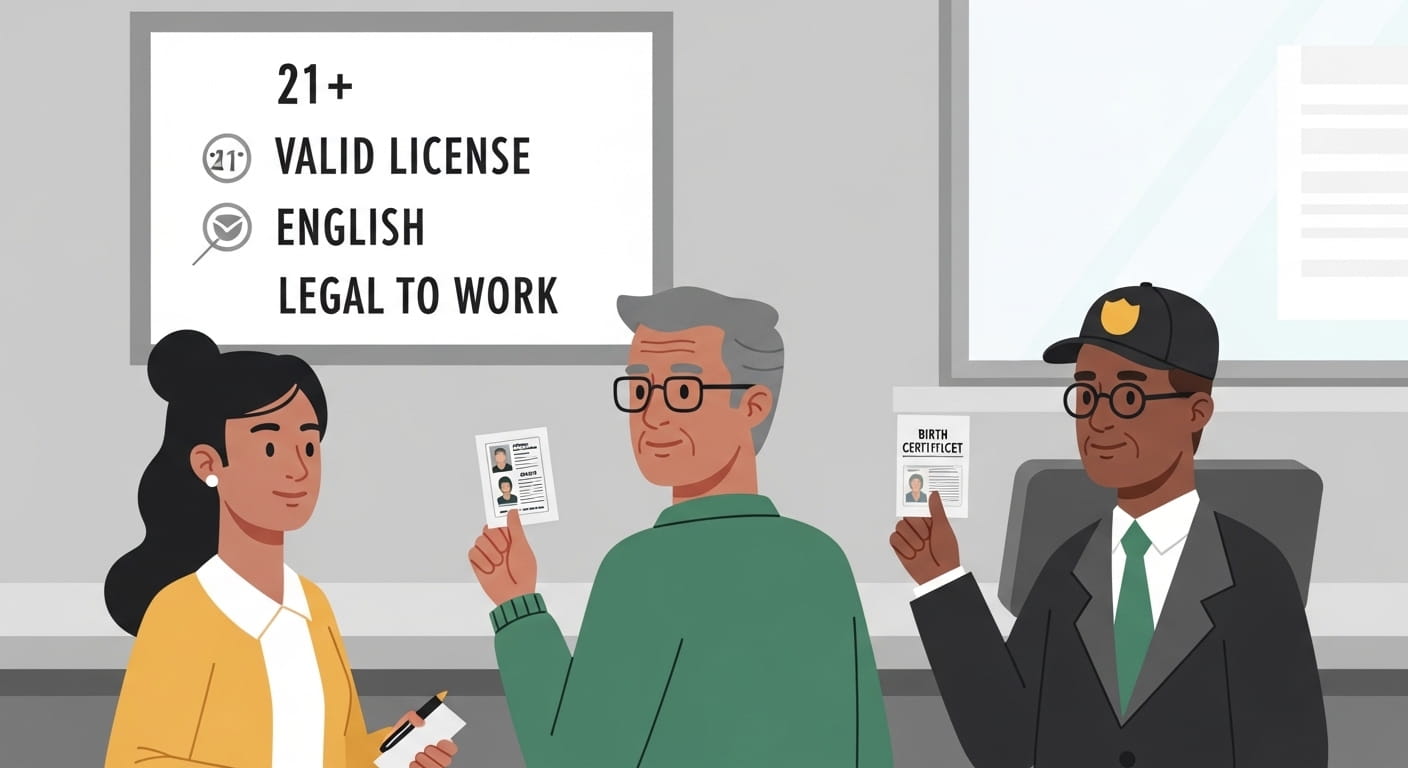
To become a truck driver in USA, you must meet federal minimum standards. These are non-negotiable.
- Age: You must be 18 to drive within your state (intrastate). But for high-paying interstate jobs (crossing state lines), you need to be 21.
- License: You need a valid state-issued driver’s license. No exceptions.
- Language: You must be able to read and speak English well enough to read road signs, prepare reports, and talk to law enforcement.
- Citizenship: You don’t need to be a US citizen, but you must be legally authorized to work in the USA (Green Card or work visa).
Step 2: Get Your Commercial Learner’s Permit (CLP)
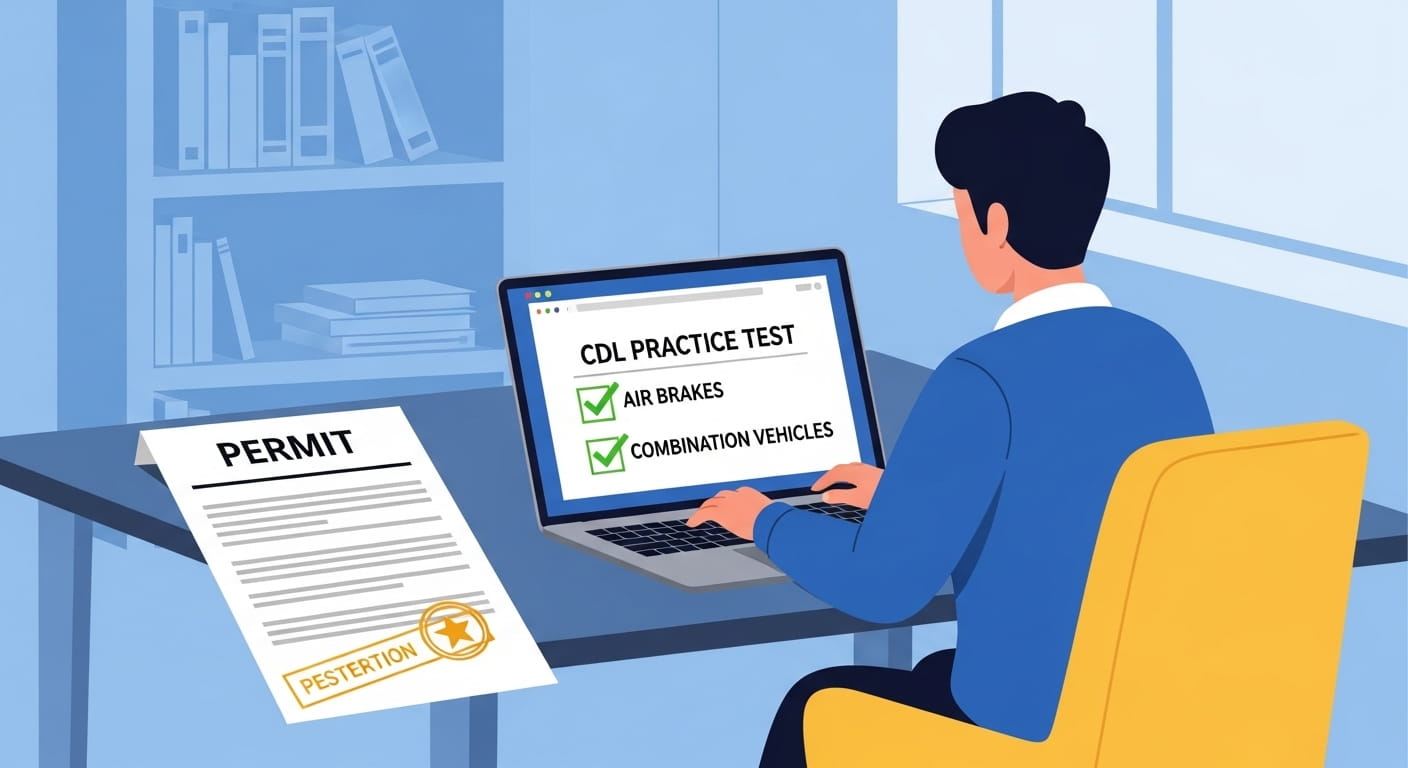
You cannot just hop into a truck. First, you need a permit. The Commercial Learner’s Permit (CLP) is your entry ticket.
To get the CLP, you must pass a written knowledge test at your local Department of Motor Vehicles (DMV). You will study three main areas:
- General Knowledge (Basic driving rules for big trucks).
- Air Brakes (How to stop a heavy vehicle safely).
- Combination Vehicles (How the tractor connects to the trailer).
Once you pass the written test, you get your CLP. You must hold this permit for at least 14 days before you can take the driving test.
Step 3: Choose Your Training Path (School vs. Company)
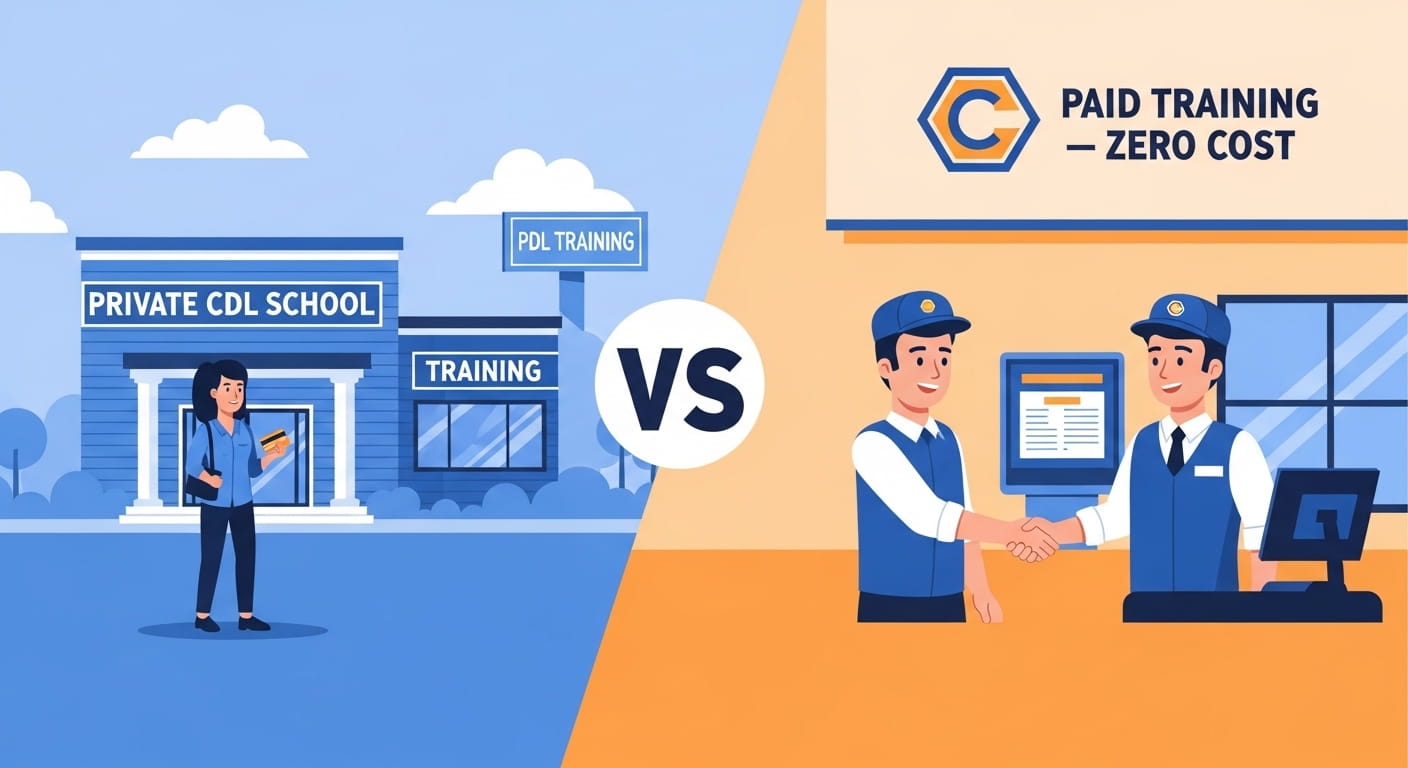
Here is where most people get stuck. How do you actually learn to drive a 70-foot vehicle?
You have three options. Each has pros and cons.
Option A: Private CDL School (Best for control)
You pay $3,000 to $7,000 for 3–8 weeks of training. You use their truck to learn backing, shifting, and highway driving.
- Best for: People who want to choose their first employer freely.
- Downside: Upfront cost.
Option B: Company-Sponsored Training (Best for low budget)
Mega-carriers like Swift, Schneider, or Prime Inc. will pay for your training. In exchange, you sign a contract to work for them for 6–12 months.
- Best for: People who want how to become a truck driver in USA for free.
- Downside: Lower pay during the contract period.
Option C: Community College (Best for financial aid)
Many community colleges offer CDL programs. You can often use federal student aid or workforce grants to pay for these.
- Best for: Veterans using GI Bill or low-income workers seeking grants.
Real story: A former retail manager named Mike took the company-sponsored route. He had $500 in his bank account. Three months later, he had a CDL and a paycheck. He stayed with the sponsor for one year, then left for a local job making $85k.
Real Story: A former retail manager named Mike took the company-sponsored route. He had $500 in his bank account. Three months later, he had a CDL and a paycheck. He stayed with the sponsor for one year, then left for a local job making $85kStep 4: Pass the CDL Skills Test (The “Road Test”)
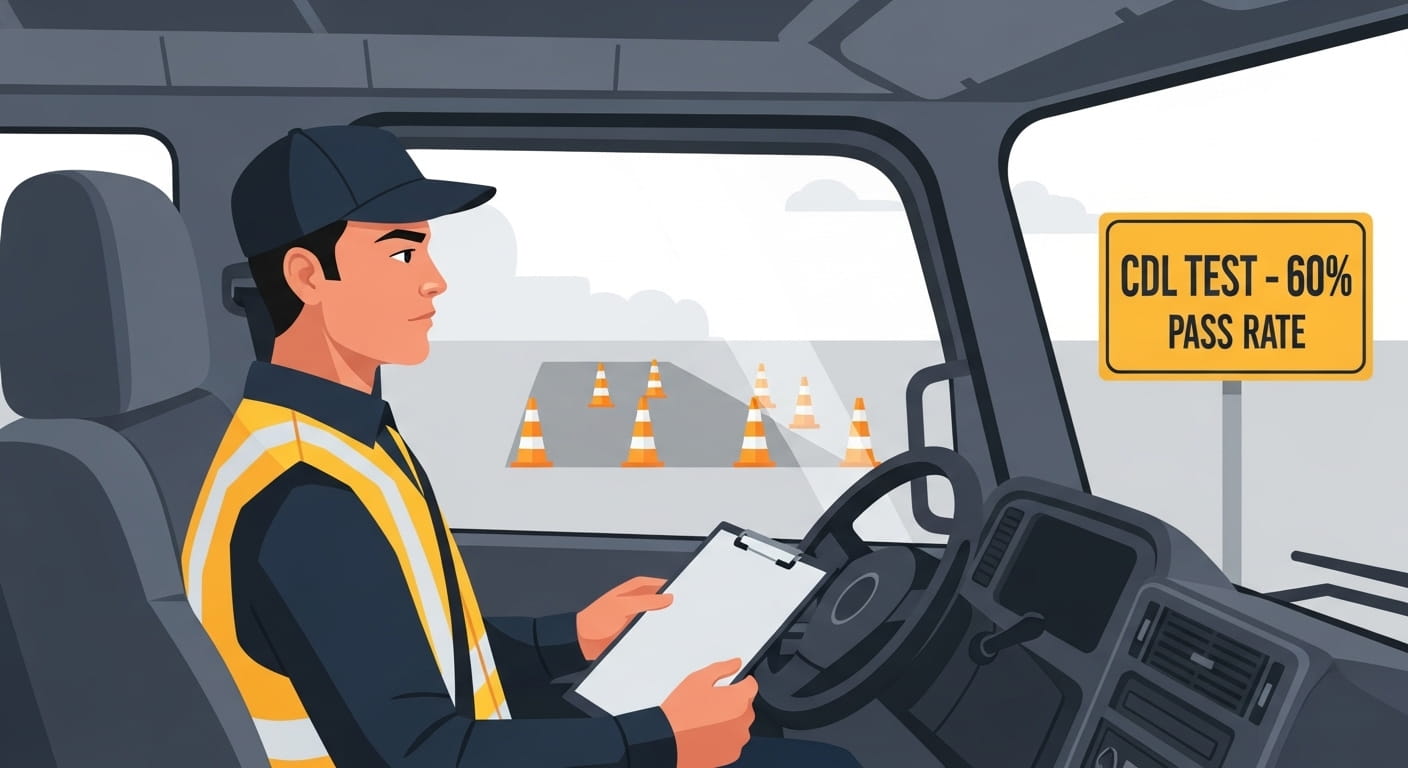
The final boss. The CDL skills test is harder than your regular driver’s test. It has three parts:
- Vehicle Inspection (Pre-trip): You must walk around the truck and explain what you are checking. “Oil level is full. Belts are not frayed. Lights are functioning.” You cannot miss more than a few items.
- Basic Controls: Backing up in a straight line, offset backing, and alley docking. This is where most students fail initially. Practice backing every single day.
- Road Test: You drive with an examiner for 30–45 minutes. They watch for shifting smoothness, following distance, and railroad crossing protocol.
Pass rate reality: First-time pass rates are about 60% for the full test. Do not get discouraged if you fail the backing portion. Most states let you retake the specific section you failed.Step 5: Pass the DOT Physical and Drug Test
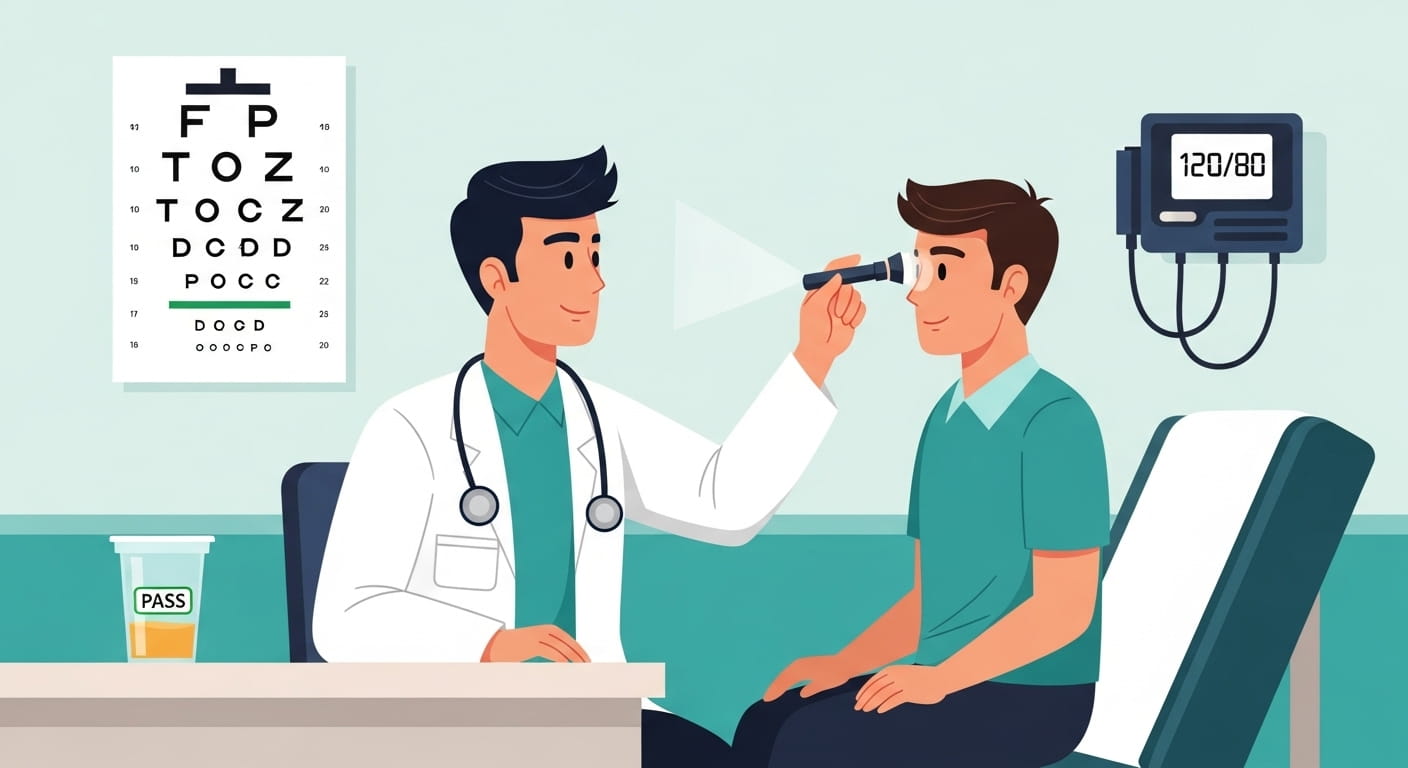
Trucking is regulated by the Department of Transportation (DOT). Before you get hired, you must pass a physical exam.
The DOT physical checks:
- Vision: 20/40 in each eye (with glasses or contacts allowed).
- Hearing: Must hear a forced whisper from 5 feet away.
- Blood Pressure: Under 140/90 (you can get a one-year card if slightly higher).
- Drug Screen: Urine test for marijuana, cocaine, amphetamines, and opiates.
Critical warning: Even if you live in a state where marijuana is legal (like California or Colorado), federal law bans it for truck drivers. A positive drug test goes into a national clearinghouse. You will lose your chance to become a truck driver in USA for at least a year.
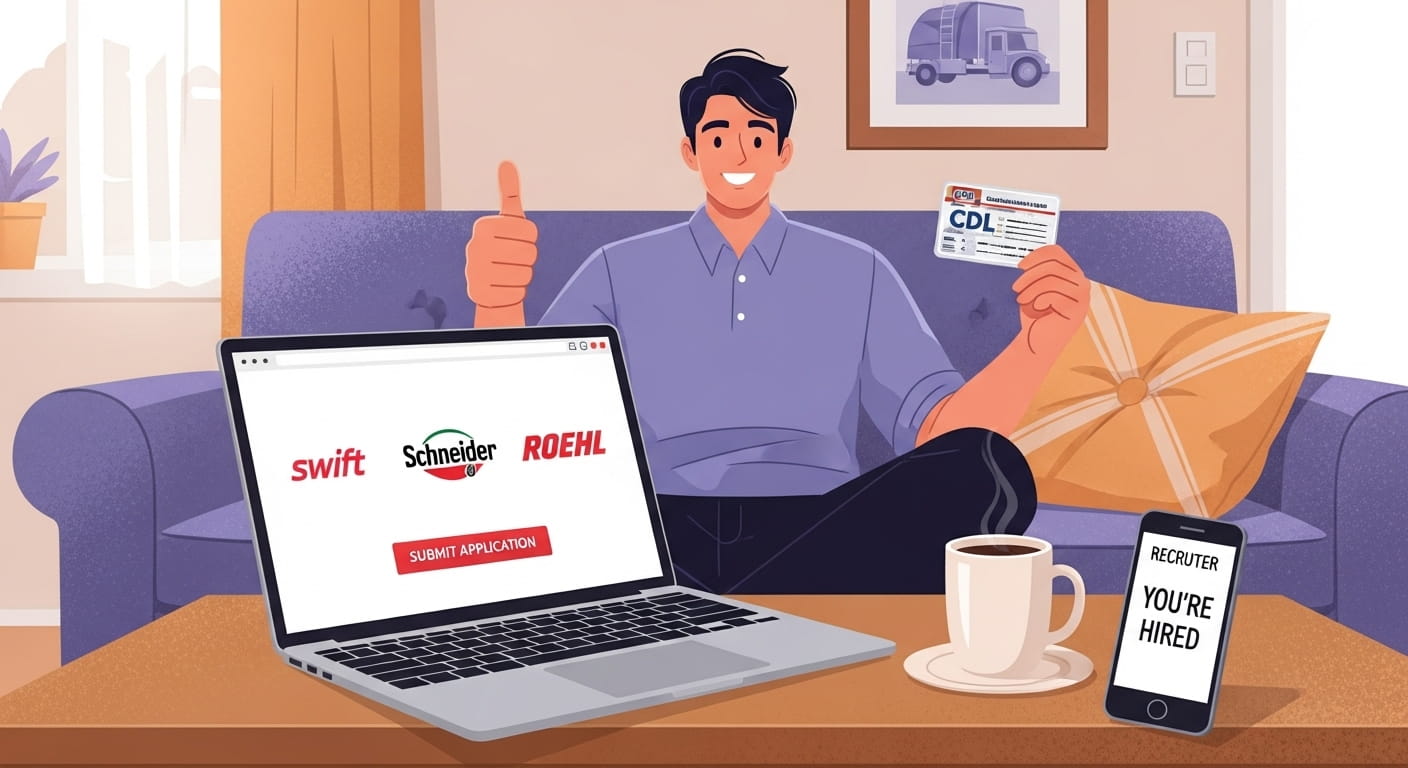
Step 6: Apply for Your First Trucking Job
You have the license. You have the medical card. Now you need a job.
New drivers have a hard time getting hired by small, local companies because insurance rates are high for rookies. You need to target “rookie-friendly” carriers.
Top companies that hire new CDL graduates:
- Swift Transportation
- Schneider National
- KLLM Transport
- Roehl Transport
- Western Express
What to put on your resume:
You have no “trucking experience,” but you have transferable skills.
- Retail: “Managed inventory and met strict deadlines.”
- Construction: “Operated heavy machinery and followed safety protocols.”
- Military: “Maintained equipment under pressure.”
Most recruiters just want to know:
Are you reliable?
Do you show up on time?
Will you pass a drug test?
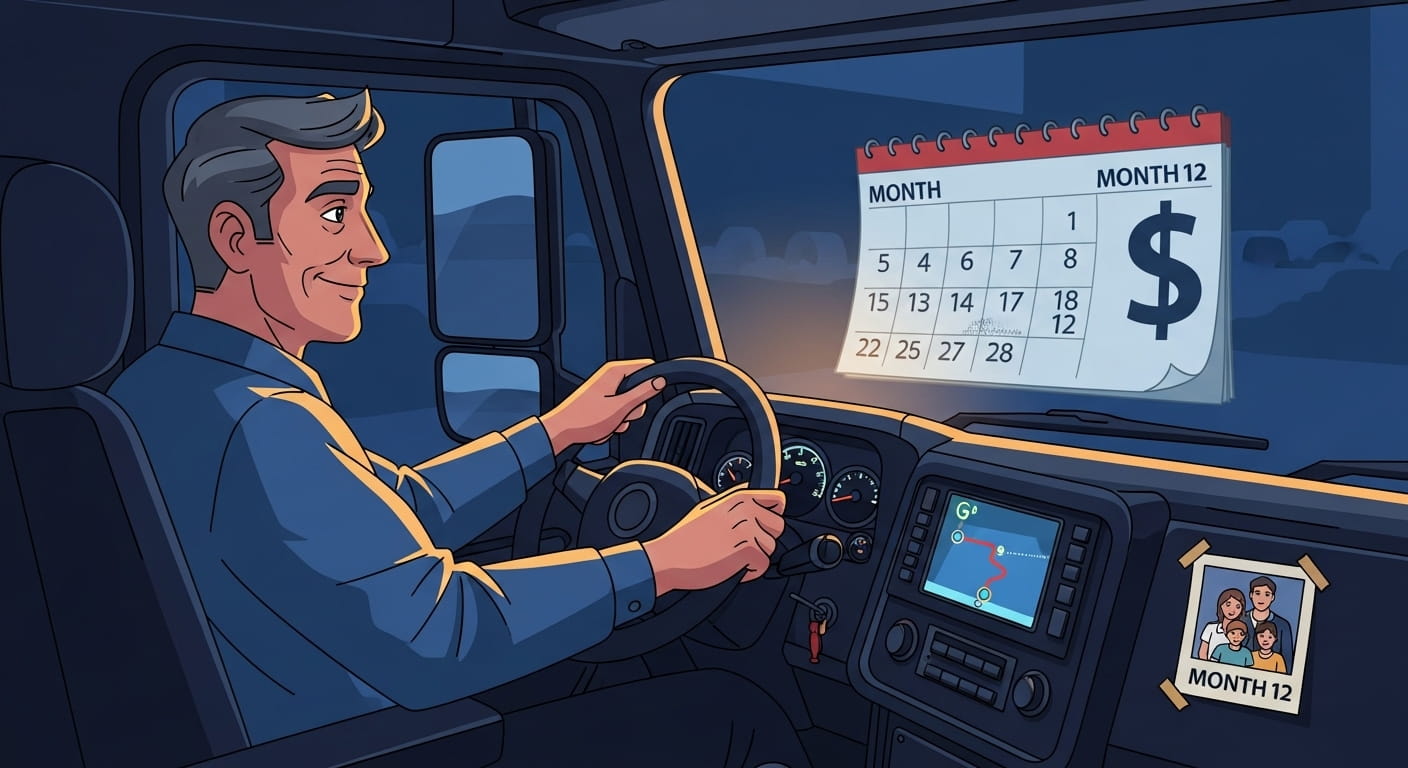
Step 7: Survive Your First Year (The “Rookie Year”)
Your first 12 months are the hardest. You will likely drive Over-the-Road (OTR), meaning you live in the truck for 2–3 weeks at a time.
Here is how to survive:
- Master trip planning: Do not rely on GPS for trucks. Use a truck-specific atlas. Know where your weigh stations and truck stops are.
- Learn to back slowly: Every driver hits a dock or a curb eventually. Go slow. Get out and look three times if needed.
- Manage your money: OTR drivers get paid by the mile. If the truck isn’t moving, you aren’t earning. Save a cash cushion for slow weeks.
After one year, the industry opens up. You can apply for local delivery (home daily), fuel hauling (higher pay), or heavy haul (specialized equipment).
The Salary Breakdown (Real Numbers)
Wages vary by region and freight type. Here is what you can expect in 2026:
Experience Level Type of Job Average Yearly Pay First 6 months Training/Team driving $40,000 – $50,000 6-12 months Solo OTR (Dry van) $55,000 – $65,000 1-2 years Regional / Dedicated $65,000 – $80,000 2+ years Tanker / Hazmat / LTL $85,000 – $110,000+ Note: Owner-operators (drivers who own their truck) can earn more, but they pay for fuel, maintenance, and insurance.
Note: Owner-operators (drivers who own their truck) can earn more, but they pay for fuel, maintenance, and insurance.Common Mistakes to Avoid
When researching how to become a truck driver in USA, you will see scams. Protect yourself.
Mistake #1: Paying for a “CDL fast” program.
Legit training takes weeks. If a school promises a license in 3 days, it is a scam. They will take your money and disappear.Mistake #2: Ignoring your MVR.
Your Motor Vehicle Record (driving history) matters. If you have recent speeding tickets or a DUI, you cannot get a CDL. Wait until those violations age out (usually 3–5 years).Mistake #3: Signing a lease-purchase as a rookie.
Many companies offer “own your truck” programs. Avoid this in your first year. The payments are high, and if the truck breaks down, you still owe the bank.Ready to stop dreaming and start driving?
Fill out the form and a Remms recruiter will reach out within one business day. No spam, no pressure — just real results.
Submit Driver ProfileFrequently Asked Questions
How long does it take to become a truck driver in the USA?
If you go to full-time school, you can get your CDL in 3 to 8 weeks. However, due to waiting for DMV appointments and background checks, plan for 3 to 4 months from start to first paycheck.How much does it cost to get a CDL?
Costs vary wildly. Company-sponsored training is $0 upfront. Private schools range from $3,000 to $7,000. Community colleges may cost $1,500 to $3,000 after grants. Always ask if they accept financial aid.Can a felon become a truck driver?
Yes, but it depends on the crime. The federal government bars drivers with felonies involving drug trafficking or acts of violence (within the last 7 years). Property crimes or non-violent offenses are often okay. Be honest with the recruiter—they will run a background check anyway.Do I need a special license to drive a truck?
Yes. You need a Class A Commercial Driver’s License (CDL) to drive a tractor-trailer. A Class B CDL is for straight trucks (like garbage trucks or delivery vans). For most long-haul jobs, you want a Class A.Is truck driving worth it in 2026?
Yes, if you value autonomy over a corner office. The job is lonely. You will miss birthdays. But you will never worry about layoffs again. For someone who likes driving and wants immediate income without college debt, it remains one of the best blue-collar careers in America.
Final Steps: Your Action Plan for Monday Morning
You have all the information. Now you need a plan.
- Visit your local DMV website. Download the CDL handbook for your state.
- Take a practice test. Search for “free CDL general knowledge practice test.” Do it until you score 90% consistently.
- Call three CDL schools. Ask two private schools and one community college for their total price and start date.
- Check your driving record. Order a copy from your state’s DMV. Fix any errors before you apply.
Learning how to become a truck driver in USA is not magic. It is a checklist. Age check. Permit test. Training. Road test. Drug screen. Job offer.
Thousands of people do it every month. You can be next.
Have a specific question about CDL training or first-year earnings? Leave a comment below or contact a local workforce center for free career coaching.