
You have been on the road for ten hours. The sun is setting, your eyes feel heavy, and your dispatcher is asking for an update. You glance at your electronic logging device (ELD) and see you still have one hour of driving left before your 11-hour limit. But your 14-hour on-duty window is about to close. What do you do?
This is the daily reality for thousands of truck drivers across America. Understanding truck driver hours of service (HOS) rules is not just about staying compliant. It is about protecting your career, your paycheck, and your safety.
In 2025, HOS violations were the number one driver out-of-service violation during roadside inspections, accounting for 32.4% of all driver violations. A single violation can damage your CSA score for up to two years, increase your insurance premiums by 10–30%, and even cost you job opportunities.
The good news? Mastering truck driver hours of service is entirely doable. This guide breaks down every rule, exception, and upcoming change you need to know.
What Are Truck Driver Hours of Service?
Truck driver hours of service refers to the federal regulations that limit how many hours a commercial driver can work and drive before taking mandatory rest breaks. The Federal Motor Carrier Safety Administration (FMCSA) created these rules to prevent accidents caused by driver fatigue.
If you drive a commercial motor vehicle (CMV) weighing over 10,001 pounds, transport hazardous materials requiring placards, or carry passengers for compensation, these rules apply to you.
The regulations are found in 49 CFR Part 395. Violations can result in fines, out-of-service orders, and damage to your CSA (Compliance, Safety, Accountability) score, which affects your insurance rates and job prospects.
The 5 Core HOS Rules Every Trucker Must Know

Let us start with the fundamentals. Every driver who wants to understand truck driver hours of service needs to memorize these five rules.
Rule #1: The 11-Hour Driving Limit
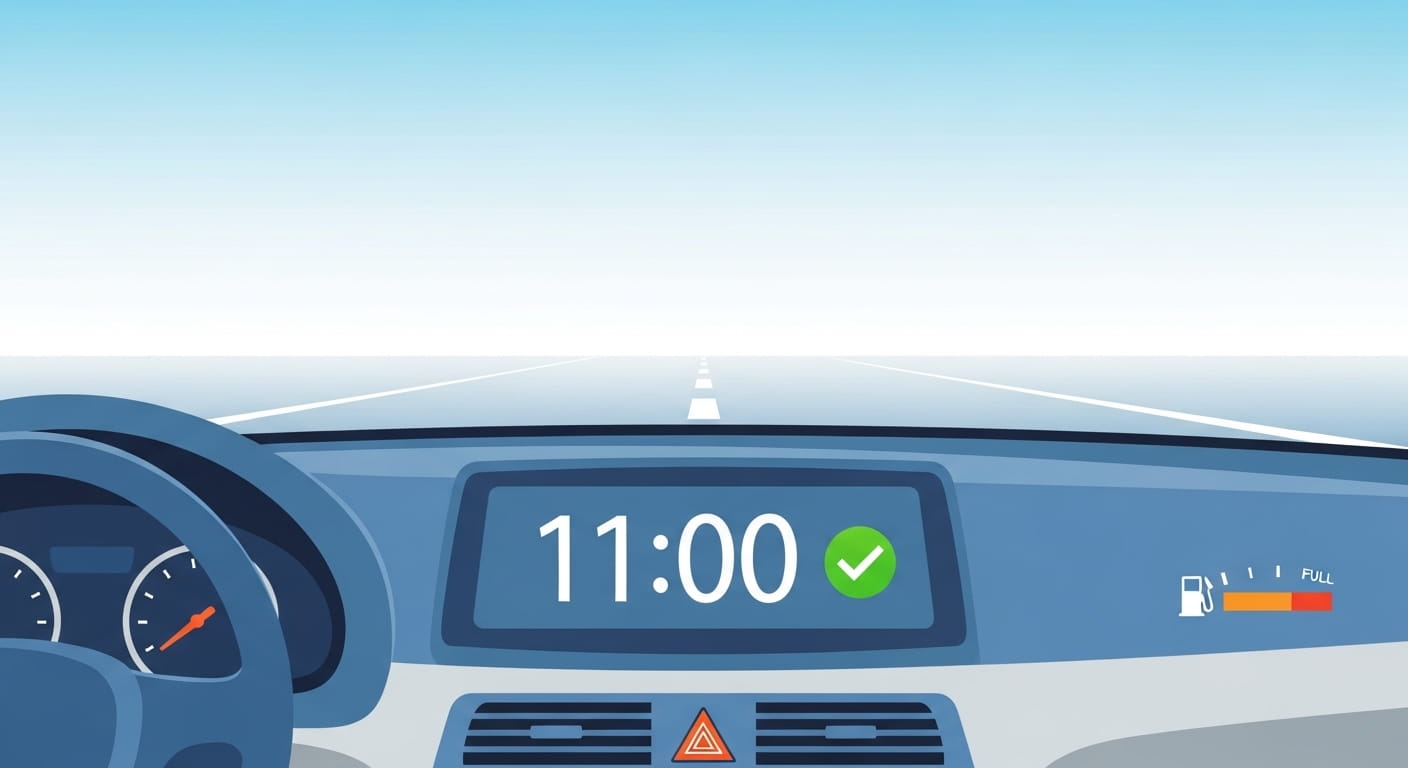
You may drive a maximum of 11 hours after having 10 consecutive hours off duty. Once you reach 11 hours of driving, you cannot drive again until you take another 10 consecutive hours off duty.
This is the most basic rule. It is also one of the most frequently violated. Exceeding the 11-hour limit is one of the top HOS violations found during roadside inspections, especially under tight delivery schedules.
Rule #2: The 14-Hour On-Duty Window
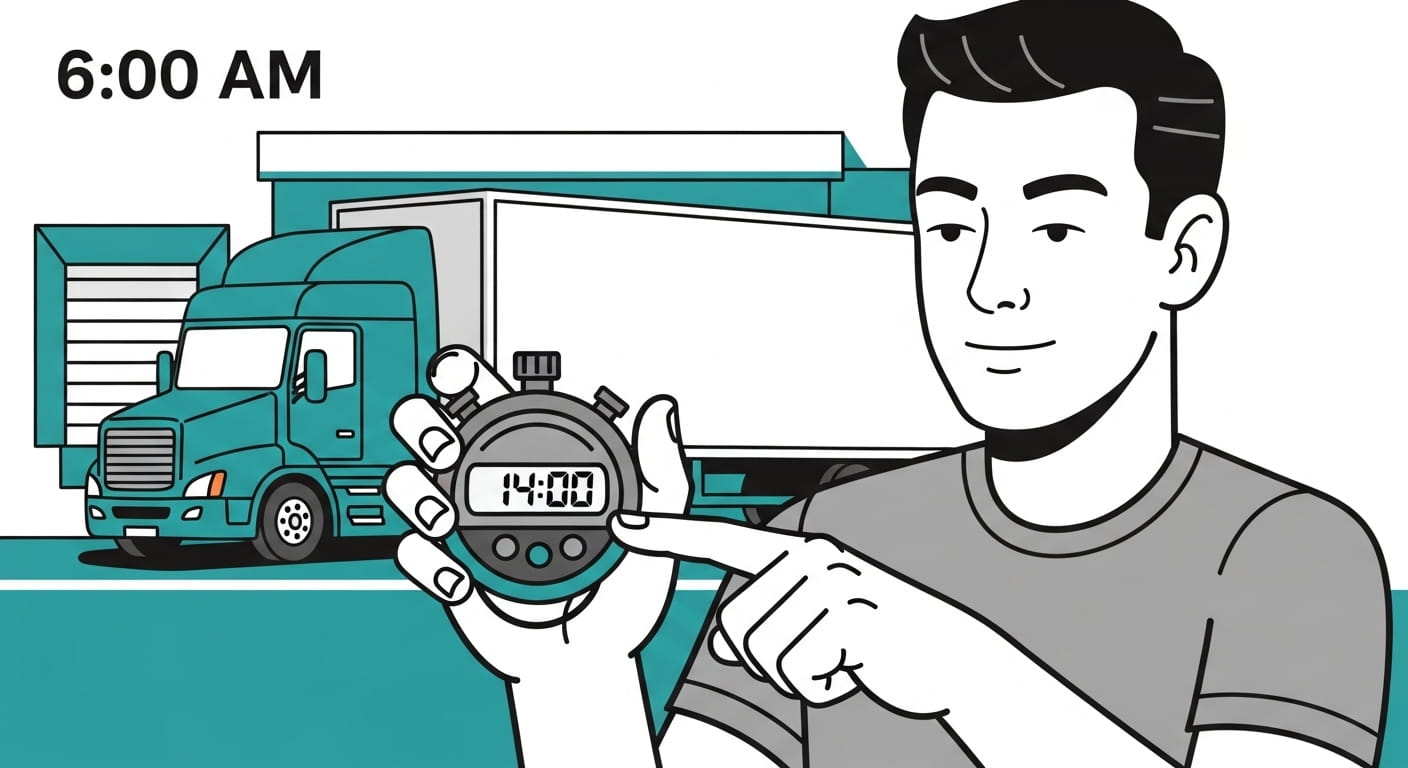
Your clock starts the moment you come on duty. From that moment, you have a 14-hour window to complete all your driving and on-duty work. After 14 hours, you cannot drive again even if you have not used all 11 driving hours.
Here is a critical point: taking a break during the day does not pause your 14-hour clock. If you start at 6:00 AM, your window closes at 8:00 PM, regardless of how much time you spent eating or waiting at a shipper. The only way to stop that clock is to take 10 consecutive hours off duty.
Rule #3: The 30-Minute Break Requirement

After 8 cumulative hours of driving time, you must take a break of at least 30 consecutive minutes. You can satisfy this break with off-duty time, sleeper berth time, or even on-duty (not driving) status.
This rule changed in 2020. Previously, the break had to be strictly off-duty. Now, waiting at a dock or performing non-driving work counts toward your 30-minute requirement.
Rule #4: The 60/70-Hour Weekly Limit
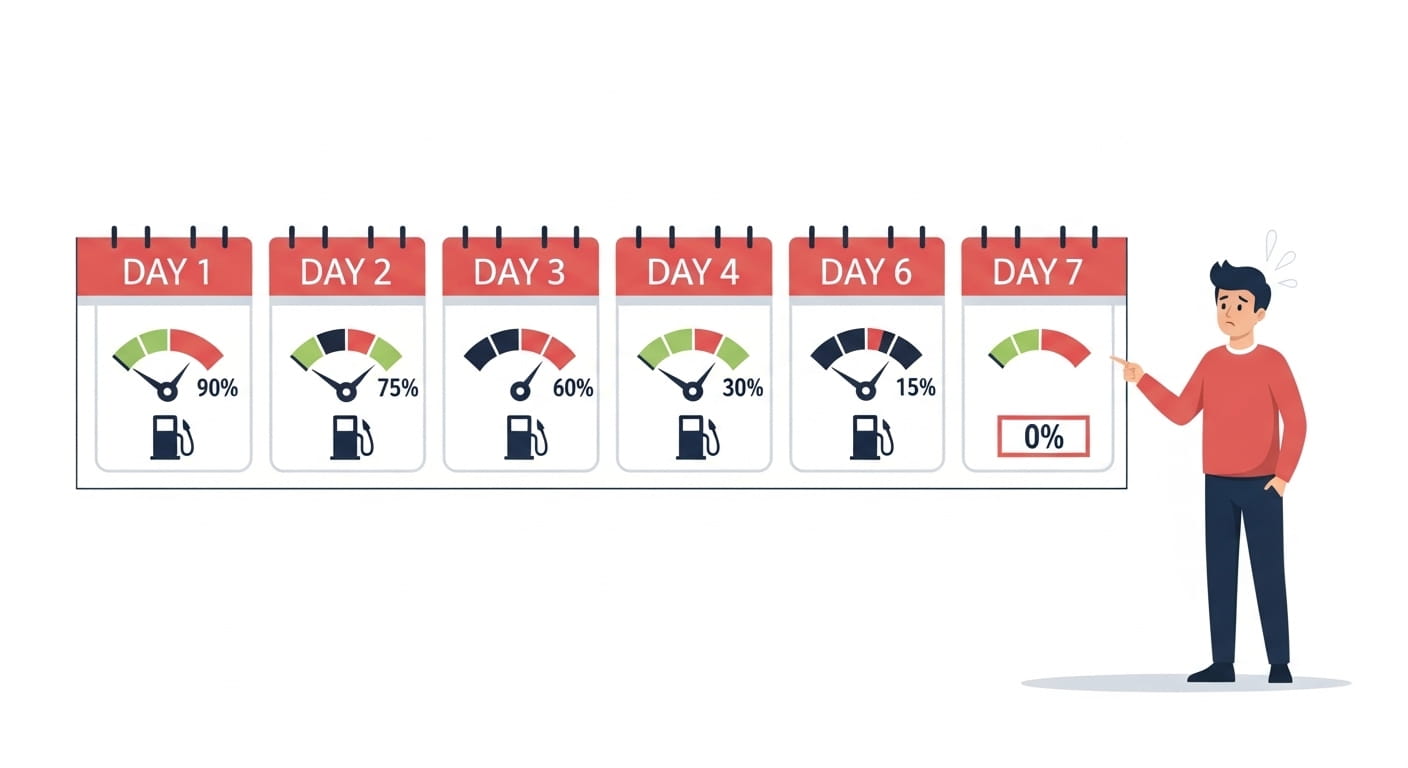
You cannot drive after accumulating 60 hours of on-duty time in any 7-consecutive-day period, or 70 hours of on-duty time in any 8-consecutive-day period depending on your carrier‘s cycle.
Think of this as your weekly fuel tank. Once it is empty, you cannot drive until you either:
- Take a 34-hour restart (34 consecutive hours off duty), which resets your weekly clock, or
- Wait for older hours to drop off your 7- or 8-day rolling period.
Rule #5: The 34-Hour Restart
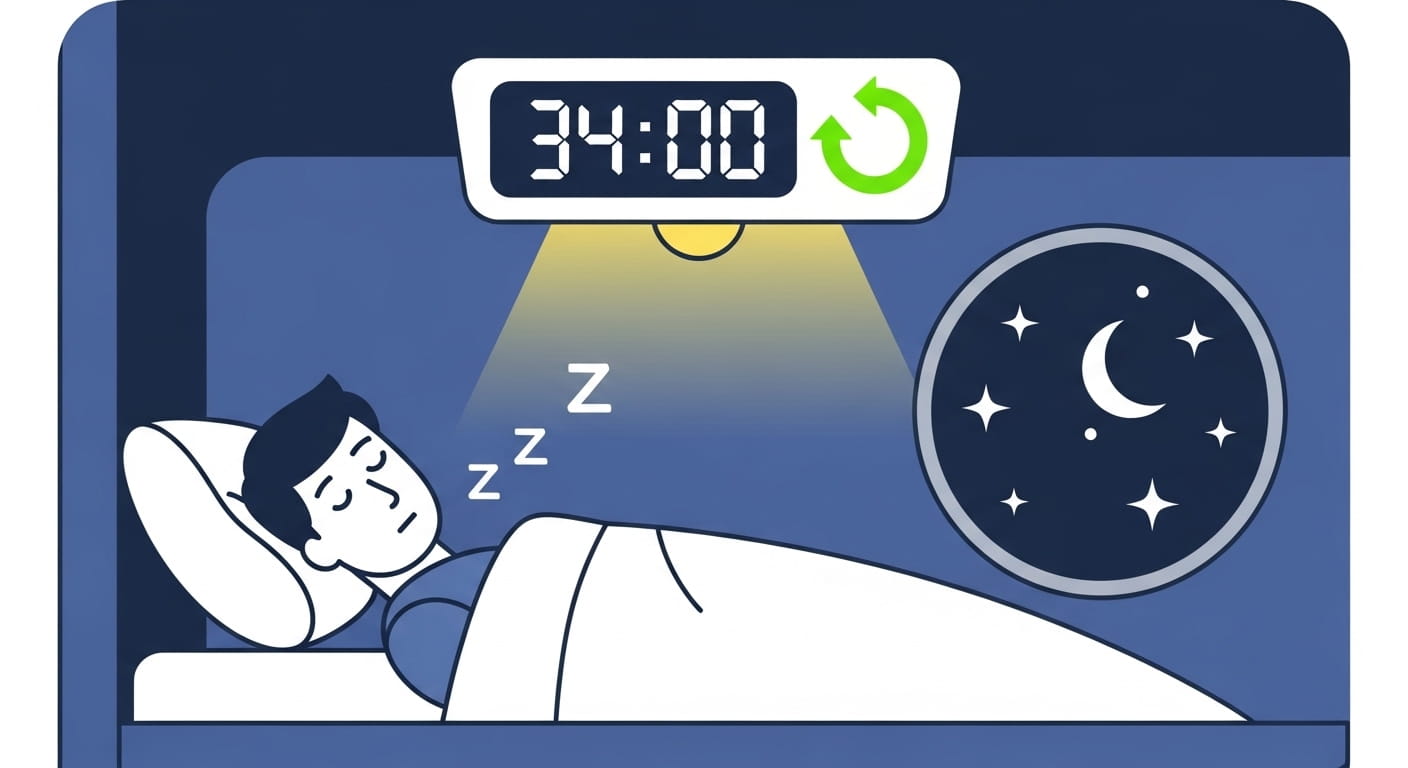
The 34-hour restart allows you to reset your 60/70-hour weekly clock by taking 34 consecutive hours off duty. This provision is especially valuable for long-haul drivers who want to maximize their weekly driving time.
The Split Sleeper Berth Provision
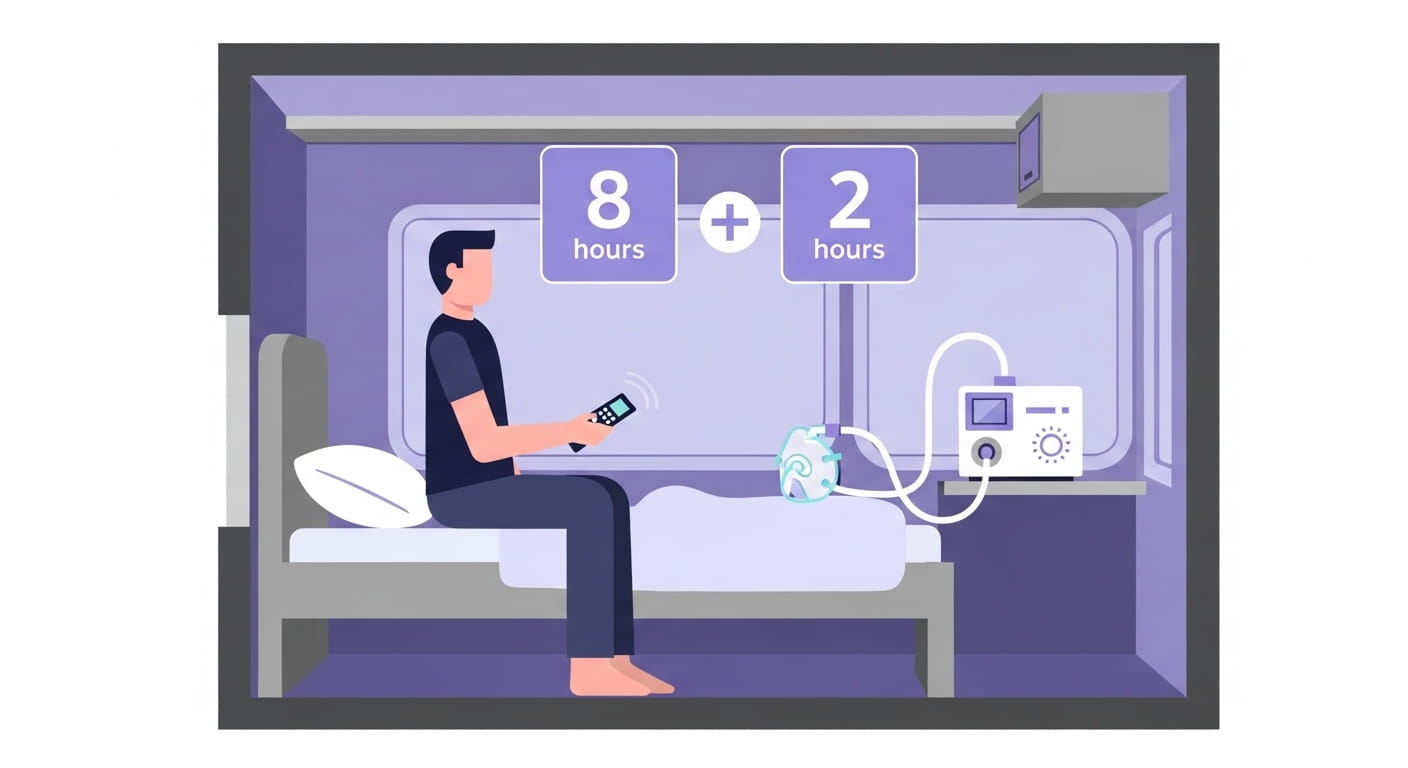
If your truck has a sleeper berth, you have flexibility that day cab drivers do not. The split sleeper berth provision allows you to divide your required 10-hour off-duty period into two separate breaks.
Under current regulations, you can use two qualifying split options:
- 8/2 split: Take 8 consecutive hours in the sleeper berth, plus 2 consecutive hours either in the sleeper berth or off duty
- 7/3 split: Take 7 consecutive hours in the sleeper berth, plus 3 consecutive hours either in the sleeper berth or off duty
The key is that when you complete the shorter period (2 or 3 hours), it pauses your 14-hour clock. The longer period (8 or 7 hours) extends your driving window. Many experienced drivers use split sleeper berth rules to navigate tight schedules and detention times at shippers.
⚠️ Important: The split sleeper berth provision does not remove the 10-hour off-duty requirement. It simply allows you to meet it in two parts instead of one continuous block. Use this tool carefully, as miscalculating splits is a leading cause of HOS violations.
What’s New in 2026: FMCSA Pilot Programs
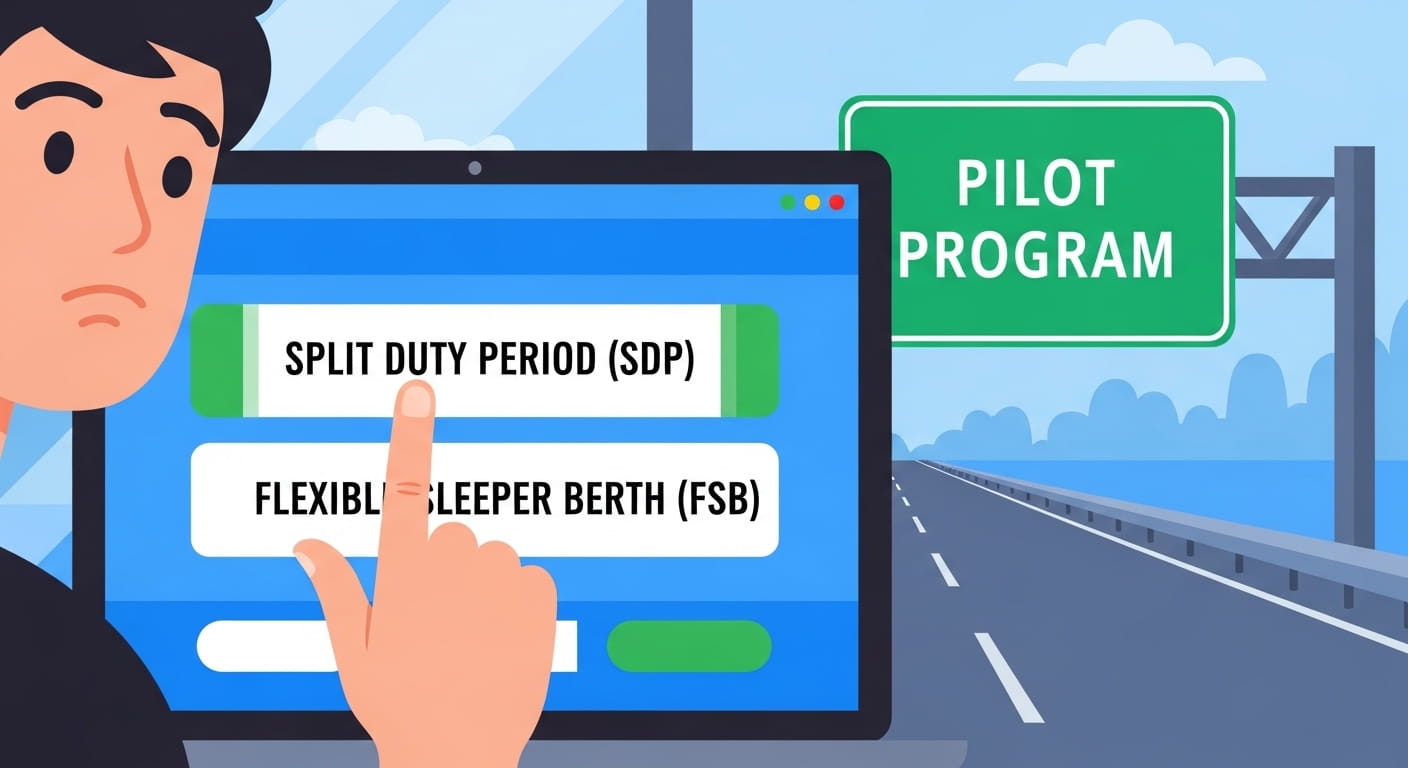
The FMCSA is actively testing new rules that could give drivers even more flexibility. As part of the U.S. Department of Transportation‘s “Pro-Trucker Package,” two pilot programs launched in 2026: the Split Duty Period (SDP) and Flexible Sleeper Berth (FSB) pilot programs.
Split Duty Period Pilot Program

This program allows participating drivers to pause their 14-hour on-duty window for a break of 30 minutes to 3 hours. The pause can be for off-duty time, sleeper berth time, or on-duty (not driving) time at a pickup or delivery location.
If approved broadly, this change could help drivers who frequently face long detention times at shippers. As one driver commented, “The option to pause the 14-hour clock for up to three hours would help me in meeting my delivery requirements“ and would also help with not ”burning time sitting in traffic problems that are always in the Northeast at rush-hour times”.
Flexible Sleeper Berth Pilot Program
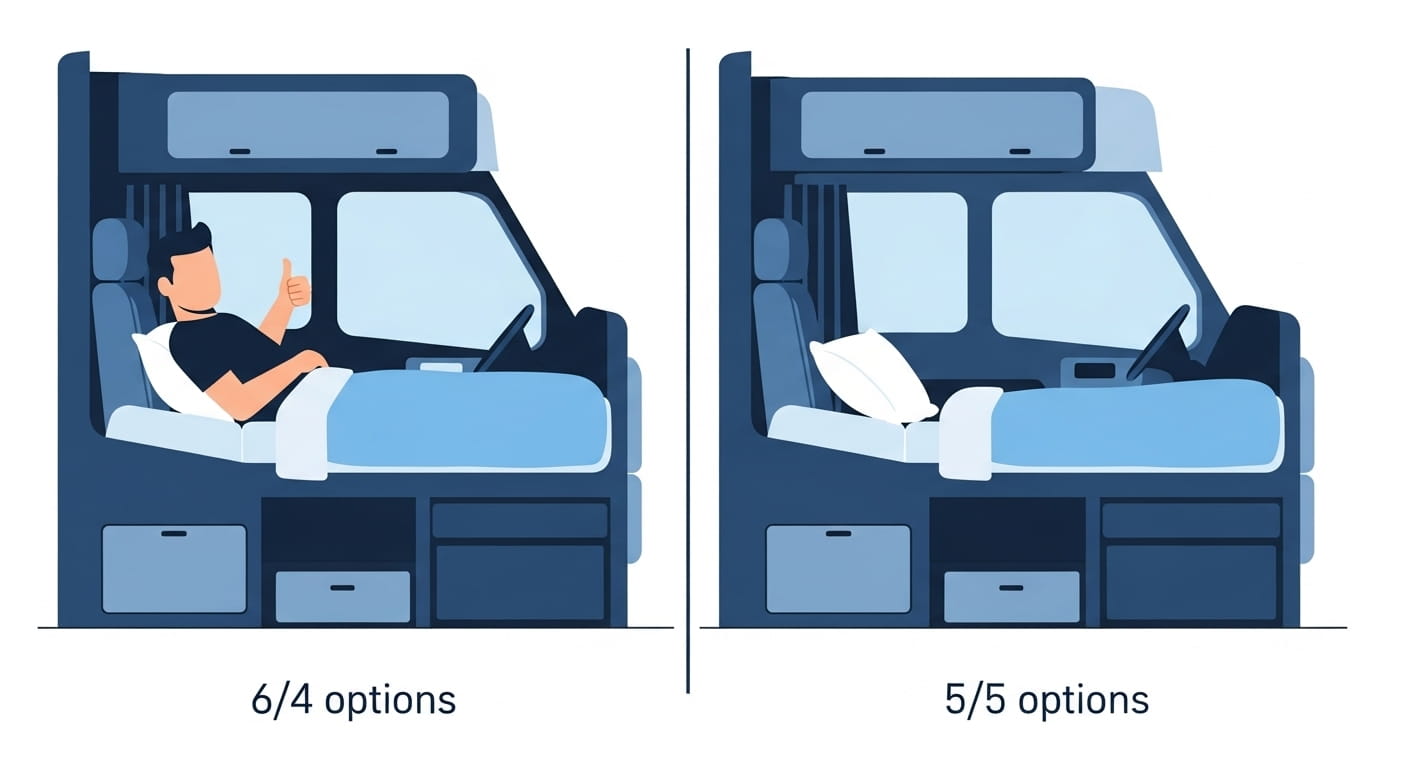
This program expands split sleeper berth options beyond the current 8/2 and 7/3 splits. Participating drivers can test 6/4 and 5/5 splits, offering even more flexibility in scheduling rest periods.
Both pilot programs began protocol development in early 2026, with over 500 commercial truck drivers expected to participate. If successful, these changes could be incorporated into permanent HOS regulations in the coming years.
HOS Exceptions and Exemptions
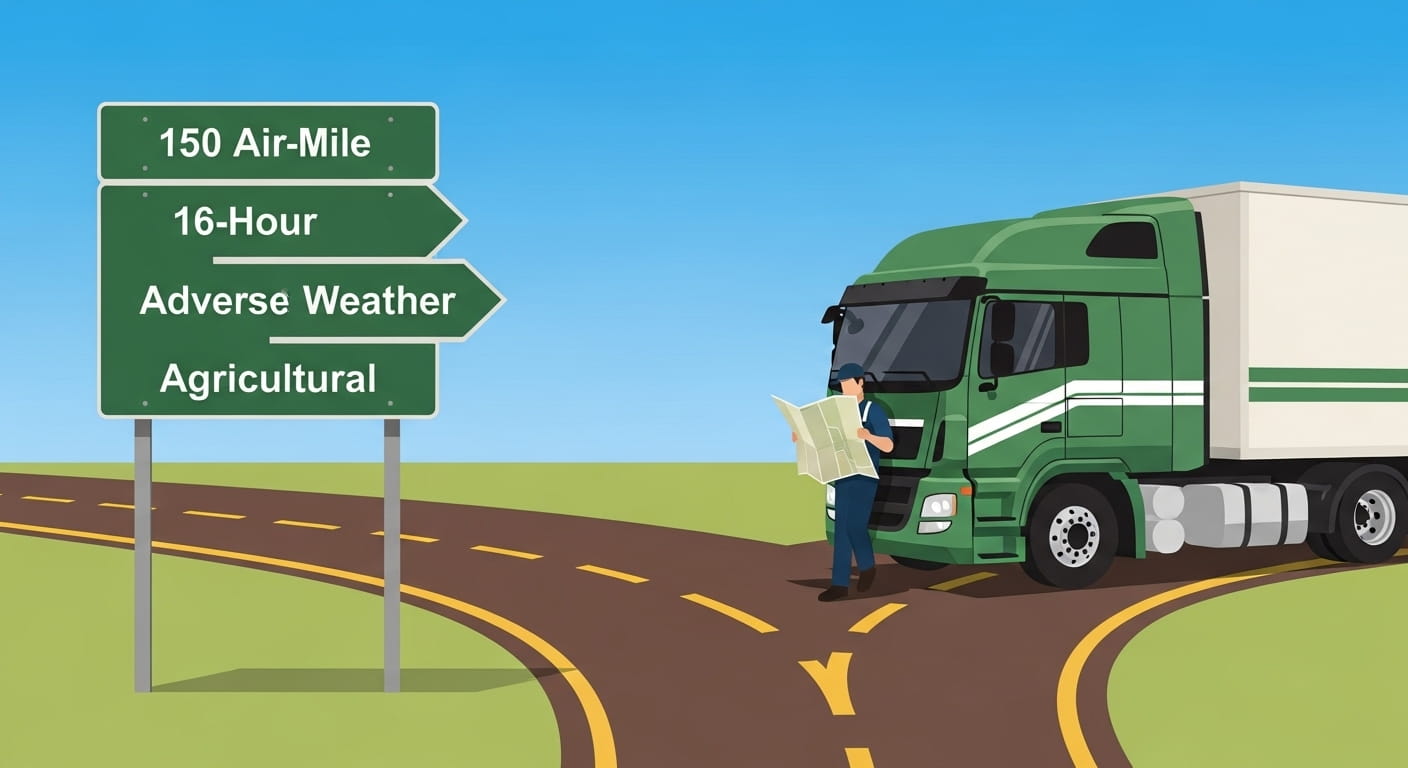
Not every driver operates under the standard truck driver hours of service rules. Several exceptions and exemptions can provide legal flexibility when used correctly.
The 150 Air-Mile Short-Haul Exemption
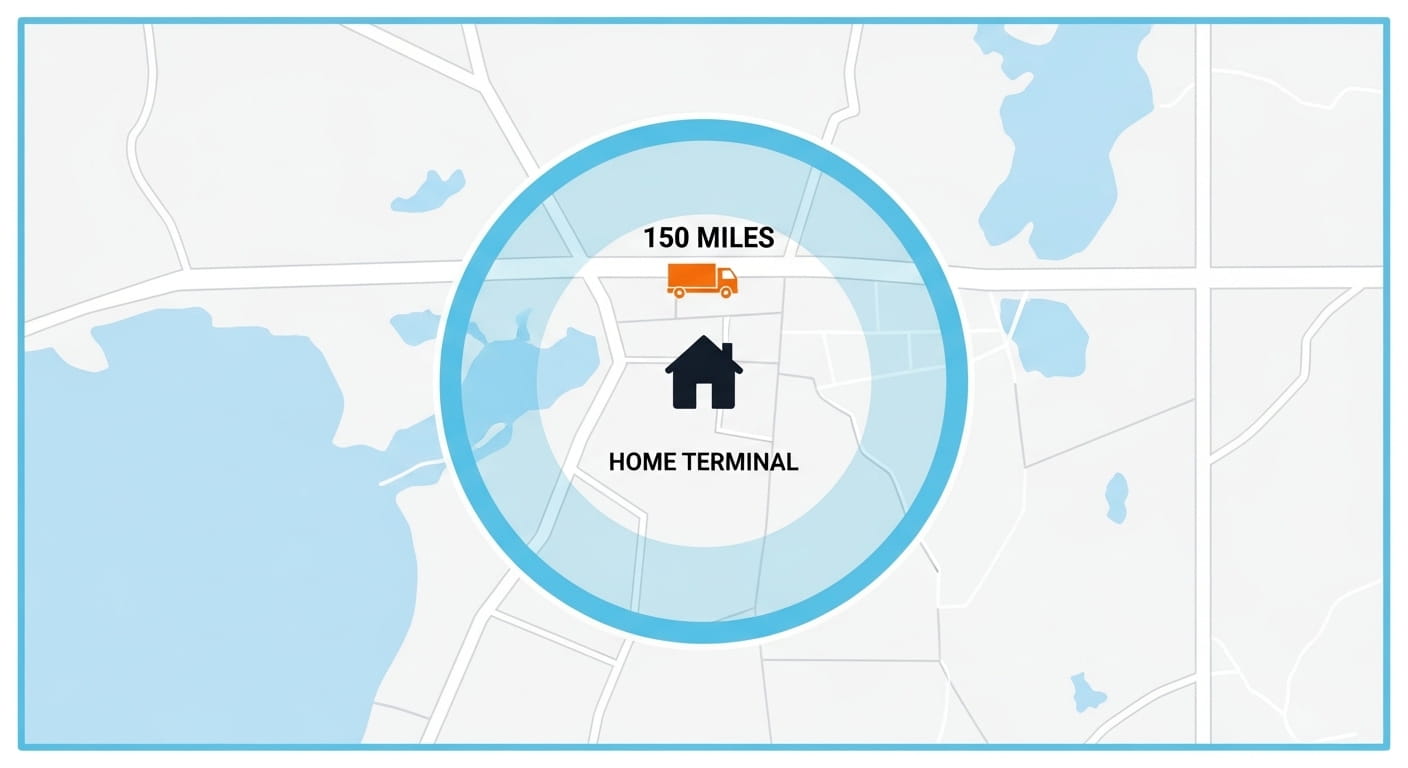
If you operate within a 150 air-mile radius (approximately 172.6 statute miles) of your normal work reporting location, return to that location within 14 hours, and meet other qualifications, you are exempt from ELD requirements and do not need to prepare records of duty status. This exemption is frequently used by local and regional drivers.
The 16-Hour Short-Haul Exception
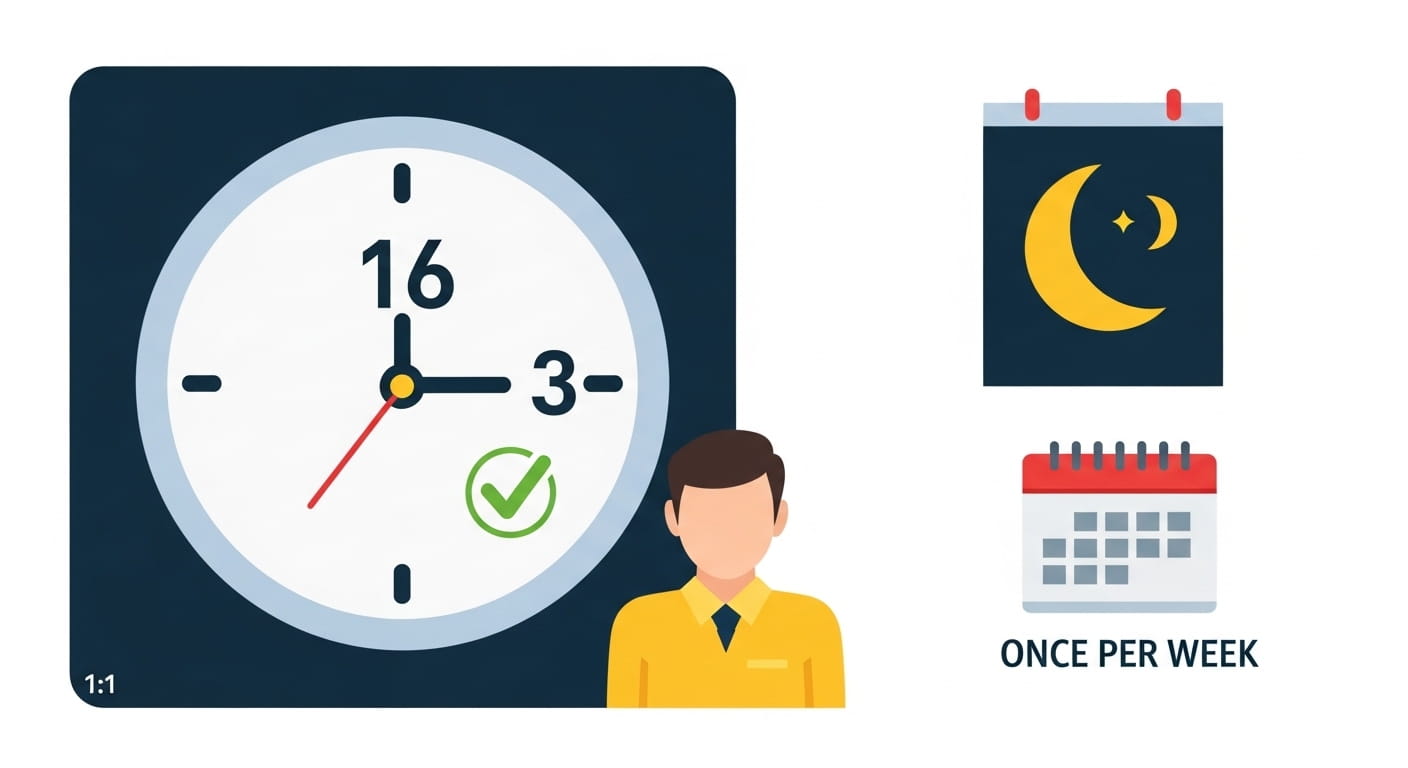
If you normally qualify for the short-haul exemption but occasionally need to exceed the 14-hour window, you can extend it to 16 hours, once every 7 days or after a 34-hour restart.
⏰ Key requirement: You must start and end your shift at the same location and be released within 16 hours. This exception does not extend your 11-hour driving limit.
Adverse Driving Conditions Exception

If you encounter unforeseen bad weather or road conditions that were not known before your trip, you may extend both your 11-hour driving limit and 14-hour window by up to 2 hours.
⚠️ Important: This exception applies only to conditions discovered after departure. A snowstorm forecasted two days ago does not count.
Agricultural Exemption

During state-designated planting and harvest periods, drivers transporting agricultural commodities within a 150 air-mile radius may be exempt from HOS rules. This exemption is critical for farm haulers during busy seasons.
What Happens If You Violate HOS Rules?
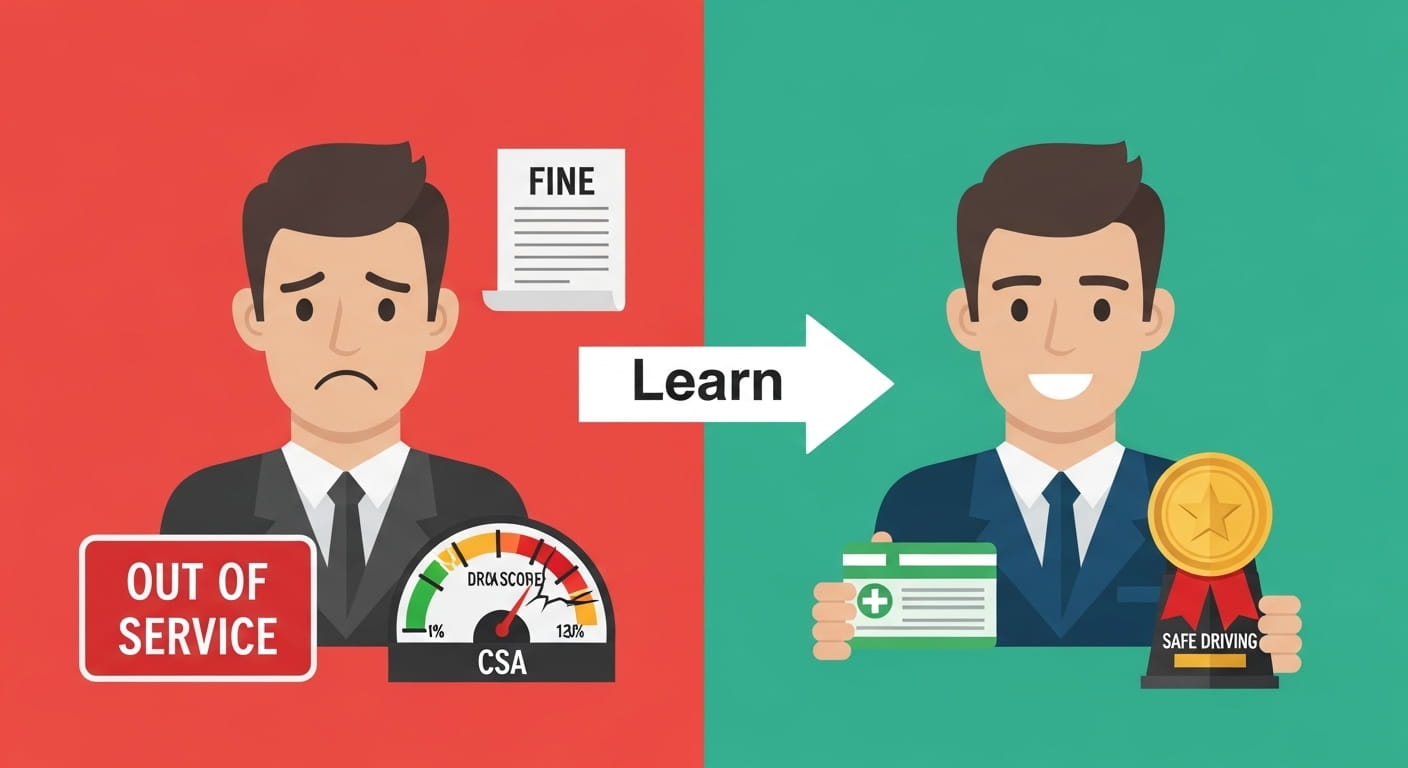
HOS violations are serious. Here is what is at stake.
In 2025, HOS violations were the leading cause of driver out-of-service orders, accounting for 32.4% of all driver violations. Common violations include:
- Driving beyond 11 hours
- Insufficient off-duty time
- 60/70-hour rule violations
- No 30-minute break
- ELD malfunctions
Penalties extend far beyond the roadside fine:
| Violation Type | Potential Penalty |
|---|---|
| Operating out-of-service vehicle | Up to $19,277 per occurrence |
| Recordkeeping violations | Up to $1,584 per day ($15,846 total) |
| Falsifying logs | Up to $13,072 |
| CSA score impact | Affects insurance (25–45% increases) for 24 months |
Beyond fines, violations damage your CSA score for 24 months, affecting your ability to get loads from safety-conscious shippers and brokers.
Mini-Story: How One Driver Saved His Career
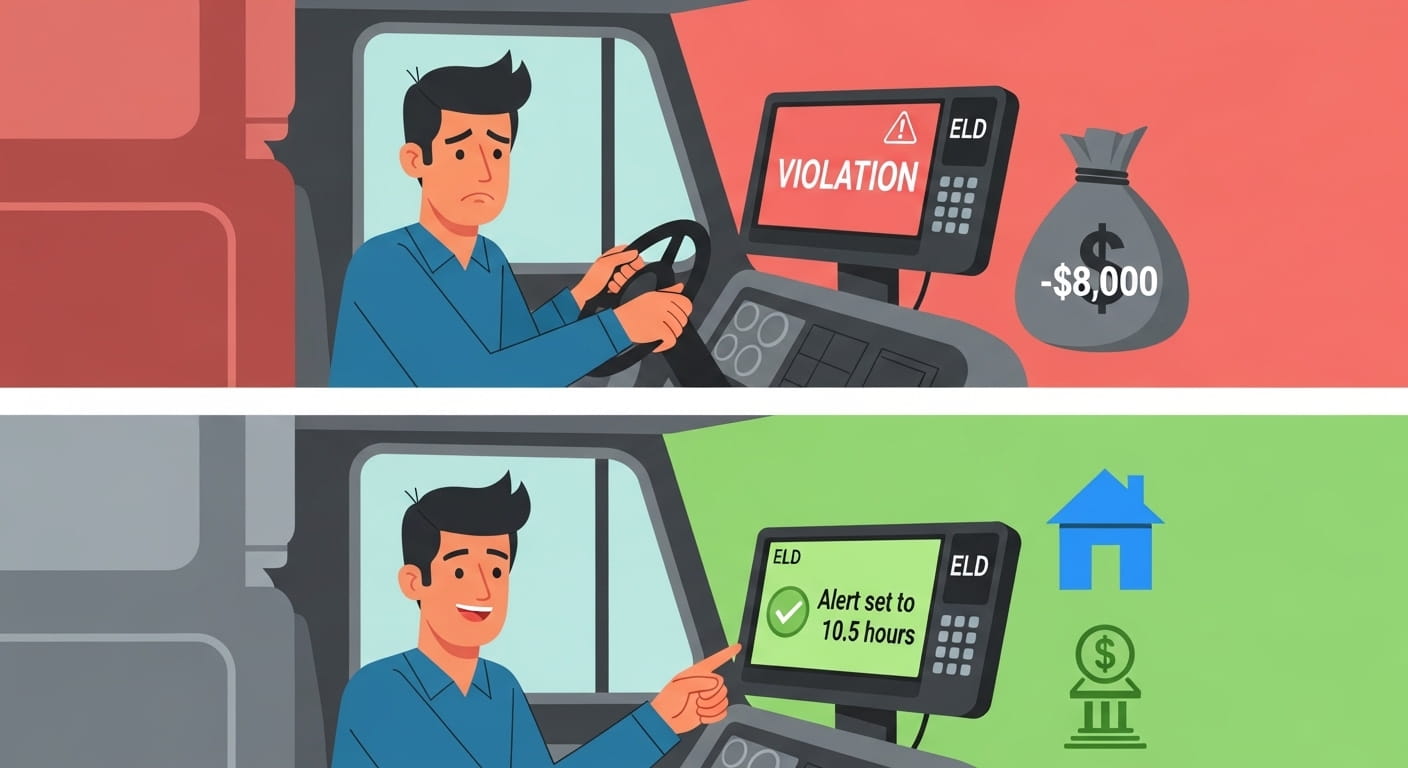
James, a 15-year veteran from Tennessee, always thought he knew truck driver hours of service rules. But one winter, he pushed his limits. He had a tight delivery window and the weather was clear. He drove 11 hours and 15 minutes, figuring “just a few minutes over” would not matter.
At the next weigh station, his ELD flagged the violation. He was put out of service for 10 hours. His company received a fine. His CSA score jumped. Six months later, his insurance premium increased by 25%. Two brokers dropped him from their boards.
James learned the hard way. Now, he sets his ELD to alert him at 10.5 hours of driving. He plans his routes with weather backups. He never cuts corners. “That 15 minutes cost me over $8,000 in higher insurance and lost loads,” he says. “It was not worth it.”
Ready to stop dreaming and start driving?
Fill out the form and a Remms recruiter will reach out within one business day. No spam, no pressure — just real results.
Submit Driver ProfileConclusion: Master the Rules, Master the Road
Understanding truck driver hours of service is not optional. It is the foundation of a successful, sustainable career. The drivers who know these rules inside and out are the ones who plan smarter routes, waste less time, and make better money.
Here is your action plan:
- Review your ELD settings. Ensure alerts are enabled for 10.5 driving hours and 13.5 on-duty hours.
- Know your exceptions. Understand the 16-hour short-haul exception, adverse driving conditions, and split sleeper berth rules.
- Plan for weather and delays. Assume something will go wrong and build buffer time into every trip.
- Stay current with regulations. HOS rules change. Follow FMCSA announcements and industry news.
- Prioritize rest. Fatigue is dangerous. Getting quality sleep is not just compliant it is smart business.
Trucking is a demanding profession. But with the right knowledge and discipline, you can stay compliant, stay safe, and stay profitable. The rules are there to protect you. Learn them, respect them, and keep on rolling.