
This guide is based on data available as of 2025-2026. Salaries, regulations, and industry conditions are subject to change. Always verify current information with official sources before making career decisions.
Introduction: The Open Road Awaits
Every day, more than 1.2 million truck drivers crisscross the United States, hauling roughly 72% of the nation’s freight by weight.
From the produce that fills grocery store shelves to the raw materials that build American homes, truck drivers are the invisible backbone of the U.S. economy.
Yet for all its importance, truck driving remains one of the most misunderstood professions in America a career that offers remarkable freedom and earning potential while demanding sacrifices that few other jobs require.
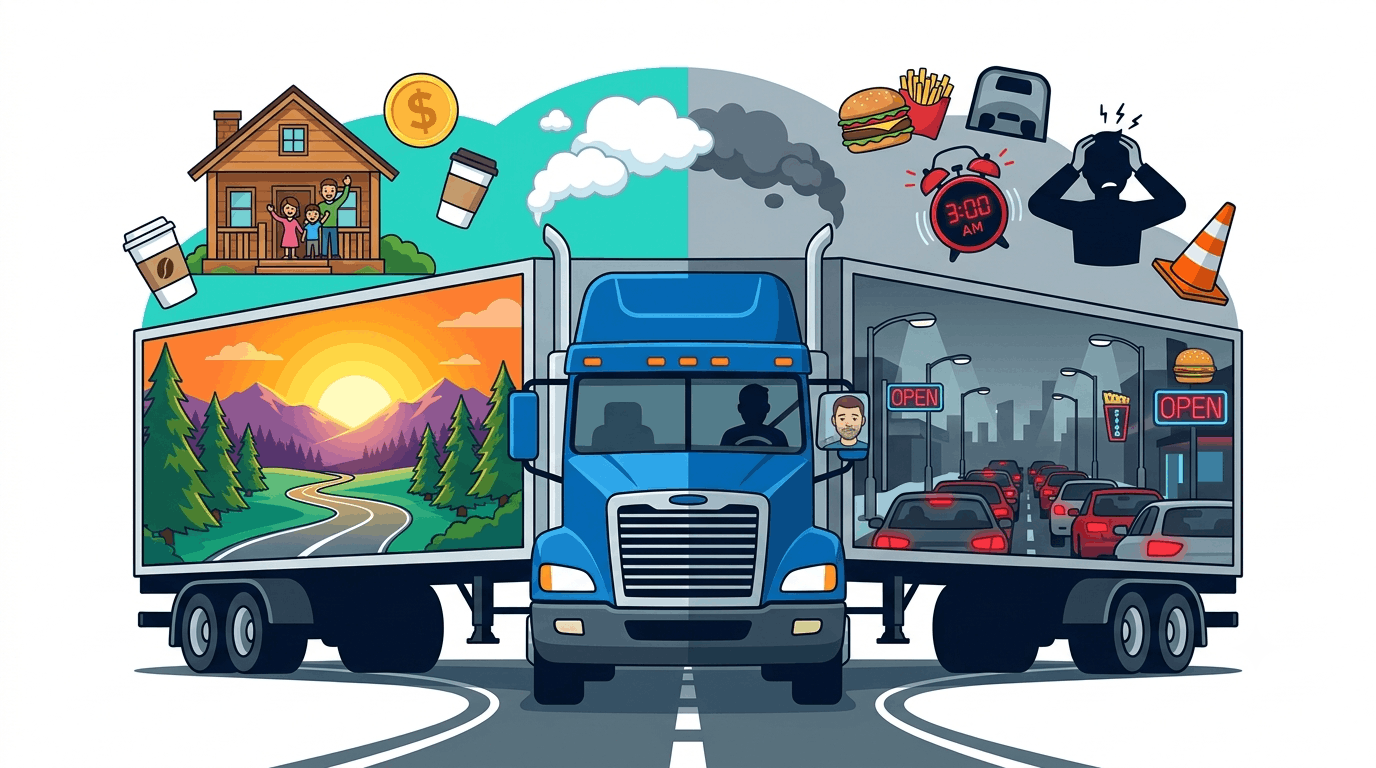
If you are considering entering this profession, or if you are a current driver weighing your next career move, understanding the full spectrum of truck driving pros and cons is essential.
This comprehensive guide examines every facet of life behind the wheel, from salary expectations and lifestyle realities to health challenges and technological disruptions.
Whether you are a rookie contemplating your first Commercial Driver’s License (CDL) or a veteran owner-operator reassessing your future, this article will help you navigate the complex decision of whether truck driving is the right path for you.
Part I: The Landscape of American Trucking in 2026
The State of the Industry
The American trucking industry is in a period of significant transition. Following years of an acute driver shortage with the American Trucking Associations estimating a shortfall of 80,000 drivers in 2021 and projecting 160,000 by 2030 the landscape has shifted.
Today, the industry faces what experts describe as a “quality” shortage rather than a “quantity” shortage. As ATA Chief Economist Bob Costello explained, “What we have in the United States is a quality problem around drivers, much more so than an absolute number”.
This distinction matters. More than 49,800 drivers have left the industry from 2022 highs, and over 39,000 interstate carriers have exited the market.
Yet according to a 2025 survey by Tech.co, 69% of logistics companies still report that the ongoing shortage of drivers is limiting their ability to meet freight volumes. Nearly half (45%) cite a lack of qualified applicants as their top hiring challenge.
For prospective drivers, this creates a paradox: the industry needs drivers, but it needs quality drivers those who can pass drug and alcohol tests, maintain clean safety records, and meet the high standards of professionalism that carriers demand.
This emphasis on quality means that truck driving pros and cons are not uniform across the board; the best opportunities go to the most qualified candidates.
Understanding the Different Types of Trucking
Before diving into the truck driving pros and cons, it is important to understand that “truck driver” is not one job but many. The experience varies dramatically based on the type of driving you choose:
- Over-the-Road (OTR) Drivers: Spend weeks away from home, hauling freight across state lines. OTR drivers typically average $92,606 annually.
- Regional Drivers: Operate within a specific region (e.g., the Southeast or Midwest), home more frequently. Average salary: $75,877.
- Local Drivers: Return home daily, working within a metropolitan area. Average salary: $66,252.
- Owner-Operators: Independent contractors who own their trucks and operate their own businesses. Income potential varies widely but can exceed six figures for successful operators.
Each path presents a different balance of truck driving pros and cons, and understanding these distinctions is the first step toward making an informed career decision.
Part II: The Pros of Truck Driving
1. Strong Job Security and Industry Demand
Perhaps the most compelling argument for entering trucking is the stability it offers. Trucking continues to be the backbone of the U.S. economy.
Almost everything you see around you arrived by truck, and companies are still looking to hire reliable drivers. If you are dependable and consistent, this industry can offer long-term job security.
The industry will need roughly 1.2 million new drivers over the next decade to keep pace with growing freight demand and an aging workforce.
This demand means that, unlike in many other industries, you can almost instantly find another trucking job without being out of work for long. For workers worried about automation and outsourcing, trucking remains one of the professions least impacted by AI.
2. Solid Earning Potential
Money is what prospective truck drivers want most, and for good reason. According to the Bureau of Labor Statistics, the median annual salary for truck drivers is approximately $57,440. However, this figure masks significant variation:
- Entry-level drivers can earn between $38,640 and $78,800
- Experienced drivers can earn $78,800 or more
- OTR drivers average $92,606
- Some drivers earn over $100,000, though this is more common for owner-operators
Beyond base pay, many carriers offer safety bonuses, performance-based incentives, and referral rewards. A survey found that more than half of respondents said an income of $100,000 or more would be enough for them to become a truck driver.
While six-figure incomes are rare for company drivers, they are achievable for owner-operators who manage their businesses effectively.
Geographic location also plays a role. Alaska pays truck drivers the most at an average of $69,520, while Louisiana pays the least at $51,930. Higher-paying states also tend to have a higher cost of living, so drivers should consider the full financial picture.
3. Independence and Freedom
One of the most frequently cited truck driving pros and cons is the independence the job provides. Unlike office or factory work, truck driving offers remarkable autonomy.
Though you still report to leaders and get assigned loads, there is less of that feeling of a boss looking over your shoulder.
For those who enjoy solo work, truck driving can be a good fit. Many truckers are employed by a trucking company, but some make enough money to buy their own rigs and work as independent contractors. Owner-operators have complete control of their business choosing when, where, and how they work.
This freedom extends to lifestyle choices: you can listen to podcasts, audiobooks, or music while working; you can take breaks when you need them (within regulatory limits); and you can chart your own course across America’s highways.
4. Seeing the Country
Many people dream of traveling but lack either the time or money to do so. With truck driving, you get to see the country while getting paid.
From the Rocky Mountains to the Florida coast, from the deserts of the Southwest to the forests of the Pacific Northwest, truck drivers experience America in a way few others do.
This is not tourism you are working, and the schedule is often tight but the opportunity to witness the nation’s diverse landscapes is a genuine benefit that many drivers value.
5. Career Advancement Opportunities
Truck driving is not a dead-end career. Many drivers advance to become owner-operators, fleet managers, trainers, dispatchers, or even start their own companies.
With a spotless safety record and new CDL endorsements, drivers can unlock opportunities with higher-paying freight and more predictable home time.
Truck driver trainers can earn up to $10,000 more than average solo drivers. Other advancement paths include becoming a driver instructor, safety manager, or operations consultant.
6. Low Barriers to Entry
Becoming a truck driver does not require years of schooling or a college degree. In most cases, a high school diploma or GED is sufficient to qualify for CDL training. What matters is completing a certified truck driving school program and passing the required exams.
Today, getting your CDL is faster and more affordable than ever. Many states offer accelerated programs that can have you trained and ready in just a few weeks. Some companies even help cover the cost or offer sign-on bonuses once you get certified.
Part III: The Cons of Truck Driving
1. Time Away from Home and Family
If there is one downside that dominates discussions of truck driving pros and cons, it is the time away from home. More than half of survey respondents said time away from home is the biggest downside to trucking.
OTR drivers can expect to not see family for weeks or even months at a time. Long freight deliveries involve more hours, irregular schedules, and limited access to the comforts of home.
This absence takes a toll on relationships missing birthdays, anniversaries, holidays, and everyday moments that cannot be reclaimed.
For those with families, the decision to become an OTR driver requires careful consideration. Many drivers find that local or regional routes offer a better work-life balance, allowing them to return home daily or weekly.
However, these positions typically pay less than OTR work.
2. Health Challenges
The health risks associated with truck driving are well-documented and concerning. Compared to U.S. adult workers, truck drivers have higher rates of heart disease, diabetes, hypertension, and obesity.
Several factors contribute to this health crisis:
- Sedentary lifestyle: Drivers sit for long hours with little opportunity for physical activity
- Poor nutrition: Limited access to healthy food on interstate highways means fast food is often the only option
- Irregular sleep patterns: Long hours and disrupted schedules affect sleep quality
- Stress and isolation: The mental demands of the job contribute to poor health outcomes
The statistics are sobering. More than 50% of truck drivers are obese, and over 40% have heart disease and musculoskeletal disorders.
Twenty-eight percent of commercial truck drivers suffer from sleep apnea, which can increase the risk of fatigue-related crashes. One study found that 77.9% of evaluated truck drivers had sleep apnea.
Mental health is equally concerning. Long-haul truck drivers are particularly vulnerable to depression due to prolonged isolation, irregular work schedules, and occupational stress.
Perceived stress contributes to depressive symptoms through a cycle involving heightened loneliness and diminished social support. One study found that 13.3% of truck drivers experienced severe psychological distress suggestive of a probable mental health disorder.
3. Unhealthy and Unpredictable Lifestyle
Beyond the health implications, the truck driver lifestyle involves sacrifices that affect daily quality of life:
- Sleeping in the cab: Many nights are spent in the truck, not in a comfortable bed
- Irregular scheduling: Tight delivery windows mean working odd hours
- Limited amenities: Access to showers, restrooms, and exercise facilities is inconsistent
- Monotony: The repetitive nature of long-haul driving can be mentally draining
One driver described it succinctly: “Long-haul drivers spend so much time on the road, they experience more work and less work-life balance”.
4. Safety Concerns and Regulatory Burden
Safety is always a concern for truck drivers. Driving long hours, dealing with weather, road conditions, and other drivers means risk is ever-present.
Truck drivers are more likely to be involved in fatigue-related accidents, and the consequences can be devastating.
The regulatory environment adds another layer of complexity. The Federal Motor Carrier Safety Administration (FMCSA) enforces strict hours-of-service regulations, limiting drivers to 11 hours of driving during a 14-hour on-duty period, followed by a mandatory 10-hour break.
In 2025, new regulations took effect that further increased compliance burdens. Commercial drivers who fail English Language Proficiency assessments are immediately placed out-of-service.
States are now required to automatically downgrade and disqualify prohibited drivers who have tested positive in pre-employment or random drug or alcohol tests.
While these regulations are designed to improve safety, many drivers express frustrations with Electronic Logging Devices (ELDs) and hours-of-service regulations.
The paperwork, compliance monitoring, and constant oversight can feel intrusive to drivers who value independence.
5. Parking Crisis
Truck parking was the No. 2 concern for drivers in 2025. The numbers tell the story: truck drivers need 2.4 million parking spots suitable for rest across the U.S. highway system, yet only 697,000 spots are available.
This shortage means drivers often struggle to find safe, legal places to park for their mandatory rest breaks, leading to stress and unsafe decisions.
6. Financial Risks for Owner-Operators
While owner-operators have the potential to earn more, they also bear significant financial risks. Annual insurance costs alone range from $8,000 to $17,000 per truck, with some extreme cases reaching $20,000 or more.
Premium rates rose 12.5% in 2025, with some carriers experiencing 20-30% increases. On average, carriers pay $12,000 to $17,000 per truck for basic coverage.
Owner-operators are also responsible for truck payments, fuel, maintenance, permits, and taxes. When freight demand softens as it did in 2025, with spot rates dropping from $3.53 per mile in January 2022 to $2.28 per mile in July 2025 these fixed costs become difficult to cover.
Part IV: Special Considerations
Company Drivers vs. Owner-Operators
The truck driving pros and cons differ significantly between company drivers and owner-operators:
Company Drivers:
- Pros: Steady paycheck, benefits (health insurance, 401k), no equipment costs, less paperwork, company-provided training
- Cons: Less control over routes and schedules, lower earning ceiling, subject to company policies
Owner-Operators:
- Pros: Complete independence, higher earning potential, ability to choose loads, tax advantages
- Cons: Significant financial risk, high overhead costs, responsible for all expenses, no paid time off or benefits
Team Driving
Team driving offers an alternative for those who want companionship on the road. Two drivers share the cab, allowing the truck to operate nearly 24/7. This means more miles, higher earnings, and faster deliveries.
However, team driving requires compatibility with your partner spending extensive quality time with someone can be challenging.
Women in Trucking
The industry is predominantly male, but women are increasingly entering the profession. Female truck drivers report high job satisfaction, valuing independence, pay, and work-life balance.
Research shows that female drivers are safer than their male counterparts in every statistically significant category.
However, barriers remain. Many women don’t feel safe sleeping in their trucks at night. Access to child care, exercise facilities, safe parking, and gender-specific restrooms remains limited.
These challenges represent both a downside for women drivers and an opportunity for the industry to improve.
Part V: Making the Decision – Is Truck Driving Right for You?
Questions to Ask Yourself
Before committing to a truck driving career, consider these questions:
- How do you handle isolation? If you thrive on social interaction, OTR driving may be difficult.
- Can you maintain a healthy lifestyle on the road? The lack of exercise and healthy food options is a real challenge.
- How important is being home every night? If family time is paramount, consider local or regional routes.
- Are you comfortable with regulations and paperwork? The industry is heavily regulated.
- What are your financial goals? Do you want a steady paycheck or are you willing to take risks for higher earnings?
Practical Steps to Enter the Industry
If you decide that the truck driving pros and cons weigh in favor of pursuing this career, follow these steps:
- Obtain your Commercial Learner’s Permit (CLP): You will need a valid driver’s license, a 10-year driving record, and pass a CDL knowledge test with a minimum score of 80%.
- Complete Entry-Level Driver Training (ELDT): Enroll in a certified truck driving school.
- Earn your CDL: Pass the required exams.
- Consider endorsements: Additional endorsements (hazardous materials, tanker, doubles/triples) can increase earning potential.
- Choose your path: Decide whether to start as a company driver or pursue owner-operator status.
Preparing for the Future
The trucking industry is evolving. Autonomous trucks are coming, but experts suggest this will prompt driving jobs to evolve rather than disappear.
As one industry observer noted, “I don’t think autonomous trucks are going to be a threat to our need for workforce at all. We’re still going to need new entrants into the truck driving workforce at a very high rate”.
For now, and for the foreseeable future, skilled human drivers remain irreplaceable. The key is to position yourself as a quality driver one who meets high standards of professionalism and safety.
Conclusion: Weighing the Road Ahead
Truck driving is a profession of extremes. It offers unmatched independence, the chance to see America, solid earnings, and remarkable job security.
It also demands sacrifices time away from family, health challenges, financial risks, and a lifestyle that is not for everyone.
The truck driving pros and cons ultimately depend on who you are, what you value, and what you are willing to sacrifice. For some, the open road is a calling a life of freedom and purpose that no office job could match.
For others, the isolation and health risks make it untenable.
What is clear is that trucking remains essential to the American economy. The industry needs quality drivers who can meet high standards of professionalism and safety.
If you are considering this path, do your research, understand the truck driving pros and cons, and make an informed decision. The road is waiting but only you can decide if it is the right road for you.
Ready to stop dreaming and start driving?
Fill out the form and a Remms recruiter will reach out within one business day. No spam, no pressure — just real results.
Submit Driver Profile