
For decades, the image of a truck driver was someone living in a sleeper cab for three weeks straight, eating at truck stops, and missing school plays and anniversaries. But here is the truth: Local truck driving is rewriting that story.
If you are holding a Commercial Driver’s License (CDL) or thinking about getting one, you have probably heard the term “local” thrown around. But what is local truck driving exactly? Is it really possible to sleep in your own bed every night and still make a solid middle-class income?
The short answer is yes. But the long answer the one about pay structures, route types, physical demands, and job availability is what separates successful local drivers from those who quit within six months.
In this guide, we will break down everything you need to know about local truck driving in the USA. Whether you are a recruiter trying to attract talent or a driver evaluating your next move, consider this your roadmap.
Defining Local Truck Driving (Beyond the Dictionary)
Let us start with a clear definition. What is local truck driving in professional terms?
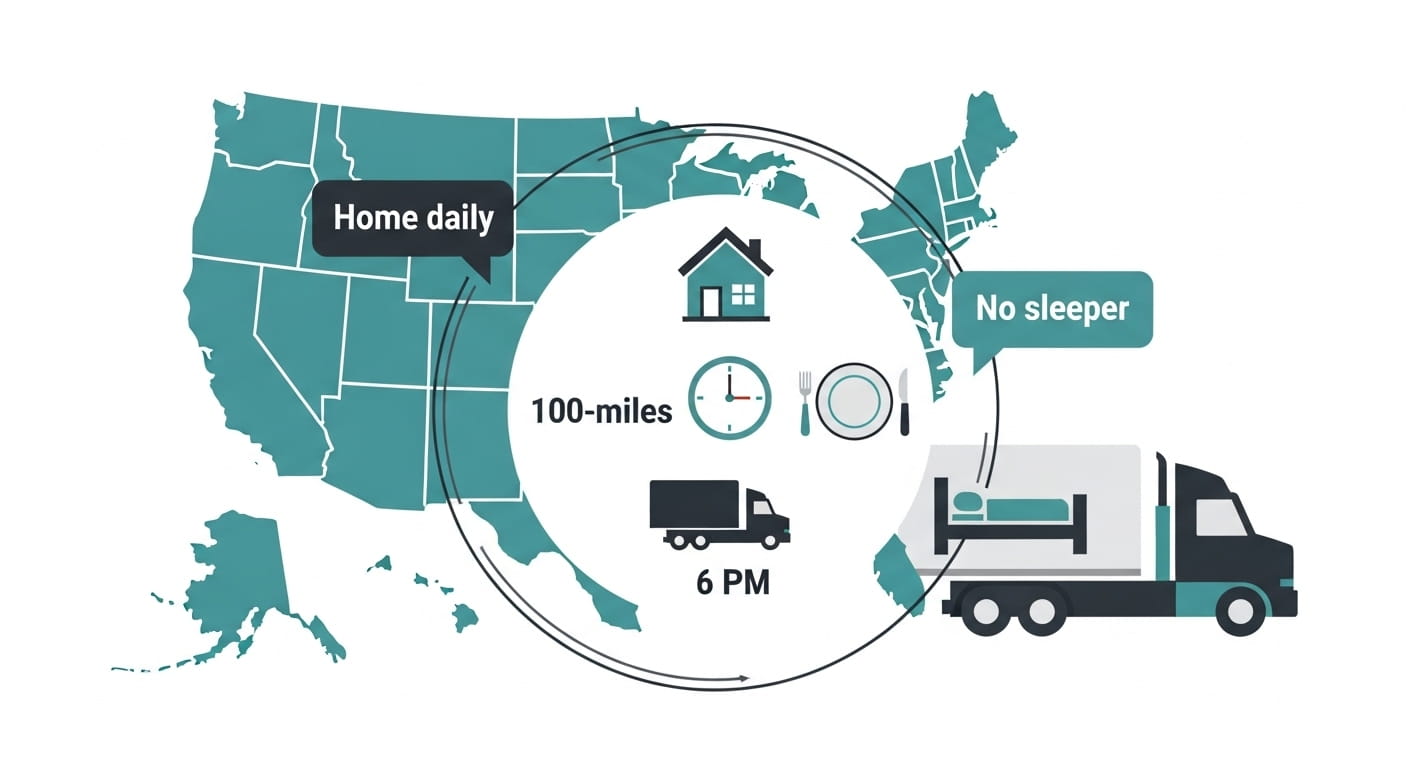
Local truck driving refers to CDL jobs where drivers operate within a specific metropolitan area or region typically a 100-to-150-mile radius of their home terminal. Unlike over-the-road (OTR) drivers who stay out for weeks, local drivers return home at the end of their shift, usually after 8 to 12 hours.
Think of it this way: OTR drivers are astronauts on a long mission. Local drivers are like city bus operators critical, skilled, but home for dinner.
However, do not let the word “local” fool you. These jobs are not easier. They often involve more physical labor, tighter delivery windows, and heavier traffic than highway cruising. But for drivers with families, medical appointments, or simply a hatred of sleeping in a moving vehicle, local truck driving is a career lifesaver.
Key Characteristics of Local Routes:
- Home daily (not just on weekends)
- No sleeper berth required (day cabs only)
- Multiple stops per shift (10–20 deliveries is common)
- Hands-on work (unloading, pallet jack operation, liftgate use)
- Start times often begin between 2 AM and 5 AM
Local vs. Regional vs. OTR: Why the Difference Matters for Recruitment
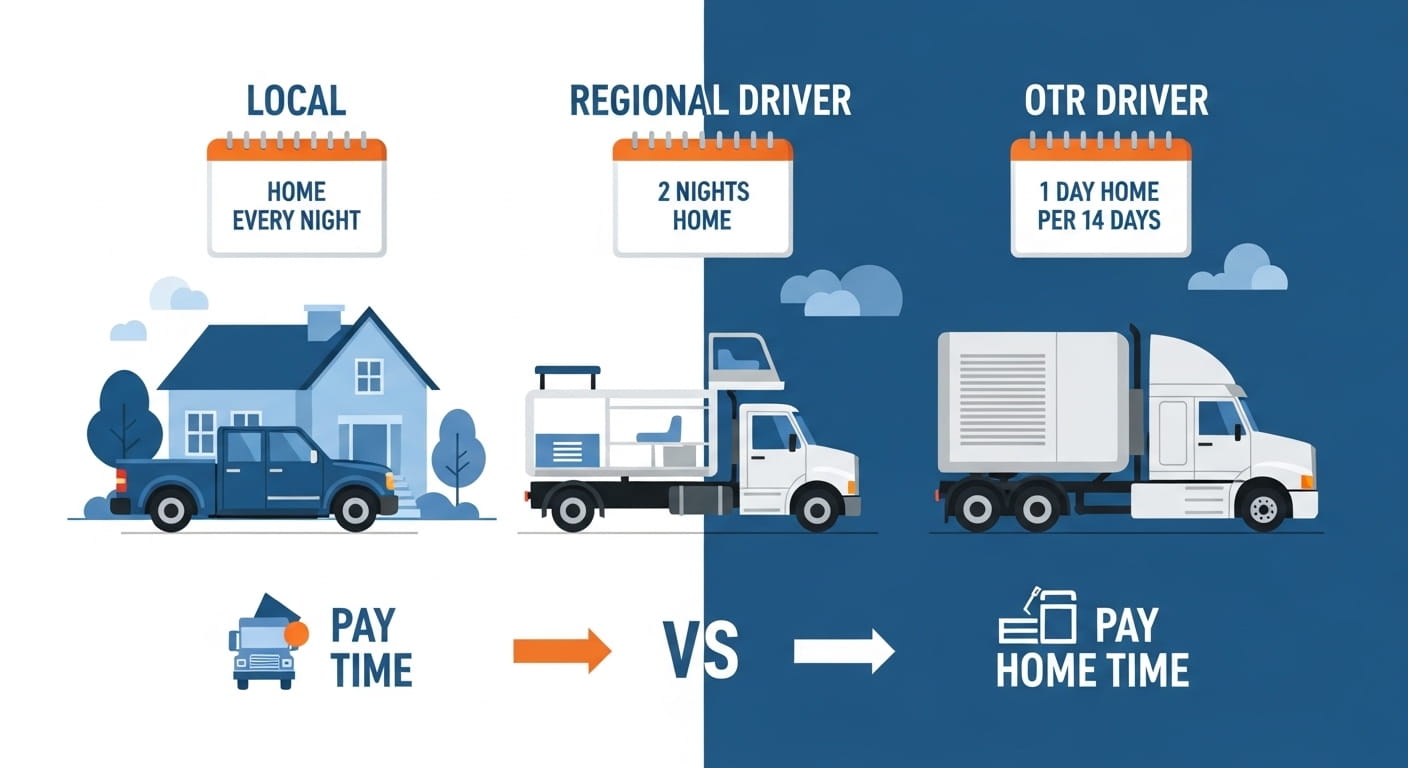
To fully understand what is local truck driving, you need to see how it compares to other driving jobs. This is where many recruitment efforts fail they assume drivers know the lingo. They do not.
| Job Type | Radius | Days Home | Typical Shifts |
|---|---|---|---|
| Local | 100–150 miles | Every night | 8–12 hours, fixed start |
| Regional | 300–600 miles | 2–3 nights/week | Variable, 12–14 hours |
| OTR | Nationwide | 1 day per 7–14 days out | Irregular, 14-hour days |
Here is the recruitment insight most companies miss: Younger drivers often chase OTR for the adventure and higher gross pay. But drivers over 30 or those with children overwhelmingly prefer local truck driving.
Why? Because time is the new currency. A local driver earning $75,000 who sleeps at home is often happier than an OTR driver earning $90,000 who lives in a truck. Recruiters who highlight “home time” in their job descriptions see 40% higher application rates.
The 5 Most Common Types of Local Truck Driving Jobs
Not all local routes are created equal. If you are asking what is local truck driving as a career path, you need to know your options.
1. Food and Beverage Delivery
This is the “boot camp” of local driving. You will use ramps, hand trucks, and liftgates to deliver heavy cases of goods to restaurants and grocery stores.
- Pay: $65k–$85k per year
- Physical demand: Very high
- Example employer: Sysco, US Foods, McLane
2. Less-than-Truckload (LTL)
LTL drivers pick up and drop off smaller shipments at commercial docks. You will drive a “pup” trailer and often use a pallet jack.
- Pay: $70k–$90k per year
- Physical demand: Moderate
- Example employer: FedEx Freight, Old Dominion, XPO
3. Dump Truck / Construction
Hauling dirt, gravel, or asphalt to job sites. Seasonal in some states but stable in growing metros like Texas or Florida.
- Pay: $55k–$75k per year
- Physical demand: Low to moderate
- Example employer: Local quarries, paving companies
4. Fuel Hauling (Tanker)
Delivering gasoline or diesel to gas stations. Requires a Hazmat and Tanker endorsement. Very clean work but high consequence.
- Pay: $80k–$110k per year
- Physical demand: Low
- Example employer: Pilot, Love’s, regional fuel distributors
5. Port and Intermodal
Moving shipping containers from rail yards or ports to warehouses. Lots of waiting, but also lots of drop-and-hook.
- Pay: $65k–$85k per year
- Physical demand: Low
- Example employer: Hub Group, J.B. Hunt (intermodal division)
Pro tip for recruiters: When explaining what is local truck driving to candidates, always specify which type of local job you are offering. A food service driver and a fuel hauler have almost nothing in common except being home daily.
The Hidden Truth About Local Truck Driving Pay
Here is where most online guides get it wrong. They tell you local drivers earn “less” than OTR. That is outdated.
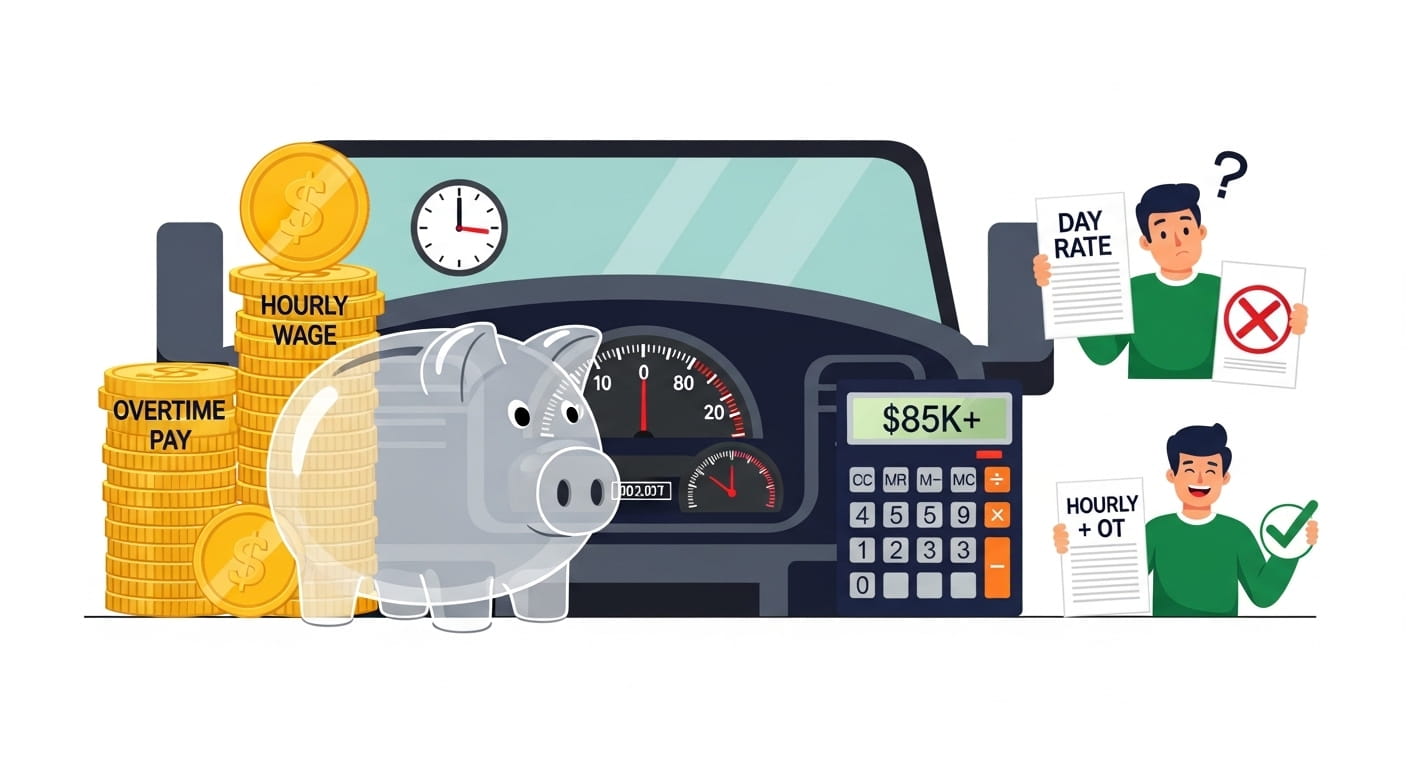
According to the Bureau of Labor Statistics (2024–2025 data), the median annual wage for heavy and tractor-trailer truck drivers is $54,660. But local truck driving specialized roles especially LTL and fuel routinely exceed $85,000.
How Local Drivers Get Paid:
- Hourly: Common in food service and construction. Overtime after 40 hours is a huge advantage.
- Per-mile: Less common locally, but some LTL carriers still use it.
- Per-stop or percentage: Rare. Avoid unless you know the math.
The math that matters: A local driver working 50 hours at $30/hour earns $1,500/week before overtime. Add 10 hours of overtime at $45/hour, and that is another $450. Weekly total: $1,950. That is over $100,000 annually.
So why do some local drivers earn less? Because they accept “day rate” positions ($200–$250 per day) with no overtime. Smart drivers never take flat day rates.
A Day in the Life: Local Driver Story
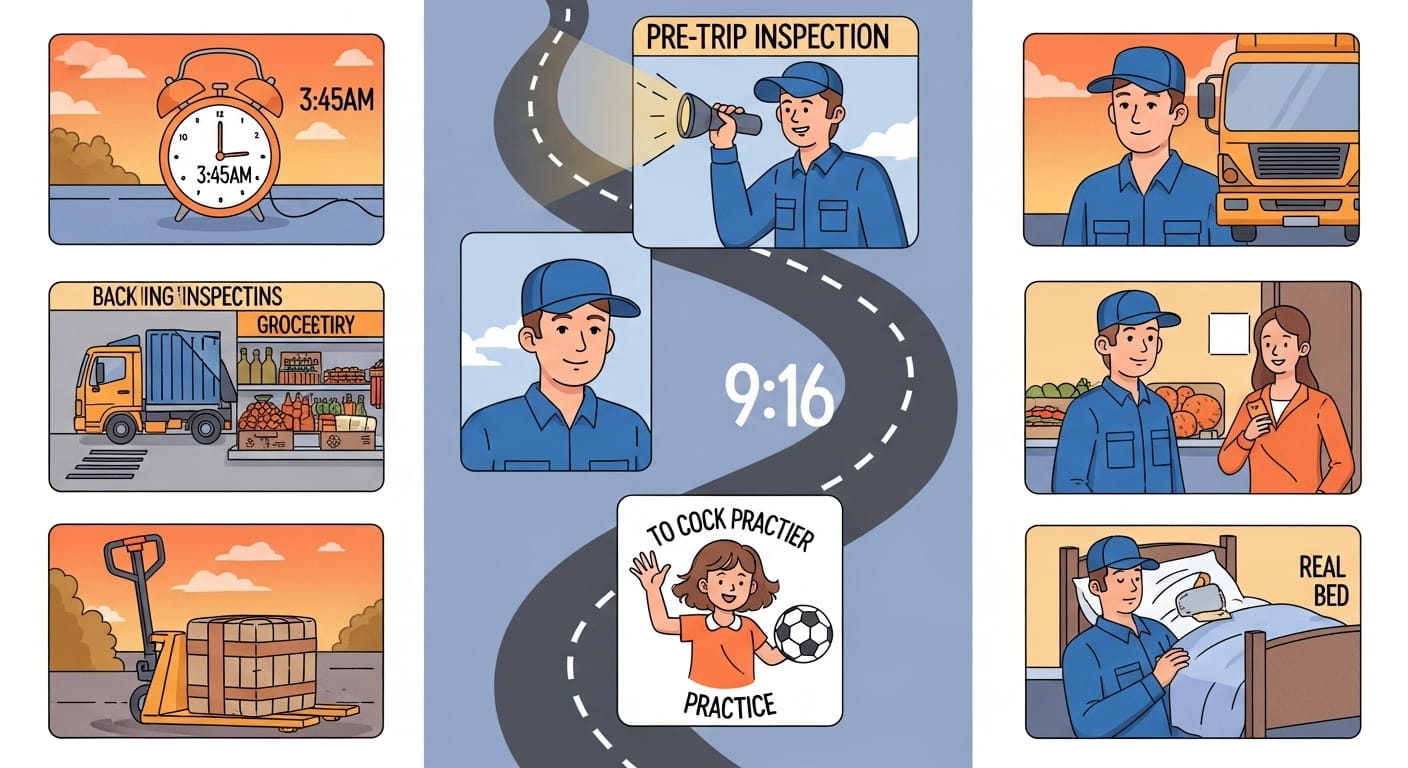
To truly understand what is local truck driving, meet Mike. Mike is 42, lives near Columbus, Ohio, and drives for a beverage distributor.
3:45 AM: Alarm goes off. Coffee, lunch packed.
5:00 AM: Pre-trip inspection on his day cab.
6:00 AM: First delivery a grocery store dock. He uses an electric pallet jack to move 30 skids of soda.
9:30 AM: Second stop. A restaurant with a tiny back alley. Backing takes 10 minutes.
12:30 PM: Third stop. Liftgate delivery to a basement door. Physical, but he is used to it.
3:00 PM: Final stop. Then deadhead back to the yard.
4:15 PM: Post-trip inspection. Paperwork.
5:00 PM: Home. His daughter’s soccer practice at 6 PM.
Mike earns $32/hour. Last year, with overtime, he cleared $88,000. He has not missed a birthday in four years.
That is local truck driving. It is not glamorous. But for millions of American families, it is the backbone of a stable life.
CDL Requirements for Local Driving: What You Really Need
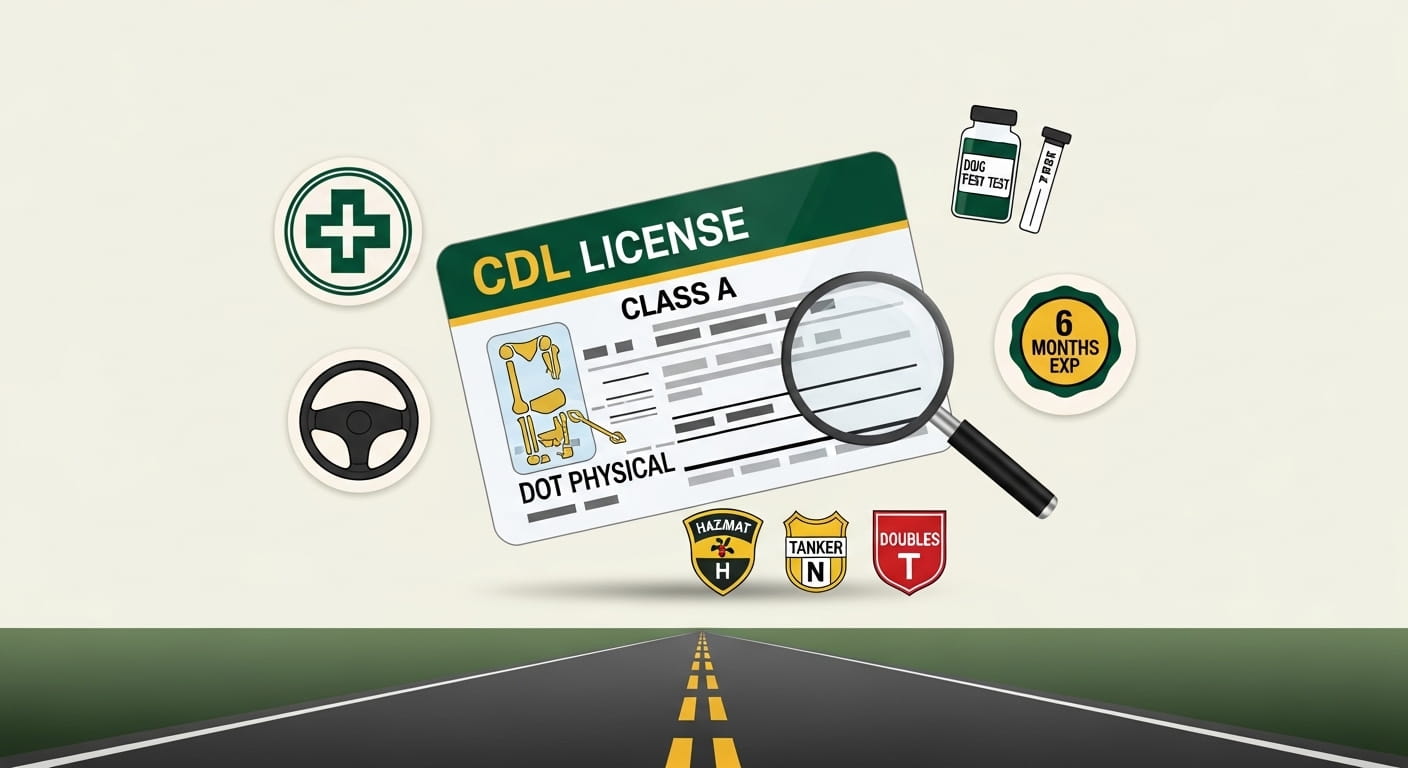
You cannot just walk into a local job with a permit. Here is the minimum:
- Class A CDL (for tractor-trailer) or Class B CDL (for straight trucks like dump trucks).
- Clean driving record (local companies are stricter than OTR megacarriers).
- No major preventable accidents in the last 3 years.
- Pass a DOT physical and drug screen.
Endorsements That Unlock Better Local Jobs:
- Hazmat (H): Required for fuel hauling.
- Tanker (N): Required with Hazmat for fuel.
- Doubles/Triples (T): Helpful for LTL carriers.
- Passenger (P): Only if you want to drive buses (different career).
The cold truth: Most new CDL graduates cannot get a local job immediately. Insurance requirements often demand 6–12 months of OTR or regional experience first. However, some food service and beverage companies have training programs specifically for local routes.
Pros and Cons of Local Truck Driving (From a Driver’s Perspective)
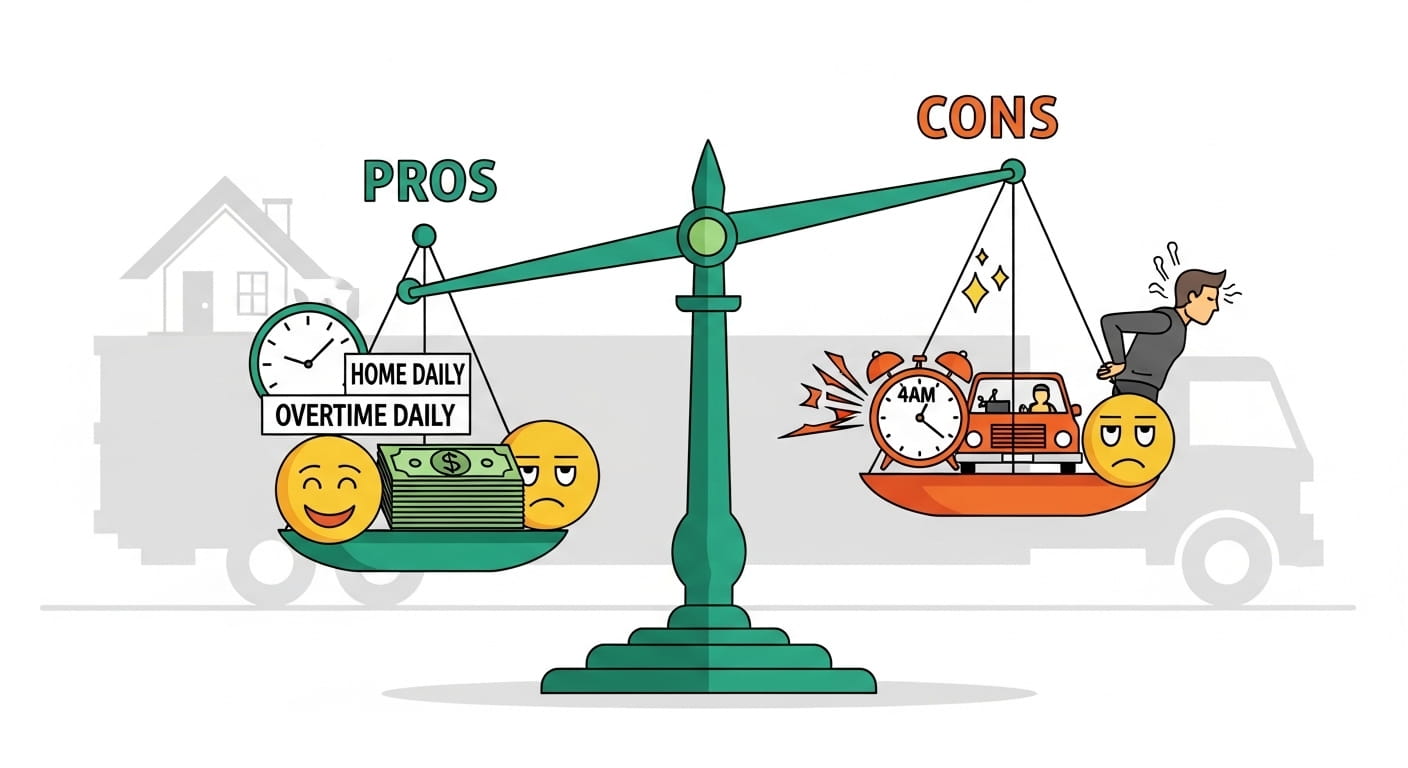
When answering what is local truck driving, you must be honest about the trade-offs.
Pros:
- Home every night. Non-negotiable for many.
- Regular schedule. You know your start time.
- More family time. Attend events, coach sports.
- Overtime pay. Hourly local jobs reward extra effort.
- Less loneliness. You interact with shippers and receivers daily.
Cons:
- Physical toll. Your body will hurt. Backs, knees, shoulders.
- Traffic stress. You never escape rush hour.
- Early mornings. Most local starts are before dawn.
- Less autonomy. Dispatchers watch your every stop.
- Lower per-mile rates. But overtime usually compensates.
Recruiter insight: When recruiting for local jobs, lead with the lifestyle benefits (home daily, predictable schedule). Address the physical demands honestly but offer solutions (proper training, ergonomic equipment).
How to Find Local Truck Driving Jobs in the USA
If what is local truck driving sounds like your future, here is how to actually land the job:
- Use specialized job boards: Indeed and LinkedIn are fine, but try Remms job board.
- Search by endorsement: Type “local CDL A hazmat” or “local fuel hauler.”
- Call terminals directly: Do not just apply online. Drive to the LTL terminal at 6 AM and ask for the terminal manager.
- Get your endorsements before applying. A driver with Hazmat and Tanker is worth 10 without.
- Be willing to start early. Most local jobs begin between 2 AM and 5 AM. If you are not a morning person, this is not for you.
Final Verdict: Is Local Truck Driving Right for You?
Let us circle back to the original question: What is local truck driving?
It is a career of trade-offs. You trade highway solitude for city traffic. You trade sleeper berths for your own pillow. You trade adventure for routine. And in exchange, you get something that no amount of money can buy: presence.
For the parent who wants to tuck their kids in. For the caregiver who needs to be available. For the driver whose back can handle a pallet jack but not a vibrating bunk for 14 days. Local truck driving is not just a job. It is a lifestyle choice.
And for recruiters? The market for local drivers is exploding. E-commerce, construction, and last-mile logistics are all pulling from the same shallow pool of CDL holders. Companies that understand what is local truck driving and sell the home daily benefit effectively will win the war for talent.
Drive safe. Sleep at home. And know that every time you back into that crowded dock, you are keeping America moving.
Is local truck driving harder than OTR?
How much do local truck drivers make per year?
Can new CDL drivers get local jobs?
What is the best local truck driving job?
Do local truck drivers unload their own trucks?
Ready to stop dreaming and start driving?
Fill out the form and a Remms recruiter will reach out within one business day. No spam, no pressure — just real results.
Submit Driver Profile