You have probably heard truckers talk about being “OTR,” “local,” or “regional.” But if you are new to the industry, those terms can sound like a different language.
Maybe you just got your CDL. Or maybe you have been driving over-the-road for a year and you are tired of sleeping in a truck stop parking lot three states away from your kids.
So let us break it down simply.
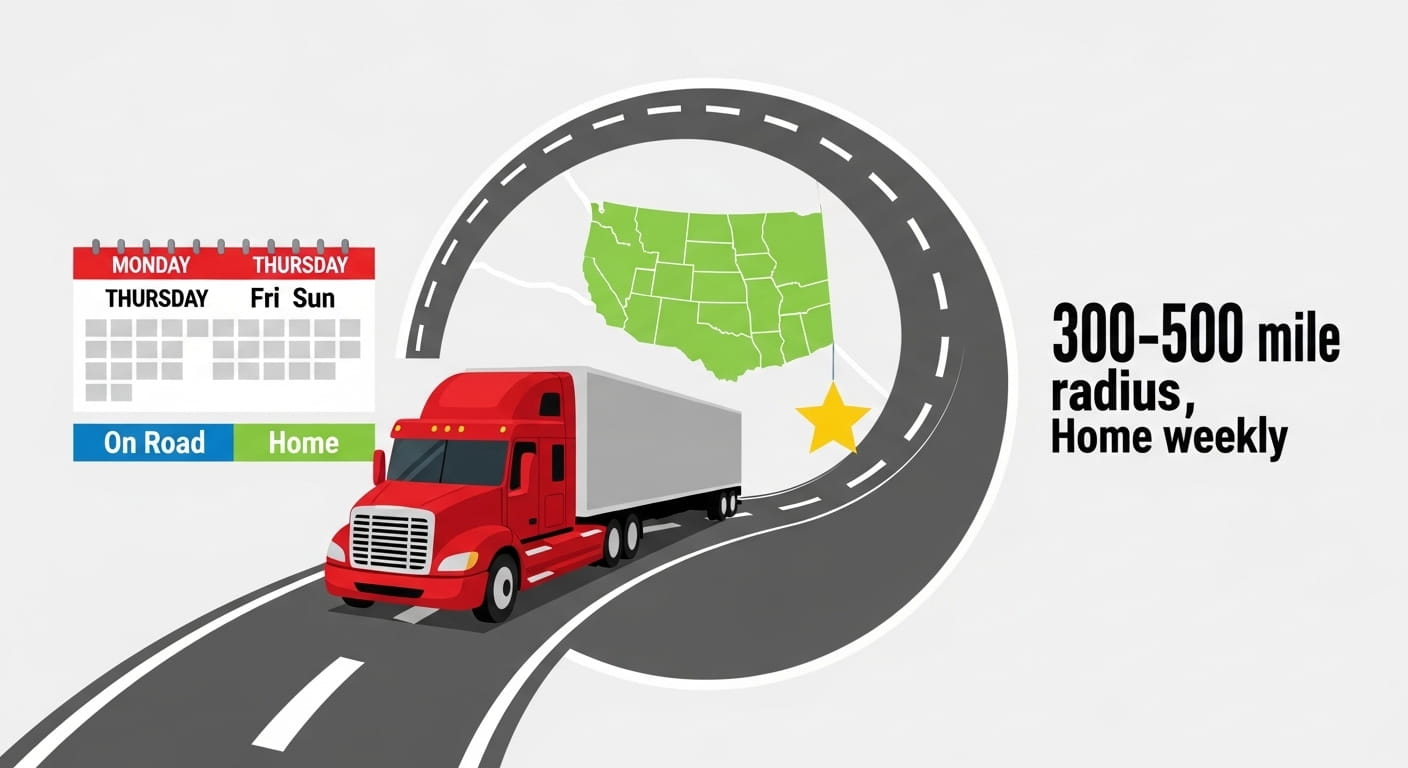
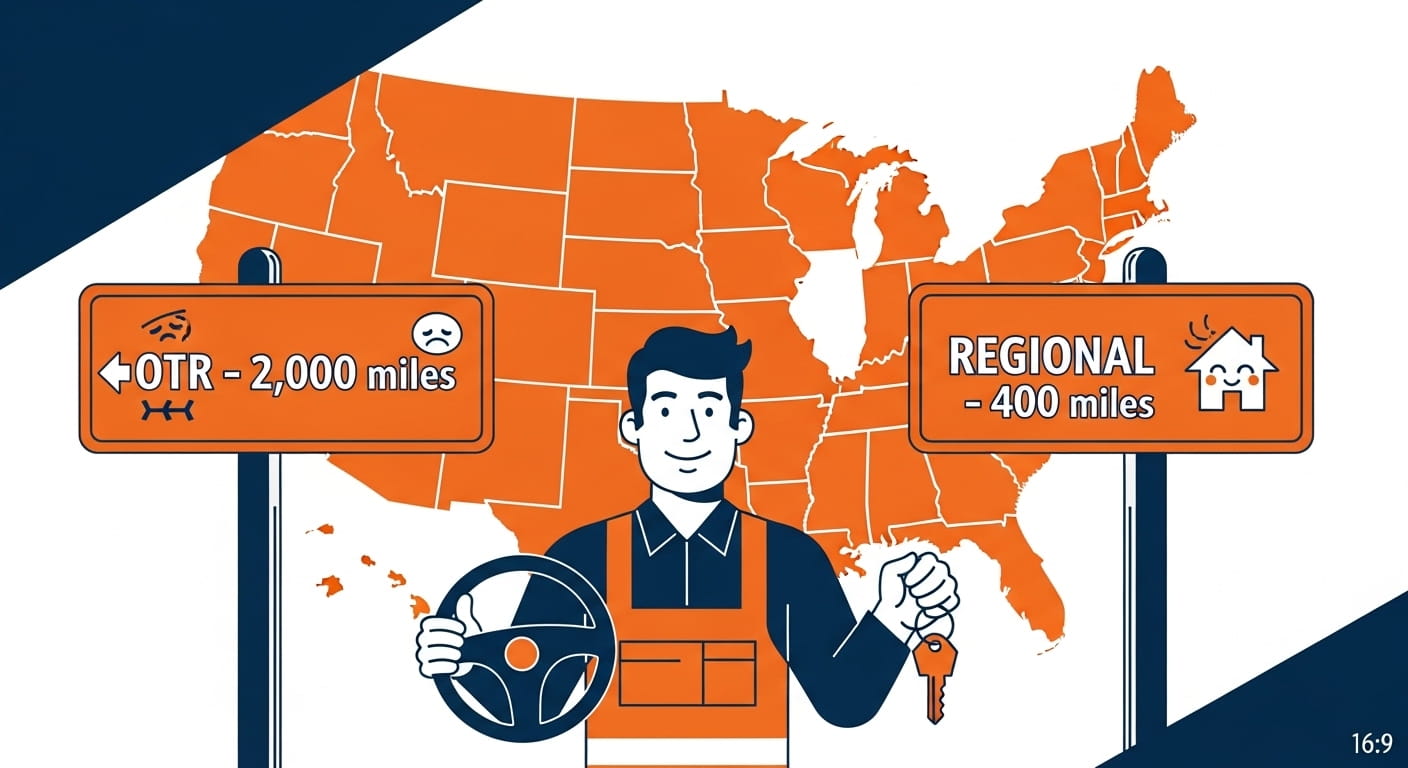
What is regional trucking? It is the sweet spot between long-haul OTR (over-the-road) and local delivery. Regional drivers stay within a specific multi-state area usually a 300 to 500-mile radius from their home terminal. They are typically home every weekend. Sometimes more often.
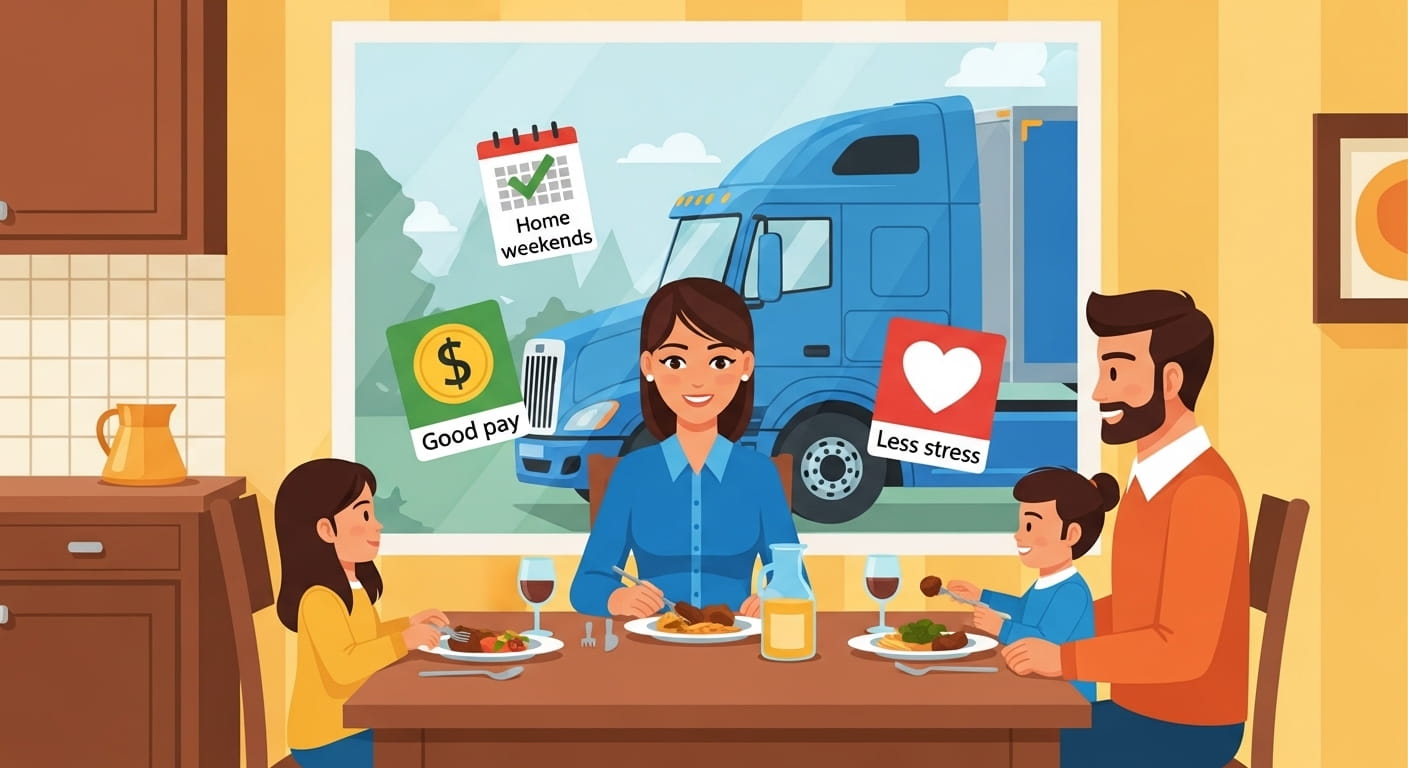
For many drivers, regional trucking is the perfect career move. You still see different scenery. You still earn good money. But you also get to sleep in your own bed on Friday night.
Let me tell you about a driver named Carlos.
Carlos spent two years driving OTR from California to Florida. He made decent pay, but he missed his daughter’s soccer games. His wife told him, “Something has to change.” So he switched to a regional route running only between Texas, Oklahoma, and Arkansas. Now he leaves Monday morning, returns Thursday night, and has Friday through Sunday at home. He took a small pay cut per mile but he stopped spending $200 a week on truck stop food. His family is happy. He is happy.
That is the promise of regional trucking.
What Is Regional Trucking? A Clear Definition
Let us start with the official answer.
What is regional trucking? It is a type of freight hauling where drivers operate within a defined geographic region, usually covering three to five neighboring states. The truck returns to a home terminal or the driver’s residence at least once a week.
Most regional trucking jobs require drivers to be out for 5 days and home for 2 days (weekends). Some companies offer 6 days on, 3 days off. A few even get drivers home twice a week.
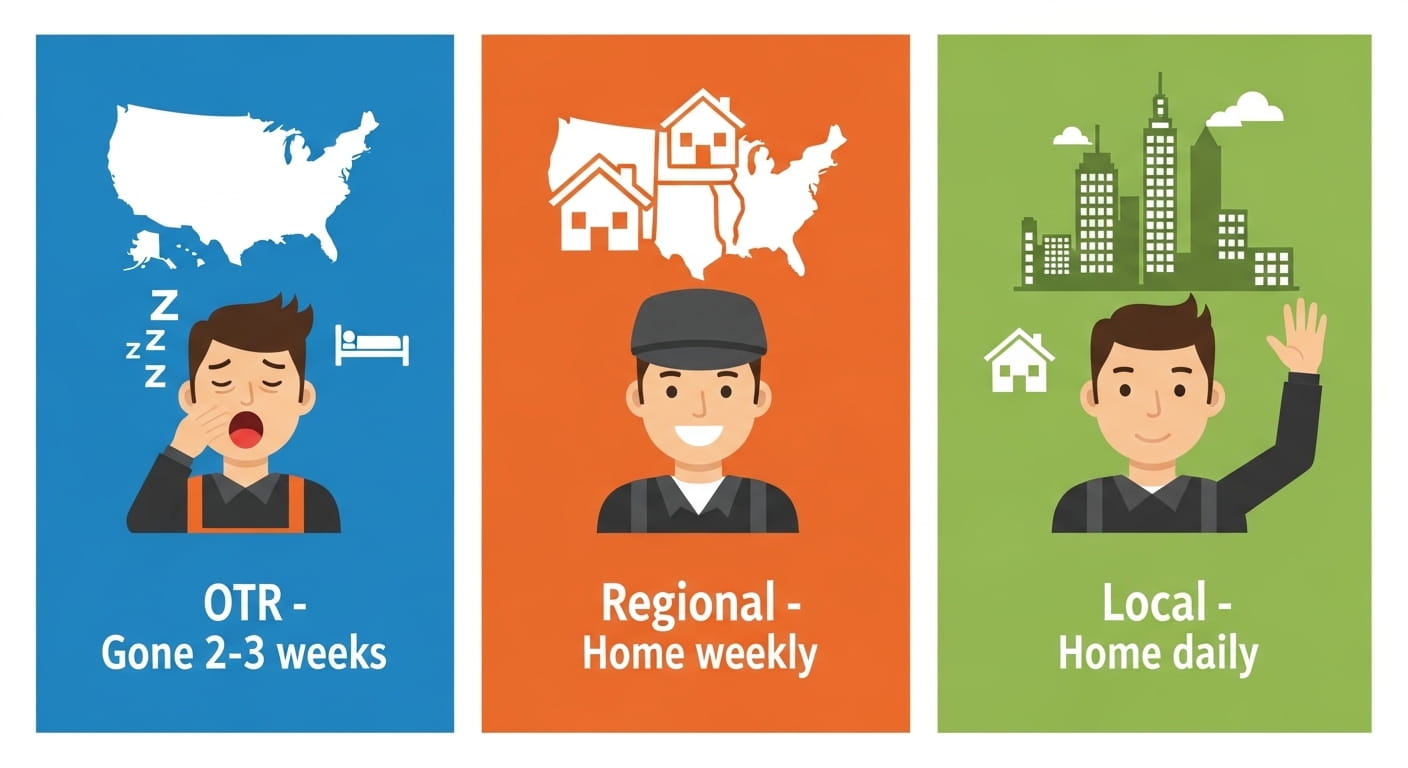
The key difference from OTR: You are not gone for two or three weeks at a time.
The key difference from local: You are not driving a dump truck or delivery van home every night. You are still sleeping in a sleeper cab a few nights per week.
So when someone asks what is regional trucking, you can say: It is the lifestyle choice for drivers who want to see the road but still see their family.
Regional vs. OTR vs. Local: A Simple Comparison
To really understand what is regional trucking, you have to see how it stacks up against the other two main driving jobs.
Feature Regional OTR (Over-the-Road) Local Home time Weekly (weekends) Every 2–3 weeks Daily Radius 300–500 miles 1,000+ miles 50–100 miles Sleeping Sleeper cab 4–5 nights/week Sleeper cab 20+ nights/month Own bed every night Average pay $65k–$85k $55k–$75k (first year) $50k–$70k Experience needed Often 3–6 months OTR None (rookie friendly) 1+ year often required Best for Drivers with families Solo adventurers Home every night lovers As you can see, regional trucking is not the highest paying nor the most time at home. But it is the best balance for most people.
Benefits of Regional Trucking (Why Drivers Love It)
Now that you know what is regional trucking, let us talk about why drivers are leaving OTR in droves to do it.
1. You Get Real Weekend Home Time
This is the number one reason. Regional drivers are home Friday night through Sunday night. That means you can:
- Coach your kid’s soccer team
- Go to church with your spouse
- Mow your own lawn
- Sleep in a real bed
2. Consistent Routes, Less Stress
OTR drivers never know where they are going next. One day you are in Seattle. Next day, Miami. Regional drivers run the same general area. You learn the truck stops, the shippers, the traffic patterns. That predictability lowers your daily stress.
3. Better Work-Life Balance
You are not a stranger in your own home. Your partner knows your schedule. Your kids know when you will be back. That stability is worth more than an extra 5 cents per mile.
4. You Still Get Variety
Local drivers see the same city streets every day. Regional drivers see mountains, farms, small towns, and big cities just within a few states. You are not bored, but you are also not lost in a different time zone every morning.
5. Easier on Your Body
OTR drivers sit for 11 hours a day, sleep in a vibrating cab, and eat truck stop food. Regional drivers still sit a lot, but the shorter runs mean more frequent stops for loading and unloading. You move more. You eat better (because you can meal prep at home on weekends).
Challenges of Regional Trucking (Be Honest)
No job is perfect. When you research what is regional trucking, you also need to know the downsides.
1. Traffic, Traffic, Traffic
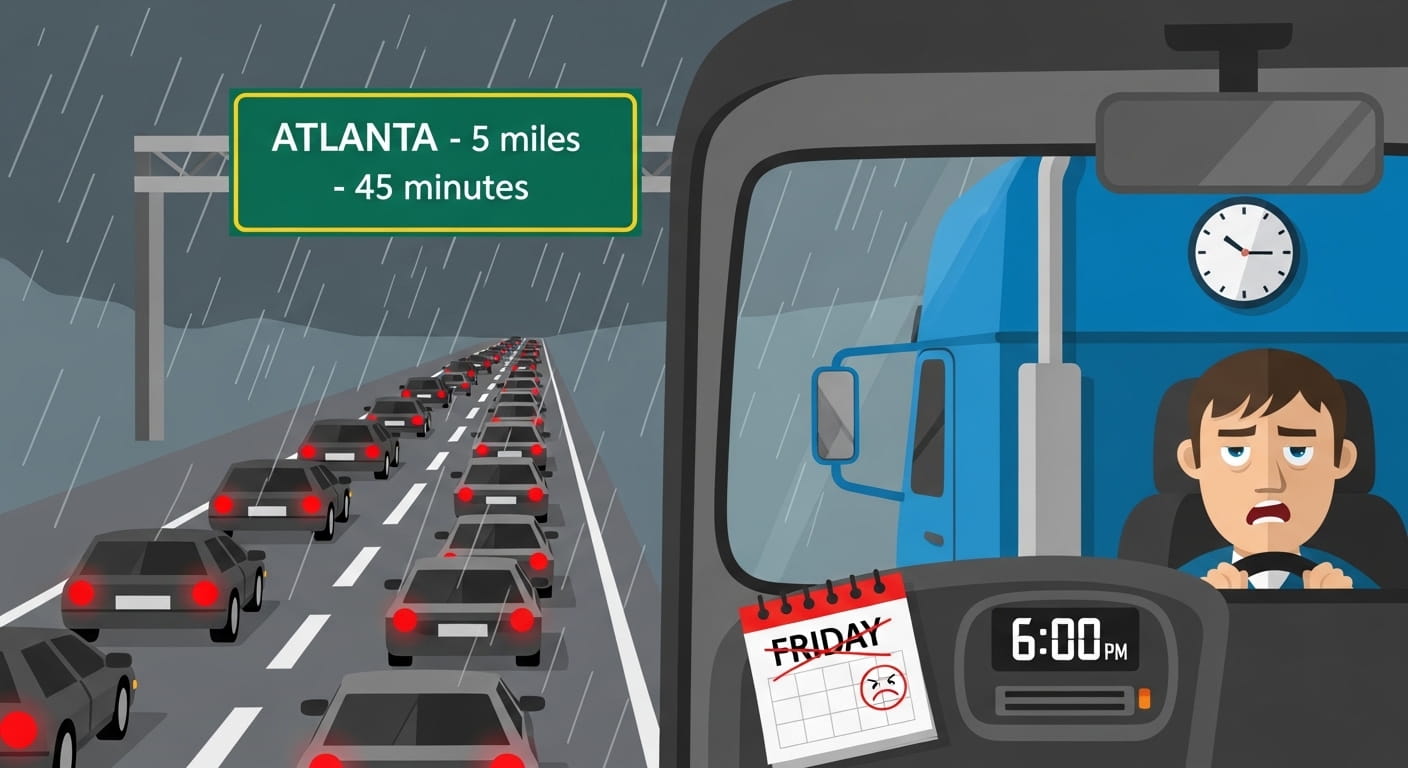
Regional routes often stick to major interstates and urban areas. That means rush hour in Atlanta. Construction in Dallas. Accidents in Nashville. You will spend more time in traffic jams than an OTR driver running through Montana at 2 AM.
2. Less Pay Per Mile Than OTR?
This is not always true, but some regional carriers pay slightly less per mile because the freight is shorter and denser. However, regional drivers often get more miles per week (2,000–2,500 vs. 1,800–2,200 OTR). So your weekly paycheck can be similar or higher.
3. You Still Miss Some Weekends
If a load is late or weather hits, you might not make it home Friday night. Most regional jobs guarantee “home time” but not always exactly when promised. Read your contract carefully.
4. Less “Freedom”
OTR drivers can take their truck anywhere. Regional drivers are locked into their lane. If you like waking up in a new city every day, regional might feel boring.
Who Is Regional Trucking Best For?
After learning what is regional trucking, you should ask yourself: Is this for me?
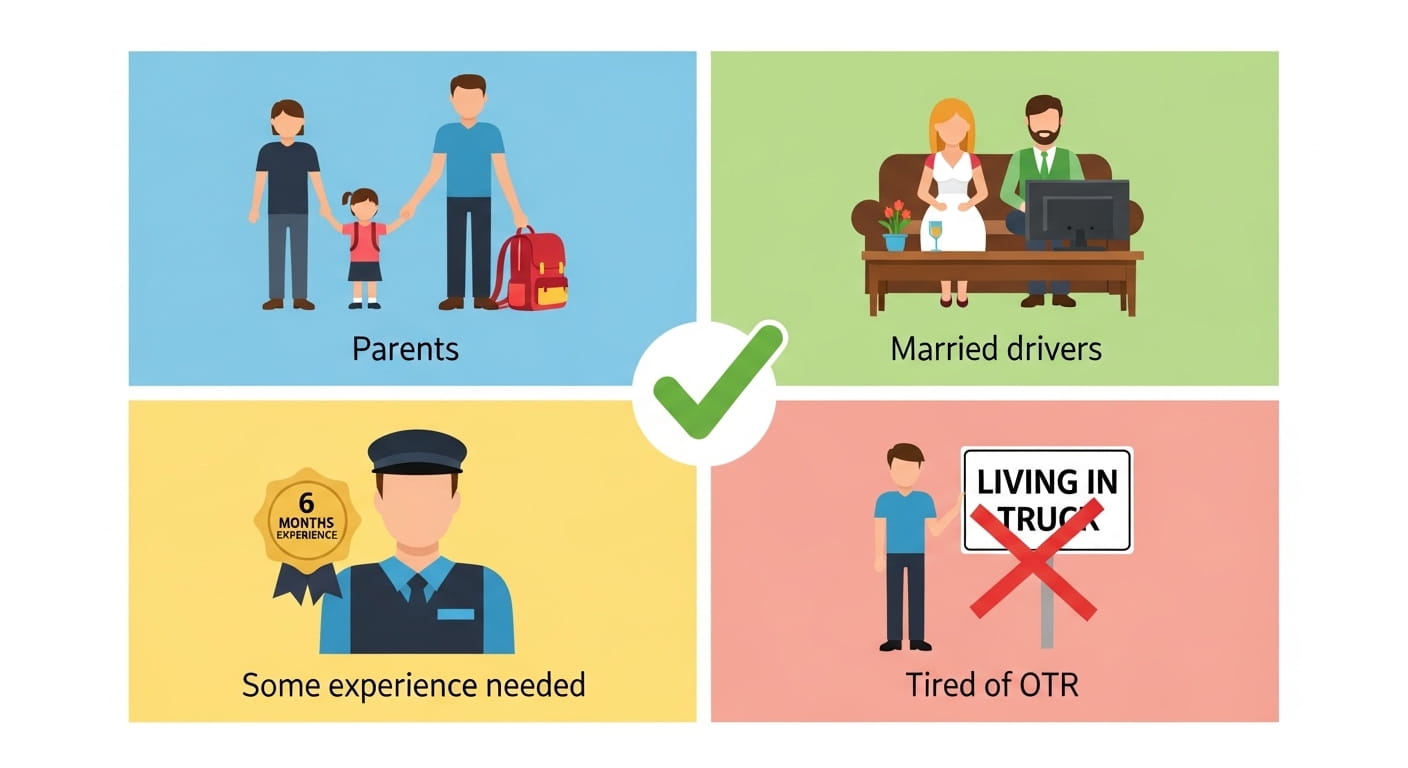
Regional trucking is ideal for:
- Parents with school-age kids – You need to be home for school events and bedtime routines.
- Married drivers – Your spouse wants to see you more than 4 days a month.
- Drivers with 6–12 months experience – Most regional jobs require a year of OTR first, but some hire rookies with good training.
- People who hate living in the truck – You are fine with a sleeper cab for 4 nights, but not 20 nights.
- Drivers who want predictable pay – Regional lanes have consistent freight. You are not chasing brokers or sitting for days waiting for a load.
Regional trucking is not ideal for:
- Single drivers who love adventure
- Drivers saving every penny to buy a house (OTR saves more money)
- People who cannot handle city traffic
Typical Pay for Regional Truck Drivers (2026 Numbers)
Let us get real about money. What is regional trucking worth in your paycheck?
Based on current industry averages:
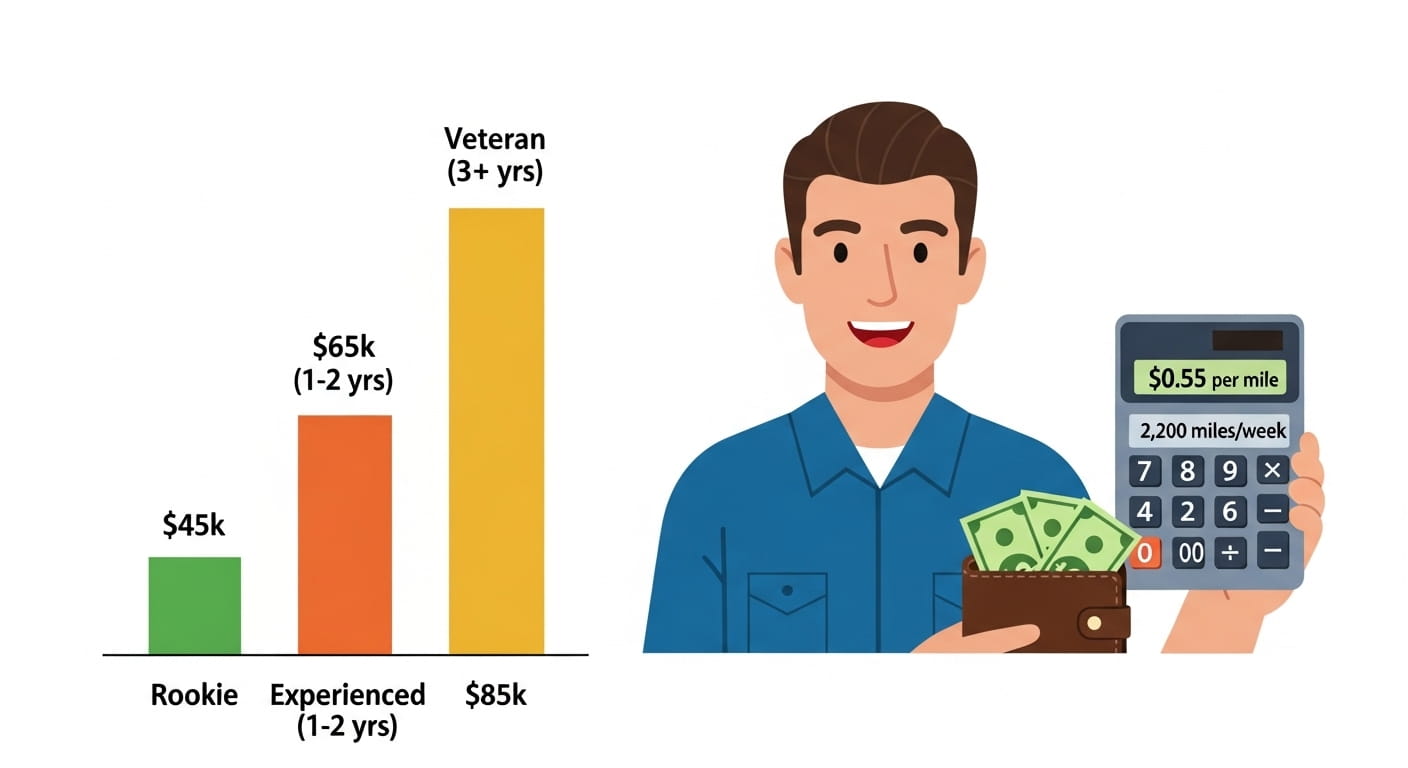
Experience Pay Per Mile Weekly Miles Weekly Pay Yearly Estimate Rookie (0-6 mo) $0.42 – $0.48 1,800 – 2,000 $750 – $960 $39k – $50k Experienced (1-2 yrs) $0.50 – $0.58 2,000 – 2,400 $1,000 – $1,400 $52k – $73k Veteran (3+ yrs) $0.60 – $0.70+ 2,200 – 2,600 $1,300 – $1,800 $68k – $94k Note: Some regional carriers pay hourly ($24–$30/hour) plus overtime. Others pay a daily rate. Always ask: What is the average weekly gross for a driver on this regional account?
How to Get Into Regional Trucking
You now understand what is regional trucking. How do you actually land one of these jobs?
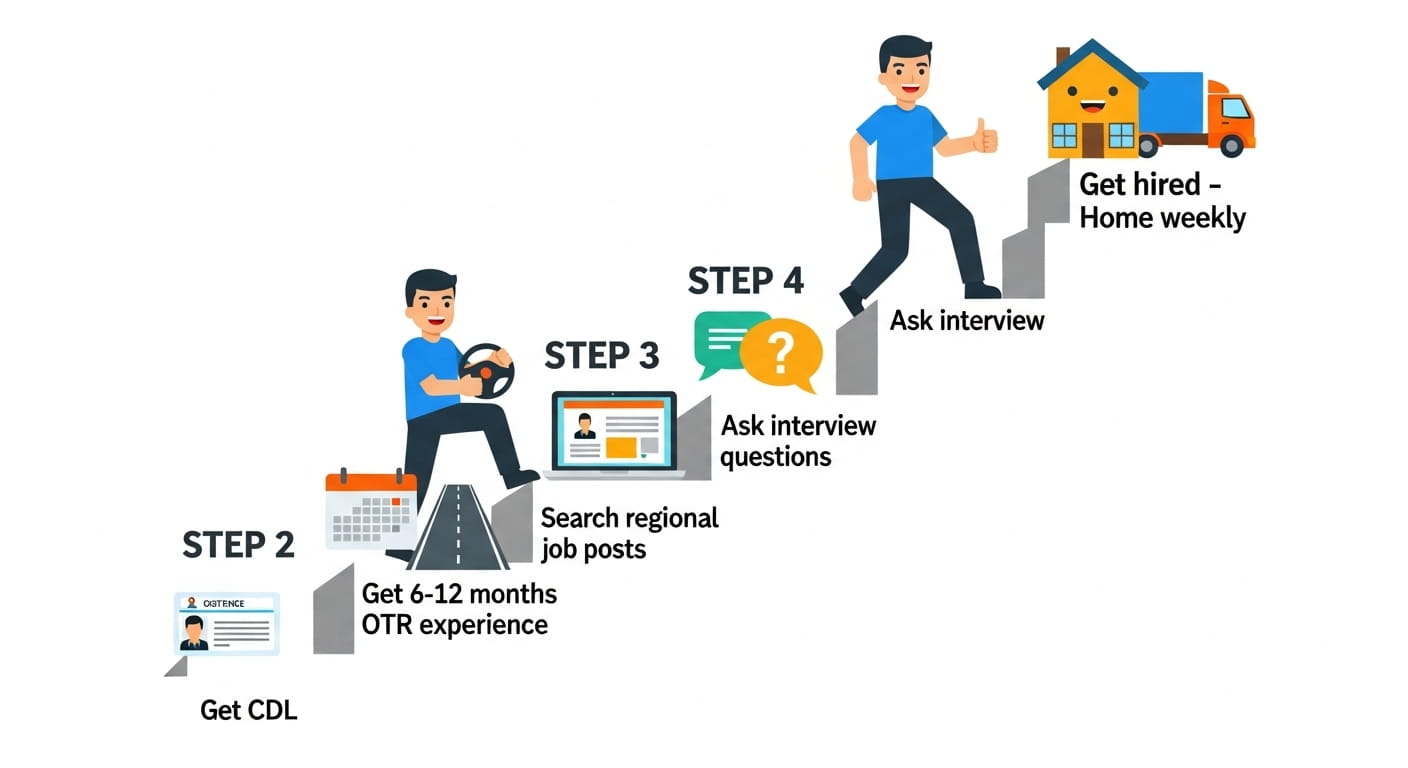
Step 1: Get Your CDL (If You Don’t Have It)
You cannot drive regional without a Class A CDL. See our guide on how to become a truck driver in USA if you need help.
Step 2: Get 3–12 Months of OTR Experience
Most regional carriers will not hire a complete rookie. They want drivers who have proven they can handle a truck in all weather, back into tight docks, and manage their hours of service. Do your rookie year OTR, then switch to regional.
Step 3: Look for “Regional” or “Dedicated” Job Postings
Search on Indeed, TruckersReport, or Craigslist for:
- “Regional CDL driver”
- “Home weekly trucking jobs”
- “Dedicated regional fleet”
Step 4: Ask Specific Interview Questions
When a recruiter calls, ask:
- “What is the average home time per week?”
- “What states does this regional lane cover?”
- “Do you pay for all miles, including empty deadhead?”
- “Are trucks governed? At what speed?”
Step 5: Be Ready to Say No to Low Pay
Some companies advertise “regional” but actually keep you out for 10 days. Read the fine print. A true regional job gets you home every 5–6 days.
Real Driver’s Story – Debra
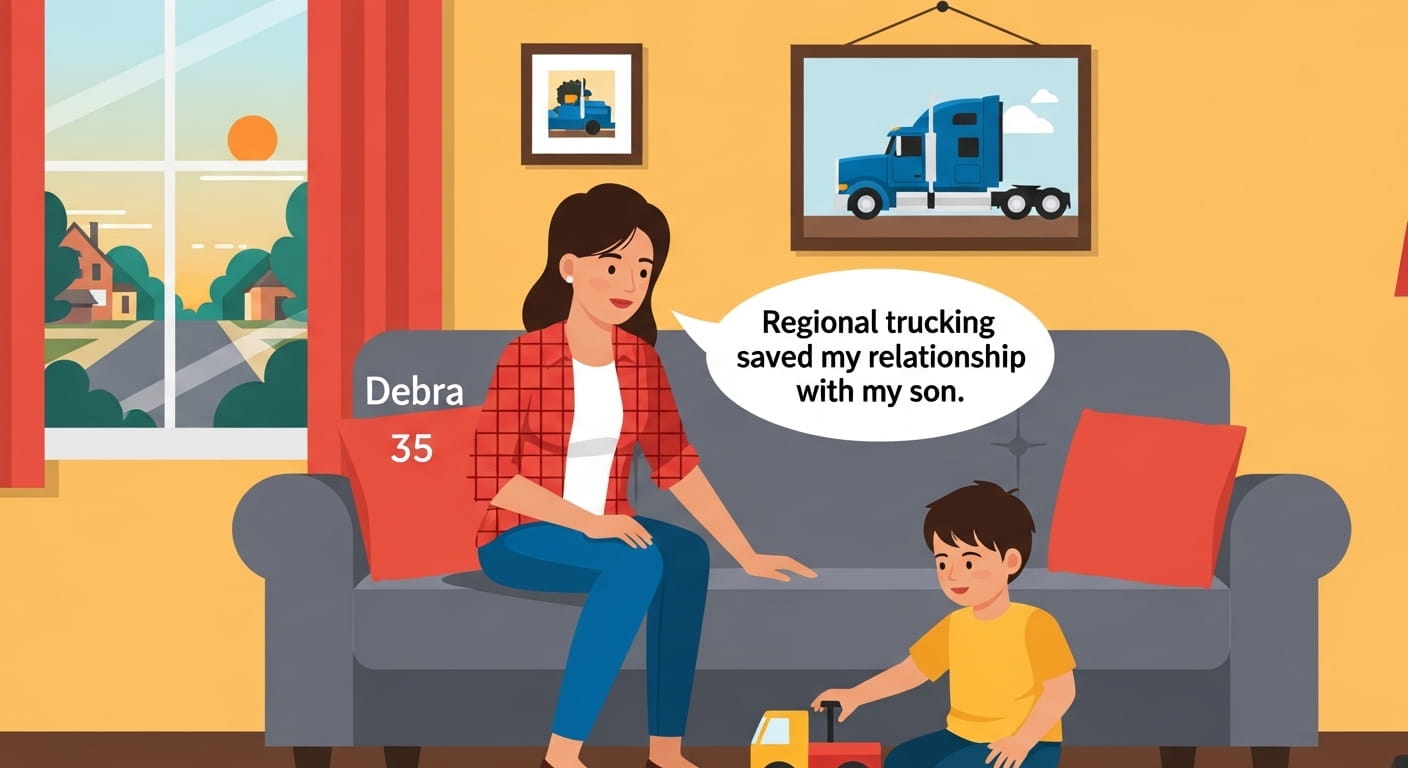
Let me introduce you to Debra, a 34-year-old single mom from Ohio.
Debra got her CDL at 31. She did two years OTR running from Cleveland to California and back. She made good money about $75,000 a year. But she was missing her son’s entire childhood. Her mother was watching him 25 days a month.
She asked her dispatcher: “What is regional trucking like in this company?” The dispatcher laughed and said, “We don’t really do that.”
So Debra switched carriers. She now runs a dedicated regional lane: Ohio, Pennsylvania, West Virginia, and Kentucky. She drives about 2,100 miles a week. She leaves Monday at 6 AM, returns Thursday night. She has Friday, Saturday, and Sunday with her son.
Her pay dropped to $68,000. But she stopped paying for a full-time babysitter. She cooks real dinners. She sleeps in her own bed.
Debra says: “I would never go back OTR. Regional trucking saved my relationship with my son.”
That is the power of understanding what is regional trucking and making the switch.
Conclusion: Is Regional Trucking Right for You?
You came here asking what is regional trucking. Now you know.
It is the middle path. Less time away than OTR. More variety than local. Consistent home time. Solid pay. Real life balance.
If you are tired of living out of a suitcase or a sleeper cab regional trucking might be your next best move.
And here is the good news: We are hiring regional drivers right now.
We run dedicated regional lanes in the Midwest, Southeast, and Texas. Home every weekend. 2022 or newer automatic trucks. No forced dispatch. Competitive pay starting at $0.55/mile for experienced drivers.
If you have at least 6 months of CDL experience and a clean record, we want to talk.
Apply Now for Regional Trucking Jobs – Home Weekly
Fill out the form and a Remms recruiter will reach out within one business day. No spam, no pressure — just real results.
Submit Driver ProfileHow to Find Regional Truck Driving Jobs in the USA
If what is regional truck driving sounds like your future, here is how to actually land the job:
- Use specialized job boards: Indeed and LinkedIn are fine, but try Remms job board.
- Search by endorsement: Type “regional CDL A hazmat” or “regional fuel hauler.”
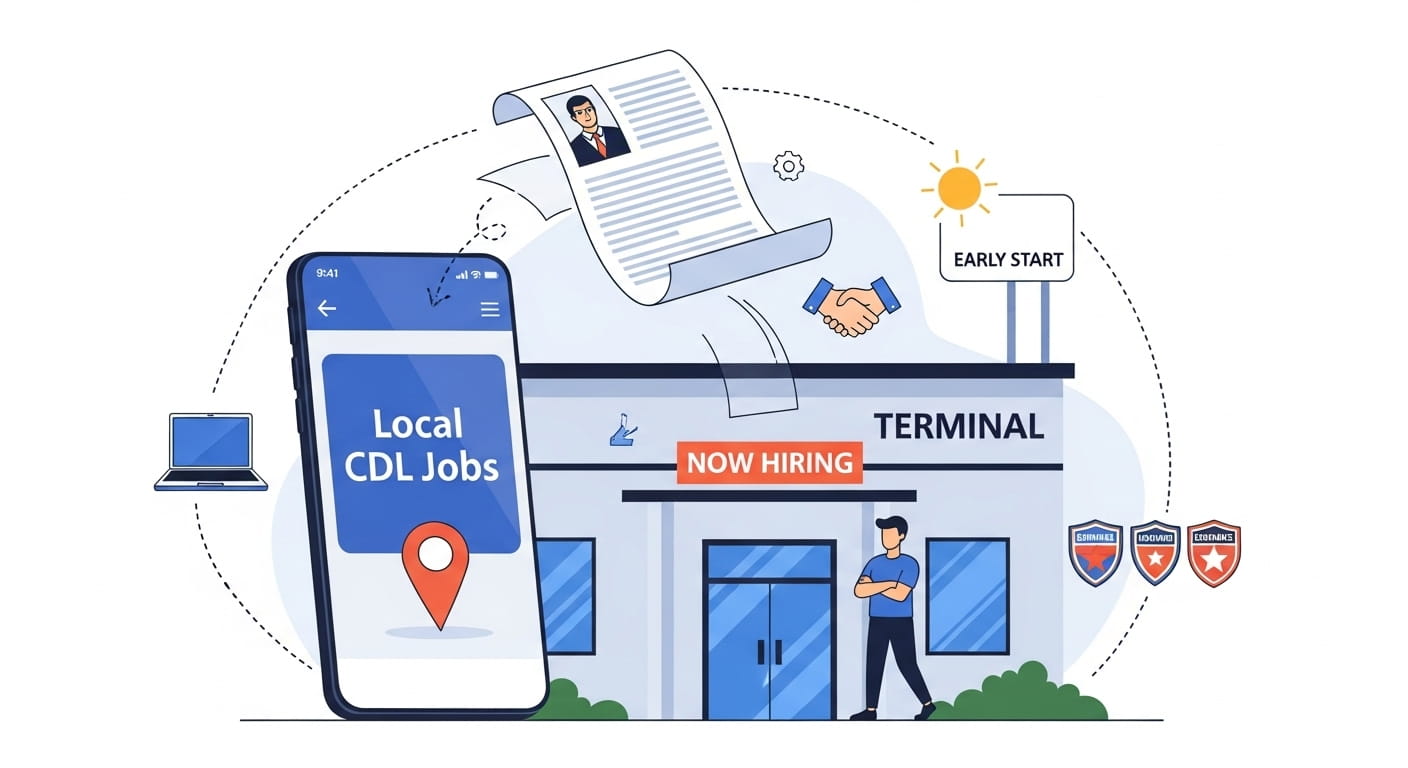
- Call terminals directly: Do not just apply online. Drive to the LTL terminal at 6 AM and ask for the terminal manager.
- Get your endorsements before applying. A driver with Hazmat and Tanker is worth 10 without.
- Be willing to start early. Most local jobs begin between 2 AM and 5 AM. If you are not a morning person, this is not for you.
Final Thoughts
So, what is regional trucking in the end? It’s the smart driver’s choice. It’s the job that says yes to both career growth and family time. It’s the route that thousands of CDL holders have chosen because it simply works.
Whether you’re fresh out of CDL school or a veteran looking for a better balance, regional trucking offers a path forward. The pay is strong. The schedule is predictable. And you get to sleep in your own bed on weekends.
Now that you know exactly what is regional trucking, the next step is finding the right company and hitting the road.
Ready to find regional trucking jobs in your area? Check out job boards like Drivers 1st, Transforce, or The Truckers Report to see what’s available near you.