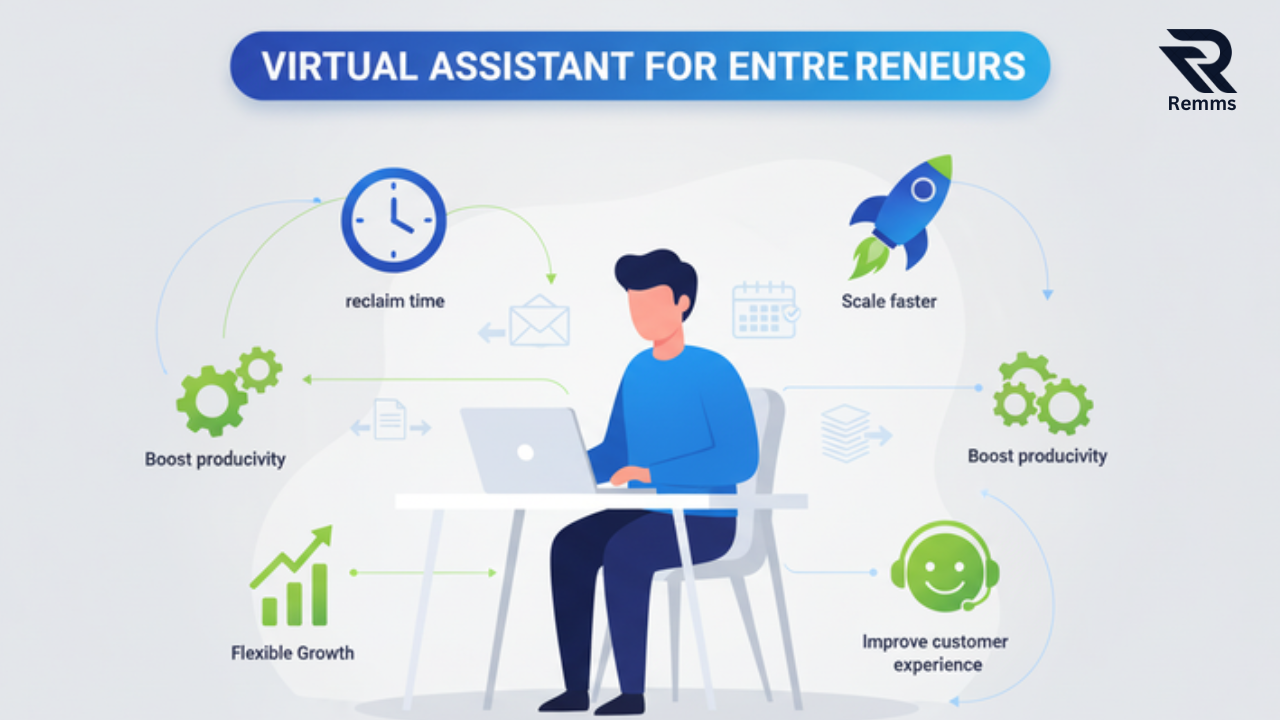
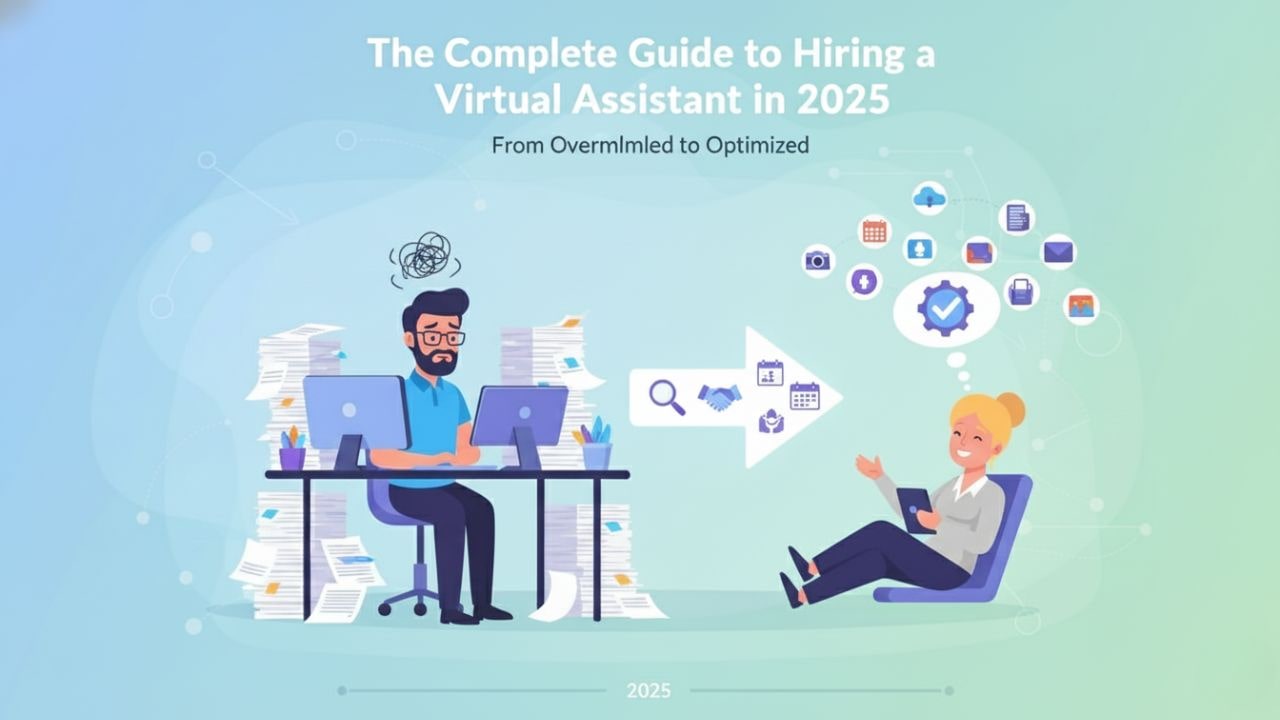
Sarah ran a thriving marketing consultancy. Even with a growing team and happy clients, she was constantly overwhelmed by day-to-day tasks. That’s when she started exploring virtual assistants for hire experts who could handle emails, scheduling, and other routine work giving her the time to focus on strategy and client growth. On paper, everything looked great: revenue was up, clients were satisfied, and the team was expanding. But behind the scenes, she was drowning. Twelve-hour days filled with back-to-back meetings, nights spent answering emails, updating spreadsheets, and chasing invoices left her exhausted. Her calendar was chaotic, follow-ups were slipping through the cracks, and she knew she was leaving money on the table. Then Sarah made one decision that changed everything: she hired a virtual assistant. Within 30 days, she reclaimed 15 hours per week. Her inbox went from 200 unread messages to inbox zero. Client follow-ups happened like clockwork. And for the first time in months, she had breathing room to actually work on her business instead of just in it. If you’re reading this, you’re probably where Sarah was capable, driven, but stretched impossibly thin. This guide will show you exactly how to find, hire, and onboard a virtual assistant who becomes your secret weapon for growth. Why Smart Business Owners Hire Virtual Assistants Let’s be honest: the DIY approach has an expiration date. When you started your business, doing everything yourself made sense. You wore all the hats, learned every role, and kept costs lean. But here’s what most entrepreneurs don’t realize until it’s too late every hour you spend on $20/hour work is an hour you can’t spend on $500/hour work. Here’s the cost of not delegating. If your time is worth $100 per hour and you spend 10 hours weekly on administrative tasks, you’re losing $1,000 in productivity every single week. That’s $52,000 annually. A full-time VA costs roughly $15,000 to $35,000 per year. The math isn’t even close. The Warning Signs You Need a VA Yesterday You need a virtual assistant when: 1. Time drain symptoms Time drain symptoms are clear when your calendar controls you rather than the other way around. You might be working 50+ hours a week, yet revenue growth isn’t keeping pace. High-value projects continuously get pushed to “next week,” and you find yourself responding to emails late at night, again. 2. Operational red flags Operational red flags often accompany these symptoms. Client follow-ups may be delayed or forgotten, invoices might go out late, impacting cash flow, and your CRM could be outdated or inaccurate. Important documents are scattered across chaotic folder structures, and missed deadlines happen because “something came up.” 3. Team strain indicators Team strain indicators also become apparent. Employees may be handling administrative work that doesn’t align with their roles, while you become the bottleneck for approvals and even basic decisions. Projects stall as they wait for your input on minor details, slowing down overall progress. The reality? In our experience at Remms, businesses that delegate administrative tasks to a VA report an average 40% increase in productive hours within the first month. That’s nearly two full workdays back in your calendar every single week. What Your Virtual Assistant Can Actually Handle Virtual assistants aren’t just glorified schedulers. The right VA becomes an extension of your operations, handling everything from daily admin to specialized project work. Administrative Support: Reclaim Your Calendar Administrative work typically consumes 30-40% of a business owner’s week. Here’s what changes when you delegate: Calendar and communication management: Real impact: One Remms client, a financial advisor, spent 12 hours weekly on calendar management alone. His VA cut this to 30 minutes of weekly review time. Sales and Marketing Support: Convert More Leads Your sales and marketing team shouldn’t spend 60% of their time on data entry and follow-ups. A VA can handle: Lead management and nurturing: Content and social media: The difference: Marketing teams with VA support close 23% more deals because they spend more time actually talking to prospects instead of managing spreadsheets. Back-Office Operations: Keep the Engine Running Back-office work is invisible when done well and catastrophic when neglected. A VA ensures: Financial operations: HR and compliance: The impact on cash flow: Businesses with dedicated invoice follow-up reduce their average payment time from 45 days to 28 days. That’s a significant cash flow improvement with zero additional capital investment. Specialized Support: Professional-Level Expertise Not all VAs are generalists. Specialized virtual assistants bring professional skills that would otherwise require full-time hires: Technical specialists: Strategic support: When to hire specialized vs. general: If a task requires expertise you’d pay $50+ per hour for locally, and you need it regularly, a specialized VA delivers professional results at a fraction of the cost. The Real Cost of Hiring a Virtual Assistant Pricing varies dramatically based on three factors: expertise level, service model, and support infrastructure. Here’s how to think about your investment: Pricing Model Comparison Service Type Hourly Rate What You Get What You Manage Best For Freelance Platforms $5–$20 Direct hire, flexible hours, project-based Everything: vetting, training, quality control, backup coverage One-off projects, experimental delegation, very tight budgets VA Agencies $25–$100 Pre-screened candidates, some training, account support Onboarding, task management, performance reviews Ongoing support needs, consistent tasks, moderate budgets Managed VA Services $25–$35 Fully trained VAs, dedicated account manager, backup coverage, SOP development Weekly check-ins only High reliability needs, executive support, hands-off delegation The Hidden Costs People Miss Freelancer model hidden costs: Managed service value adds: ROI Reality Check: If you bill $150/hour, spending 30 hours to hire and train a $10/hour freelancer costs you $4,500 in opportunity cost. A managed service charging $30/hour with 5-hour onboarding costs $750 total. Which is actually cheaper? The Proven 5-Step Framework to Hire Your Perfect Virtual Assistant Most people hire VAs backwards they find a person, then figure out what to delegate. This leads to underutilization, poor task fit, and frustration on both sides. Here’s the right approach: Step 1: Map Your Delegation Opportunities (The Task Audit) Don’t
Hiring CDL A Drivers Now – Call Recruiter Directly