
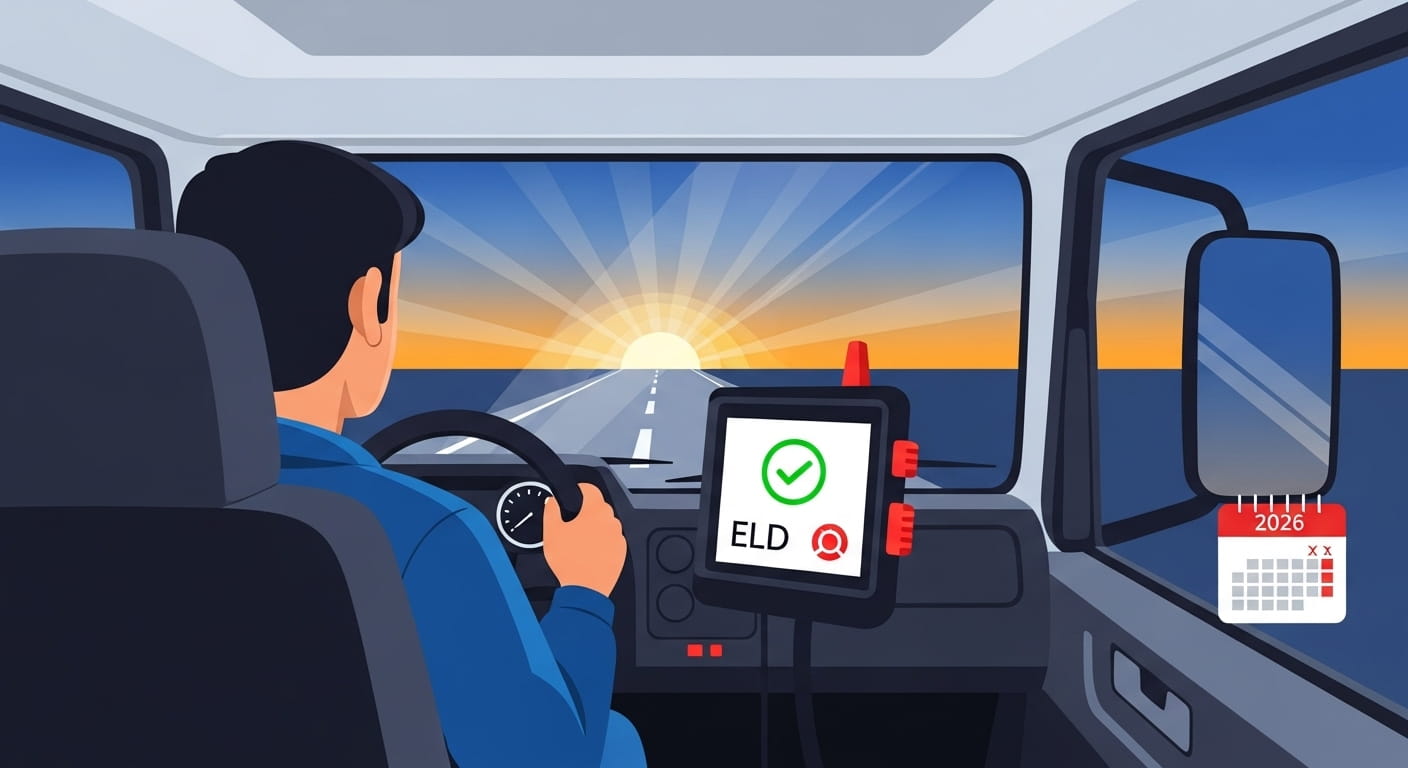
The Short Answer: 11 Hours of Driving The quick answer to how many hours can a truck driver drive? is 11 hours. That is the maximum driving time allowed after taking 10 consecutive hours off duty. But that is just the starting point. There are actually several limits that work together to keep drivers safe and roads secure. Think of them as layers of protection. Understanding each layer is the key to staying compliant. The 5 Core Rules That Answer “How Many Hours Can a Truck Driver Drive?” Let us break this down into five clear rules. Master these, and you will know exactly how many hours a truck driver can drive in any situation. Rule #1: The 11-Hour Driving Limit After taking 10 consecutive hours off duty, you may drive for a maximum of 11 hours. This is the daily driving cap. Once you hit 11 hours, you must park the truck until you take another 10 consecutive hours off duty. Rule #2: The 14-Hour On-Duty Window The 14-hour window starts ticking the moment you come on duty after your 10-hour break. You cannot drive beyond the 14th consecutive hour after coming on duty even if you have not used all 11 driving hours. Important note: Taking breaks during the day does not pause the 14-hour clock. If you start at 6:00 AM, your window closes at 8:00 PM regardless of how much time you spent eating or waiting at a dock. The answer to how many hours a truck driver can drive within a single shift is 11 hours, but you have a 14-hour window to complete them. Rule #3: The 30-Minute Break Requirement After you have driven for 8 cumulative hours, you must take a break of at least 30 consecutive minutes. This break can include off-duty time, sleeper berth time, or even on-duty (not driving) time if your employer allows it. The clock resets for the 8-hour driving limit after each qualifying break. Rule #4: The 60/70-Hour Weekly Limit This rule answers how many hours a truck driver can drive over a full week. Drivers cannot continue driving after accumulating: The 7-day or 8-day schedule depends on your carrier’s operating cycle. This weekly cap prevents drivers from working excessive hours over extended periods. Rule #5: The 34-Hour Restart (Weekly Reset) Once you hit your weekly limit (60 or 70 hours), you can reset your clocks by taking at least 34 consecutive hours off duty. This can include sleeper berth time or off-duty time. A 2026 final rule clarified that the 34-hour restart does not require two periods between 1 AM and 5 AM, making it simpler to use. ⚠️ Important: The 34-hour restart can only be used once every 168 hours (once per week). It completely resets your 60/70-hour clock to zero, allowing you to start a fresh week of driving. Mini-Story: How One Driver Mastered the 11-Hour Limit Meet Maria. She is a 12-year veteran driver who hauls refrigerated freight from California to Texas. Early in her career, she struggled with the daily question of how many hours a truck driver can drive without violating HOS rules. “I used to cut it close all the time,” Maria admits. “I would drive 10 hours and 55 minutes thinking I had time to spare. Then I hit traffic outside Dallas. By the time I found a parking spot, I was over my 14-hour window by 12 minutes. That violation cost me a $2,500 fine and three days out of service.” Maria learned to plan differently. Now she sets her ELD to warn her at 10 hours of driving. She always keeps a 1-hour buffer for unexpected delays. “The answer to how many hours a truck driver can drive is not just 11,” she says. “It is 11 minus whatever could go wrong that day.” Her advice? “Respect the rules like they are protecting your family because on the highway, they are.” HOS Exceptions: When You Can Drive Longer There are situations where the standard answer to how many hours a truck driver can drive changes slightly. These exceptions offer legal flexibility when used correctly. The 16-Hour Short-Haul Exception If you qualify as a short-haul driver (operating within a 150 air-mile radius of your reporting location), you may extend your 14-hour on-duty window to 16 hours once every 7 days, or after a 34-hour restart. Key requirements: Adverse Driving Conditions Exception If you encounter unforeseen bad weather or road conditions that were not known before your trip, you may extend both your 11-hour driving limit and 14-hour window by up to 2 hours. This means you could legally drive up to 13 hours within a 16-hour window when adverse conditions arise after departure. ⚠️ Important: This exception applies only to conditions discovered after departure. A snowstorm forecasted three days ago does not count. The Split Sleeper Berth Provision Drivers with a sleeper berth have additional flexibility. Instead of taking 10 consecutive hours off duty, you can split your rest into two periods: Neither period counts against your 14-hour driving window. This is especially valuable for long-haul drivers who face unpredictable schedules. Important: The split sleeper berth provision does not remove the 10-hour off-duty requirement. It simply allows you to meet it in two parts instead of one continuous block. New 2026 Pilot Programs: More Flexibility Coming The FMCSA launched two pilot programs in spring 2026 that could change how many hours a truck driver can drive in the future. Flexible Sleeper Berth Pilot Program This program expands split options beyond 8/2 and 7/3 to allow 6/4 and 5/5 split combinations. One segment must be at least 5 hours in the sleeper berth. Split Duty Period Pilot Program This program allows drivers to take a 30-minute to 3-hour off-duty break that pauses the 14-hour driving window, rather than letting it continue running. It can be used once per duty period. For example: Drive 5 hours → pause for 2 hours (clock stops) → drive 6 more hours. Your 14-hour window effectively extends because the pause time does not count. Both pilot programs are currently in testing with over 500 drivers. If successful, these changes could become permanent HOS regulations in 2027 or later. Summary Table: How Many Hours Can a Truck Driver Drive? Rule Limit
Hiring CDL A Drivers Now – Call Recruiter Directly