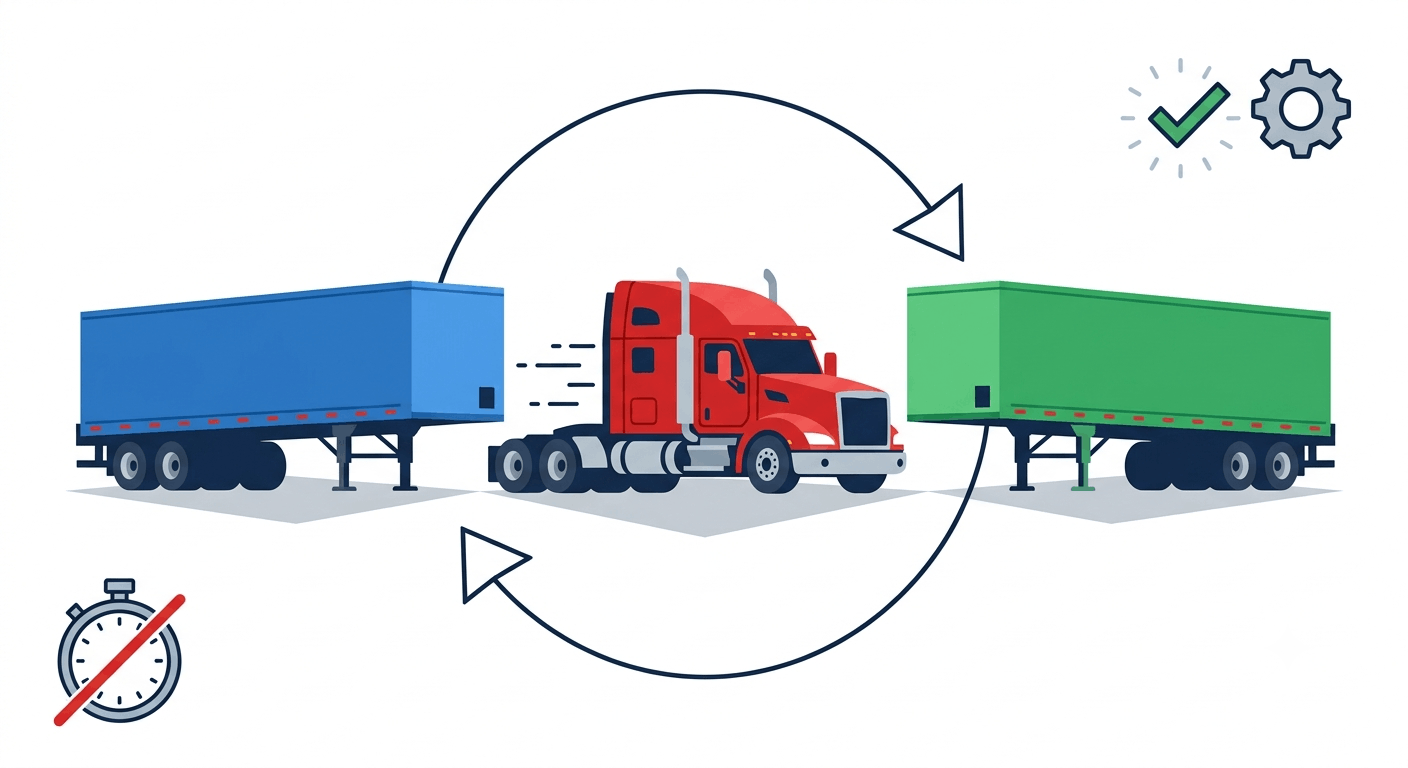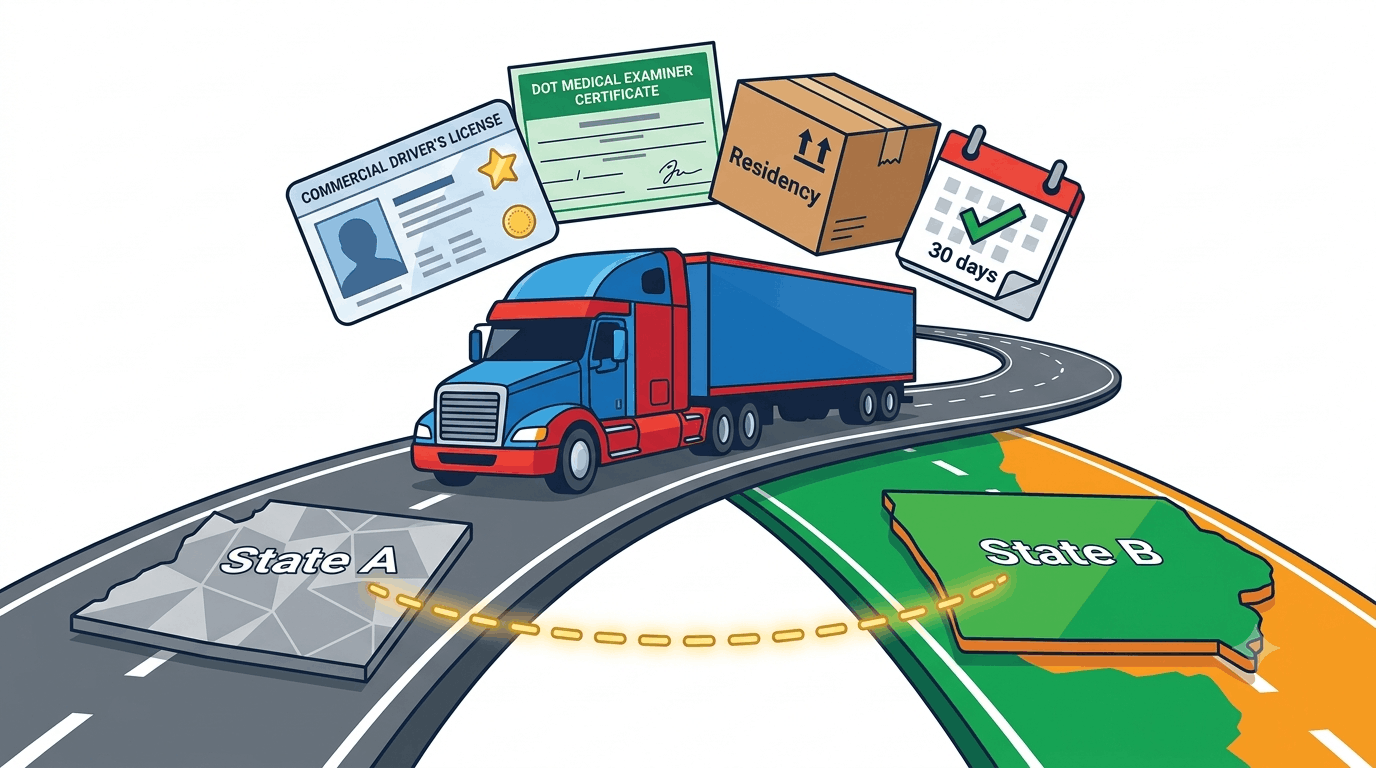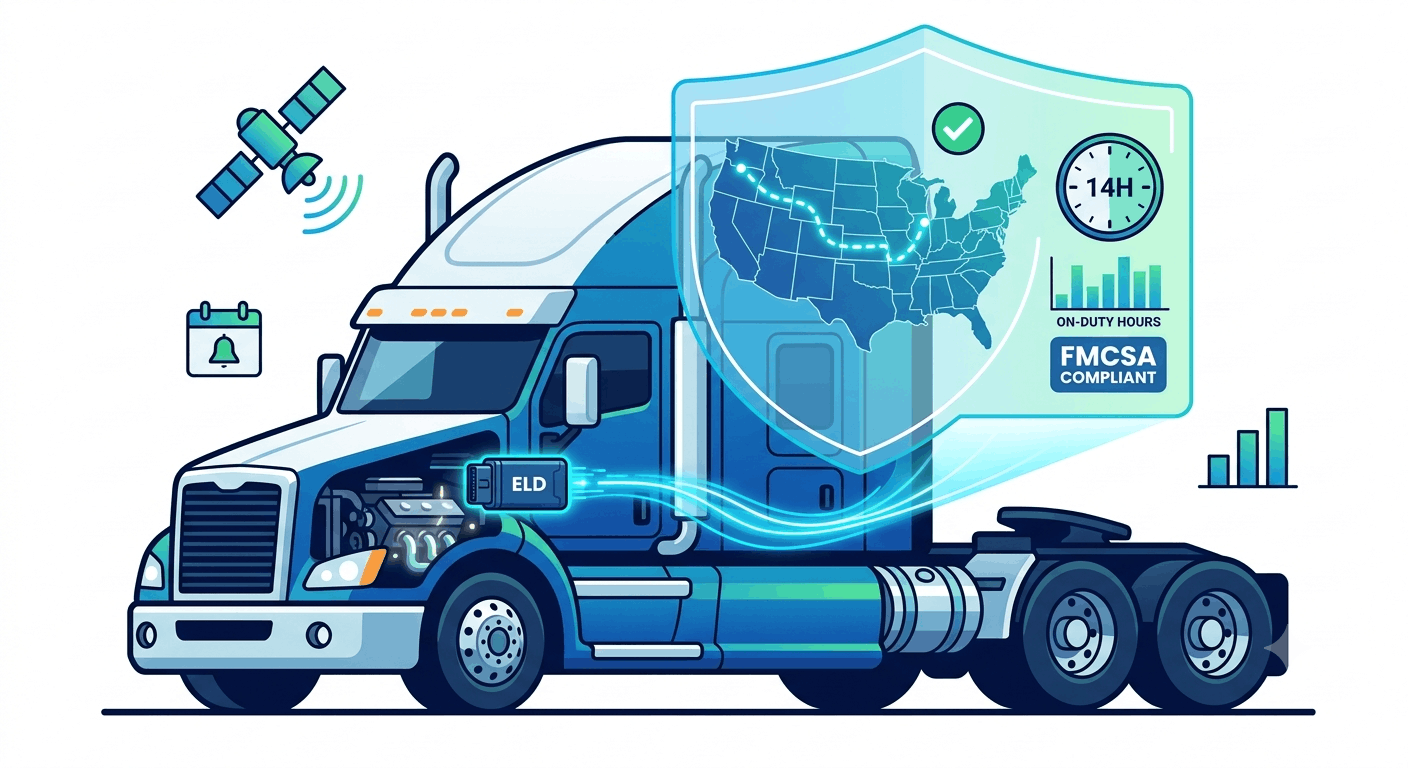
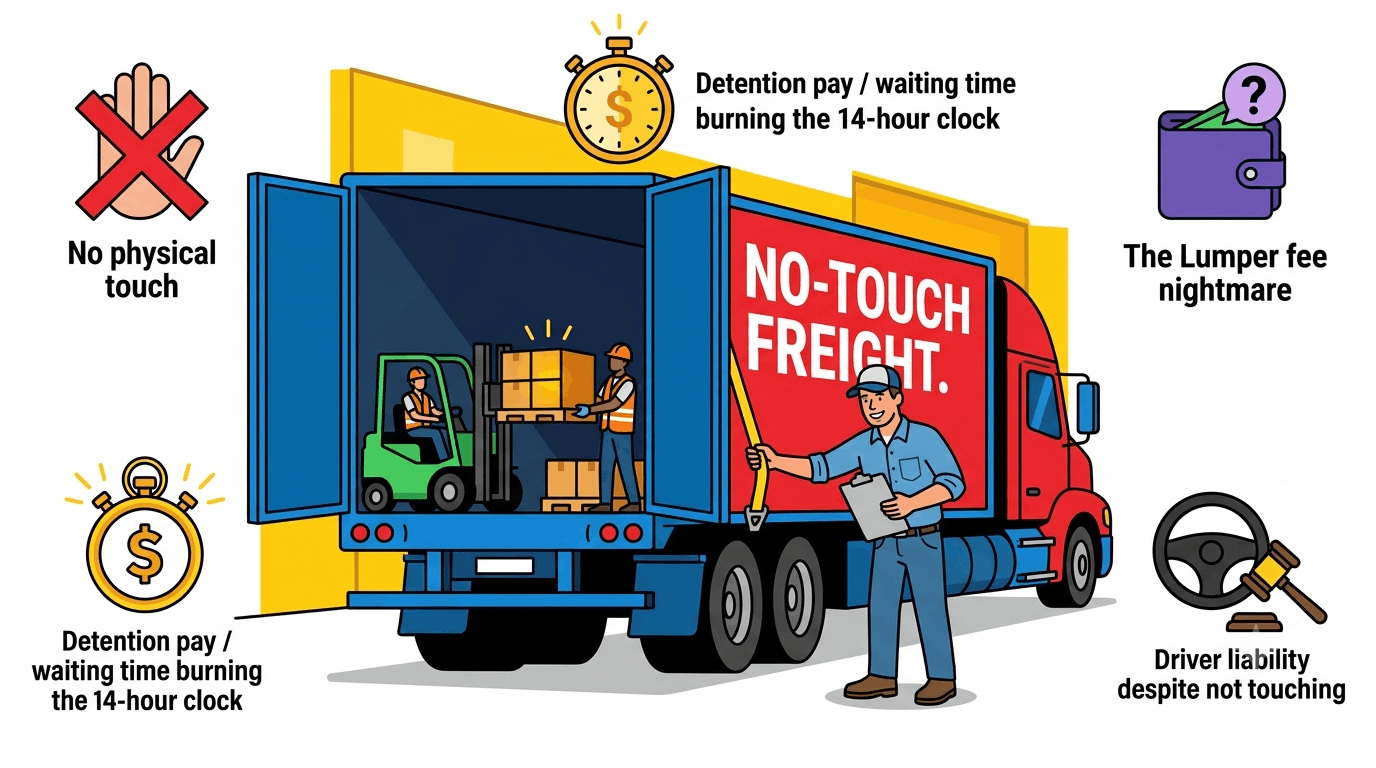
If you have spent any time browsing truck driving job listings, you have almost certainly come across the term “no-touch freight” splashed across recruitment ads. It sounds appealing less physical labor, less sweat, less strain. But what does it actually mean for your day-to-day life behind the wheel? More importantly, what are the hidden catches that recruiters do not always mention? This guide breaks down everything you need to know about no-touch freight from the basic definition to the gritty realities of lumper fees, Hours of Service, and legal liability. Whether you are a seasoned veteran or a newly-minted CDL holder, understanding this concept inside and out can make or break your trucking career. Quick Answer: No-touch freight is a shipping arrangement where the truck driver is not responsible for loading or unloading the cargo. Instead, these tasks are handled by the shipper’s warehouse staff, the recipient’s employees, or third-party contractors. The driver’s sole responsibility is to transport the load safely from point A to point B. This often involves waiting in the truck cab while dock workers use specialized equipment to handle the freight. What Exactly Is No-Touch Freight? At its core, no-touch freight is a shipping arrangement where the truck driver is not responsible for loading or unloading the cargo. Instead, these physical tasks are handled by the shipper’s warehouse staff, the receiver’s employees, or third-party contractors known as lumpers. The driver’s sole responsibility is to safely transport the load from point A to point B. In practical terms, this means you back your trailer into the dock, wait in the cab while others do the heavy lifting, and then get back on the road. No pallet jacks, no hand trucks, no climbing in and out of trailers to rearrange boxes. Your job is to drive, not to be a warehouse worker. However, it is important to note that no-touch freight does not always mean 100% touch-free. In some cases, drivers may still need to secure the load or make minor adjustments, such as reshuffling boxes before departure. The key distinction is that you are not expected to physically load or unload the entire shipment. No-Touch Freight vs. Touch Freight: What Is the Difference? To truly understand no-touch freight, it helps to compare it with its opposite: touch freight. Touch freight is exactly what it sounds like the driver is physically involved in loading and unloading the cargo. This may involve operating equipment like pallet jacks, liftgates, load bars, straps, and dollies. Touch freight is common in sectors like food service, retail delivery, and beverage distribution. Because touch freight involves additional physical labor, it often comes with higher pay to compensate for the extra work. However, it also carries greater liability and a higher risk of workplace injury. No-touch freight, on the other hand, shifts the labor responsibility entirely to the shipper or receiver. This reduction in physical strain is the primary reason many drivers actively seek out no-touch freight jobs. The trade-off is that no-touch freight positions may offer slightly lower pay compared to touch freight roles. The Two Faces of No-Touch Freight: Live Unload vs. Drop-and-Hook Not all no-touch freight is created equal. There is a massive difference in convenience between a live unload and a drop-and-hook operation. Understanding this distinction is critical for managing your time and expectations. Live Unload by Receiver In a live unload scenario, you arrive at the facility, back into the dock, and wait while the receiving facility’s staff or a third-party lumper service unloads the entire trailer. You remain in the cab or an approved waiting area, observing the process but not participating in the manual handling. The catch? You are stuck waiting. And waiting. And waiting. Depending on the facility’s efficiency, staffing levels, and workload, you could be there for hours. During this time, your 14-hour clock is still ticking if you are logging it as “on-duty not driving.” Drop-and-Hook Drop-and-hook is the gold standard of no-touch freight. In this scenario, you arrive at the facility, drop off your loaded trailer, and immediately hook up to another trailer that is already pre-loaded and waiting in the yard. The beauty of drop-and-hook is that you never wait for loading or unloading at all. The average wait time for a drop-and-hook load is often an hour or less. You are in and out in minutes, which means more time driving and more miles under your belt. Here is the key takeaway: All drop-and-hook freight is no-touch, but not all no-touch freight is drop-and-hook. When you see a job advertised as “no-touch,” do not assume it is drop-and-hook. Always clarify whether you will be doing live unloads or drop-and-hooks. The Benefits of No-Touch Freight for Drivers There is a reason why no-touch freight is such a popular selling point in job listings. The advantages are substantial, particularly for drivers who prioritize their long-term health and work-life balance. Reduced Physical Strain and Injury Risk This is the most obvious benefit. Regularly loading and unloading trailers takes a serious toll on the body over time. Repetitive lifting, pulling, and maneuvering heavy freight accelerates wear and tear on joints and the back. No-touch freight eliminates this physical strain, allowing drivers to conserve energy and stay focused on safe driving. For older drivers or those with physical limitations, no-touch freight jobs can extend their careers significantly. Faster Turnaround Times Compared to touch freight, no-touch freight is generally a faster process. You stay in the cab while workers handle the cargo, so you are ready to take off as soon as everything is loaded or unloaded. While waiting time for live unloads is still logged as “on-duty not driving,” the elimination of manual labor often results in faster facility turnaround times overall. Reduced Liability Since you never physically handle the cargo, you are not typically held responsible for damage that occurs during loading or unloading. This provides a layer of protection that touch freight drivers do not enjoy. More Predictable Scheduling When you are not responsible for loading
Hiring CDL A Drivers Now – Call Recruiter Directly